A Beginners Guide To Futures And Options Trading
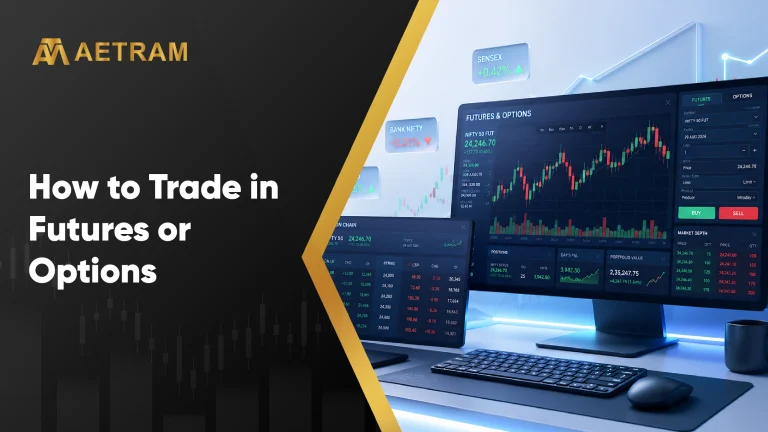
Derivatives are financial instruments where the value of the instrument is derived from the underlying asset which can be stocks, indices, commodities, etc. Derivatives like futures or options are used by investors or traders to hedge against risks arising from price volatility and reduce the losses. It is also used by speculators to profit from price fluctuation.
There are four types of derivatives and they are futures, options, forwards and swaps. However, in this blog, we will understand about futures and options. Futures and Options trading is a zero sum game. In other words, it is crucial for a traders to know that one trader’s loss is another trader’s profit. Futures and options are high risk-high rewards game.
Futures and Options (FnO) contracts are traded on derivative exchanges such as the Bombay Stock Exchange (BSE), National Stock Exchange (NSE) and the Multi Commodity Exchange (MCX).
What is a futures contract?
A futures contract is an agreement between two individuals or entities to buy or sell an underlying asset for a specific price on a specific date in the future. Unlike options contract, in a futures contract the buyer has the obligation to buy the asset and the seller must sell the underlying on the agreed price and date as per the contract. Futures contracts are traded on exchanges and traders use futures contracts to hedge against unexpected price fluctuations or speculate on future price movements.
If a trader expects the price of the underlying asset to fall, then the traders will go short in the futures market and if the trader expects the price of the underlying asset to rise, then the trader will go long in the futures market.
What is an options contract?
An options contract is a financial contract between two parties to buy and sell an underlying asset at a specific price at a future date. Since options is a derivatives contract, it derives its value from the underlying asset. These underlying asset can be stocks, indices, ETFs, commodities, etc.
A buyer of an options contract is also known a holder and the buyer has the right and not the obligation to buy or sell an underlying asset at a strike price, which is also known as prefixed price at a specific date in the future.
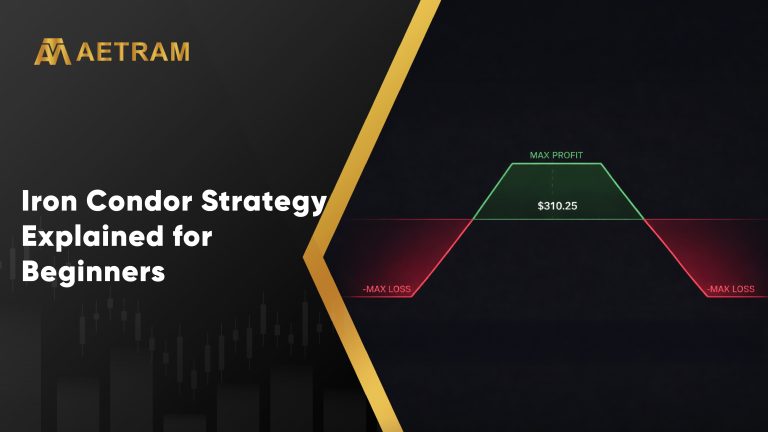
There are two types of options, namely, call option and put option. A call option buyer has the right buy the underlying asset and a put option buyer has the right to sell the underlying asset. Options are used for risk mitigation by hedging against unexpected price movements. Unlike futures, the buyer of an options contract is not obligated to exercise the contract.
If a trader expects the underlying asset to fall, then the trader will buy put option or sell call option. In contrast, if a trader expects the underlying asset to rise, then the trader will buy call option or sell put option.
Conclusion
Futures and options are high risk high reward financial instruments and traders should have good knowledge and skill set before they start trading in this FnO segment. Aetram Trades provides the required advanced analytics tool to navigate the complex FnO market. All you have to do to access this free analytics tool is open a free demat and trading account with Aetram Trades that will take only a few minutes.
Frequently Asked Questions
1. What are derivatives?
A derivative is a financial instrument whose value is derived from an underlying asset such as stocks, indices, commodities, currencies, etc.
2. What is the purpose of derivatives?
Derivatives are used for hedging to reduce risk from price volatility and it is also used speculation by traders to profit from price movements.
3. In which exchanges in India, can you trade derivatives?
Futures and options can be traded on three exchanges in India. They are BSE, NSE, and MCX.
4. What is the main difference between futures and options?
In futures contract, the buyer and the seller has the obligation to buy and sell the underlying asset on the agreed upon date and price as per the contract.
In an options contract, the buyer has the right but not the obligation to buy or sell the underlying asset. But the seller has the obligation, if the buyer exercises this right.
5. What are the two types of options?
Call option and put option are the two types of options. Call option contract is bought if the trader expects the price of the underlying asset to rise. Put option is bought if the trader expects the price of the underlying asset to fall.