How to trade in futures or options?
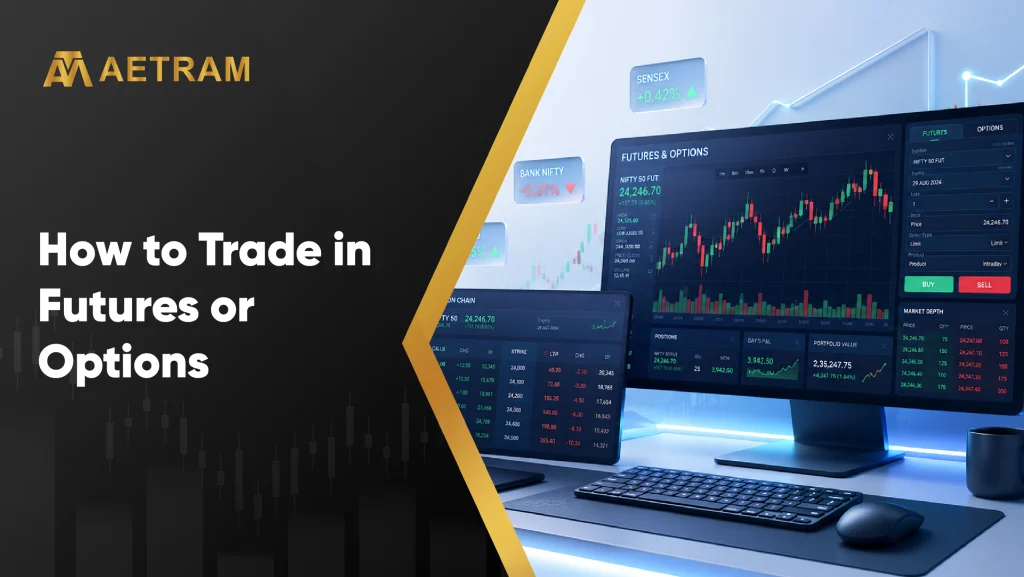
Trading in futures and options is more complex than trading in equities and you need to have the required skill set to trade in the segment of the market. Otherwise, you will face heavy losses and you can erase your capital. You need to have a good grasp of technical analysis, fundamental analysis and different strategies that can be applied based on the market conditions.
Things to keep in mind to trade in futures and options
To trade in futures and options (FnO), you need to have a trading and demat account. You can open a free trading and demat account with Aetram Trades by clicking the link and follow the instruction to complete the KYC procedure and account opening process in a few minutes.
Understand the market by learning about the stock or other underlying asset and the factors that affect the price of the underlying asset. You must know about the micor- and macro-economic factors that affect the underlying asset. Keep track of the price movements of the underlying asset, volume, volatility, etc. before taking the appropriate decisions.
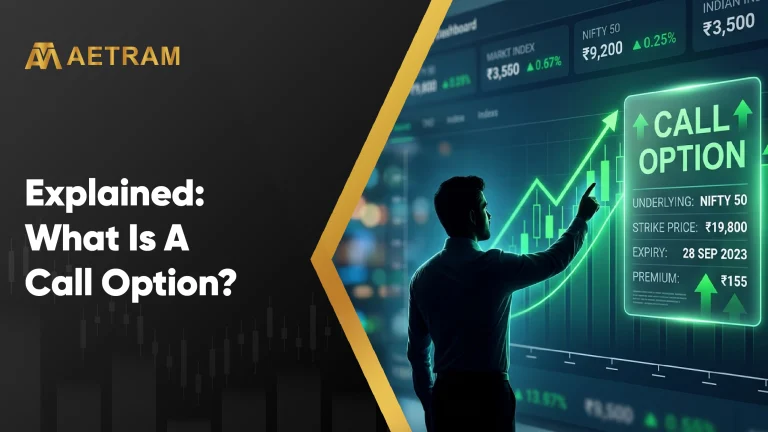
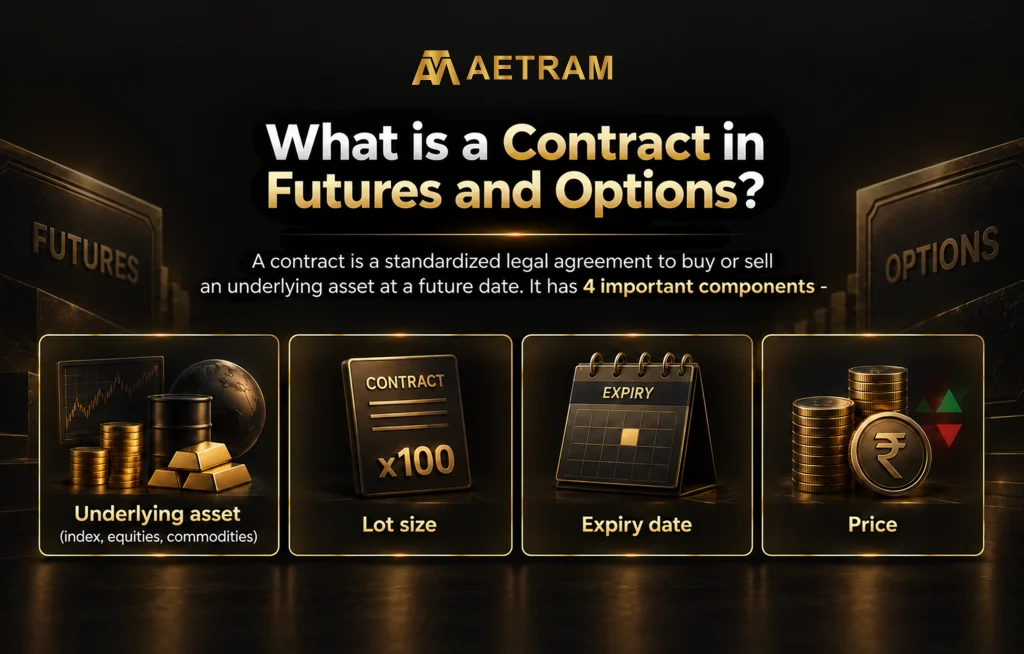
You must choose the most suitable type of contract that aligns with your objectives. If you choose to trade futures contract, select the underlying asset and its contract size based on your strategy and risk tolerance. If you are going to trading options, you have two options to select from. It is either call option or put option contract.
As a trader, always have a trading strategy based on the current state of the market and your prediction of the market in the future. If you are planning to trade options, there are nearly 40 pre-built options strategies in Aetram Trades’ analytical tool. You can also build your own strategies using Aetram’s advanced analytical tool without writing a single line of code. This analytical tool is available for all clients of Aetram Trades for free.
Make sure you have enough margin in your account using Aetram’s analytical tool that has built-in tools to calculate the margin and premium required to place an order.
As a trader it is necessary for you to implement effective risk management strategies to save your capital. You should set realistic profit targets and stop-loss orders to limit potential losses. It is also important to diversify your portfolio by trading in different assets and follow strict capital allocation and position sizing.
Use basket orders to minimise huge losses and protect your investments as futures and options are leveraged financial instruments and avoid taking naked options.
Keep monitoring your positions and learn from your mistakes after a trade has been closed. Keep a journal and jot down the trades that succeeded and failed and the reasons for them.
What is an expiry date?
As a trader in futures and options, it is very important to know that all futures and options contract come with an expiry date. This expiry can be one week or one, two or three months. On expiry date, the contracts have to be settled. However, it is not necessary to hold the contract till expiry. You can trade the contract until expiry and you can square off or offset your position if the market is not moving as expected.
What is a margin and a premium?
Derivatives trading is more risky than normal trading in equities and investment. Margin is kind of a deposit amount you have to pay your broker to cover the potential losses arising due to unexpected price movements. This is paid upfront and it is required to open a position.
In futures trading both the buyer and seller have to pay margin as both have an obligation to fulfill the contract. But when trading options contract, only the seller has to pay the margin as only the seller has the obligation to fulfill the contract. The buyer pays a premium to buy the contract from the seller. In the case of naked option selling, the margin requirement from the seller is higher than the premium received by the seller.
Conclusion
Though trading in futures and options is challenging, with the right knowledge, skill set, discipline, risk management, psychology and trading and analytics tool, you can overcome the difficulties posed by this segment. While trading in this segment is risky, the potential rewards are multiple time more than trading in equities.
Frequently Asked Questions
1. What are futures and options (FnO)?
Futures and options are derivative contracts whose value derives from an underlying asset (e.g., stocks, indices, etc.). In Futures, both buyer and seller have the obligation to settle contract at a set price on expiry; In options, the buyer has the right and but not the obligation to buy (call) or sell (put) at a strike price. Only the seller has the obligation, if the buyer exercises this right.
2. I margin paid by both buyer and seller in options trading?
No. Only the seller has to pay the margin, whereas the buyer has to pay the premium to buy the options contract from the seller.
3. What account and tools do I need to trade FnO?
You need an active trading and demat account which can be opened with Aetram Trades. Use tools that provide market data, margin/premium calculators, strategy builders, and position monitoring that are provided in Aetram’s analytical tool. The tool also has nearly 40 built-in option strategies that are readily available.
4. How should I manage risks when trading futures and options?
You must use realistic target price and and stop-loss orders, follow position sizing, diversify across assets, and allocate capital strictly.
5. What skills and practices increase the chance of success in FnO trading?
As a trader you need to develop technical and fundamental analysis skills. Follow and understand micro- and macroeconomic drivers that impact the underlying asset. Regularly monitor price, volume and volatility. Stick to the trading strategy you understand completely and practice discipline and patience while trading.