Explained: What is a Call Option?
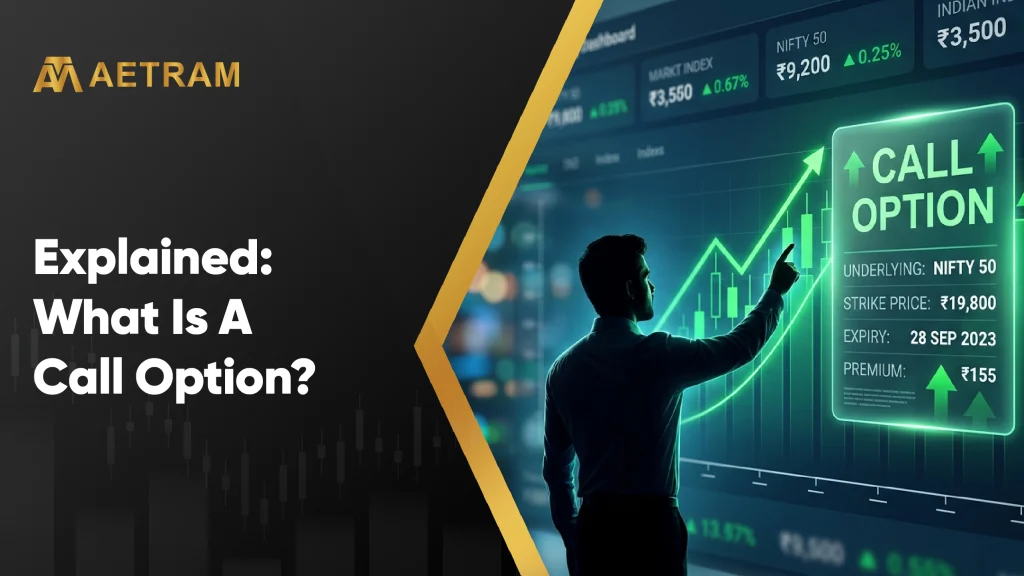
A call option is a financial derivative contract where the buyer has the right but not the obligation to buy an underlying asset at a fixed price at the time of expiry. Call options are standardized contracts which are traded on exchanges like NSE, BSE and MCX. A call option is bought by traders who expects the price of the underlying is likely to rise. As derivatives are leveraged products, the trader can bet on large volumes without committing to large capital.
How Call Option works?
When you buy a call option, you pay a premium to the seller. The buyer is called the option holder and the option seller is called the option writer. Without a writer, a buyer cannot buy an options contract with a specific strike price. The options contract gives the buyer the right to buy the underlying asset at the strike price at the time of expiry.
The buyer of a call options contract profits when the underlying asset’s price rises above the strike price. If the price remains below the strike price, the option expires worthless. The buyer’s loss is limited to the premium paid tot he seller. The seller has the obligation to sell the underlying asset at the strike price if the buyer exercises the option, exposing them to potentially unlimited losses.
Let us understand this concept with an example.
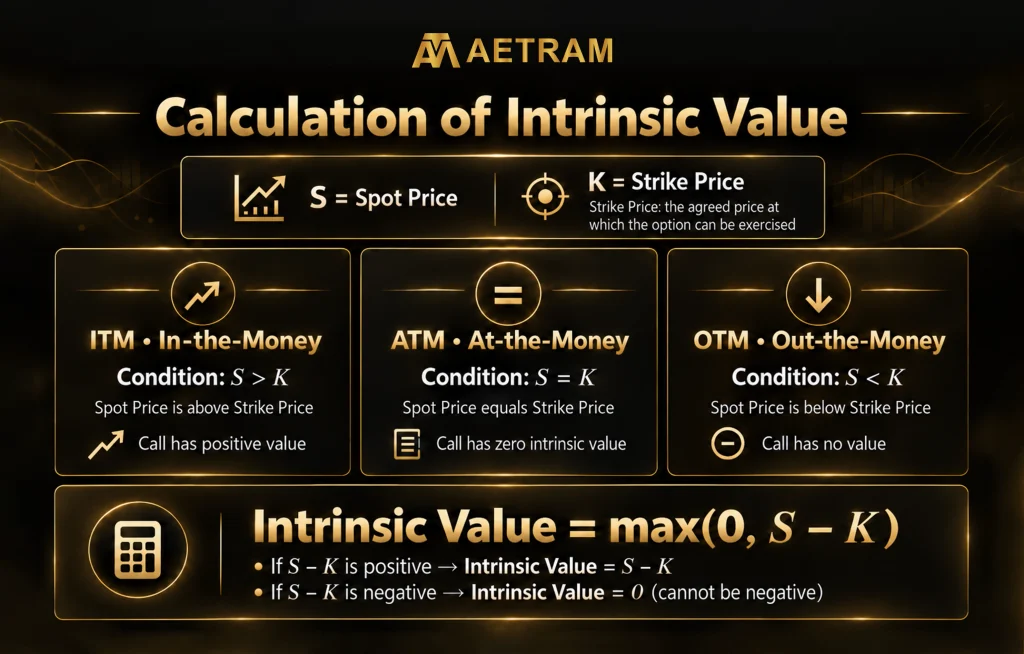
Imagine there is a company ABC that is currently trading at ₹2,200 per share, and you anticipate a price rise within the next month.
So, you purchase one call option contract with a strike price of ₹2,300 by paying a premium of ₹50 per share. Assume the lot size is 100 shares, your total investment is ₹5,000 (₹50 × 100 shares).
Scenario 1 – Price Rise
If the spot price rises to ₹2,400. You exercise your right to buy 100 shares at ₹2,300 each (₹2,30,000 total) and immediately sell them at ₹2,400 each (₹2,40,000). Your gross profit is ₹10,000 (₹100 × 100 shares). After deducting the ₹5,000 premium paid initially to the seller, your net profit is ₹5,000 which is a 100% return on your initial investment.
Scenario 2 – Price Fall
If the company’s share stays below ₹2,300, you won’t exercise the option. You simply let it expire, and your maximum loss is the ₹5,000 premium that was paid to the seller. The seller keeps this premium as their profit.
Benefits and Risks
Call options offer leverage to traders because you can control 100 quantity of shares for a fraction of the cost. Your loss or the downside is limited to the premium paid to the seller, while upside potential is unlimited theoretically. These options contracts are a good choice for hedging and generating income through covered call strategies.
All said and done, there are risks involved while trading call options. If the stock doesn’t move above the strike price before expiry, the buyer loses the entire premium paid to the seller. Time decay always works against buyers, and out of the money options can expire worthless. Sellers face theoretically unlimited losses if the stock skyrockets.
Conclusion
Call options are leveraged financial instruments enabling buyers to profit from upward price movements with limited capital in hand. As an options buyer it is important to understand strike prices, premiums, and expiry dates.
While they offer higher profits compared to cash and carry segment, options also carry high risks and it is crucial for the trader to carefully analyze market trends, volatility, and timing.
Finally, it is always safe to trade through SEBI-registered brokers like Aetram Trades which has an advanced analytics tool for futures and options along with a trading platform. Aetram Trades offers free demat and trading account with absolutely zero AMC for the first year.
Frequently Asked Questions
1. What is the minimum investment needed for call options in India?
The minimum investment needed is the premium amount multiplied by the lot size. For example, if a call option quotes ₹20 premium with a lot size of 100 shares, you need an investment of ₹2,000 plus brokerage charges. There is no fixed minimum investment and the investment varies by the underlying asset stock and market conditions.
2. Can I sell my call option before expiry?
Yes. You can sell the call options contract before the expiry. If your call option’s premium has increased due to a price rise, you can sell it to lock in profits without waiting for expiry.
3. Are call options suitable for beginners?
Call options are high-risk instruments because of leverage and time decay. Beginners should start with small positions, and try their hand in paper trading, and understand various concepts related to options before trading in the real money in the markets.
4. Where can I trade call options?
You can trade call option in an Indian exchanges namely NSE, BSE and MCX. MCX is for trading futures and options related to various commodities.
5. Who pays premium and margin?
The call option buyer pays the premium to the seller and the call option seller pays the margin money to the broker.