What Is Short Covering Rally? Explained with Example
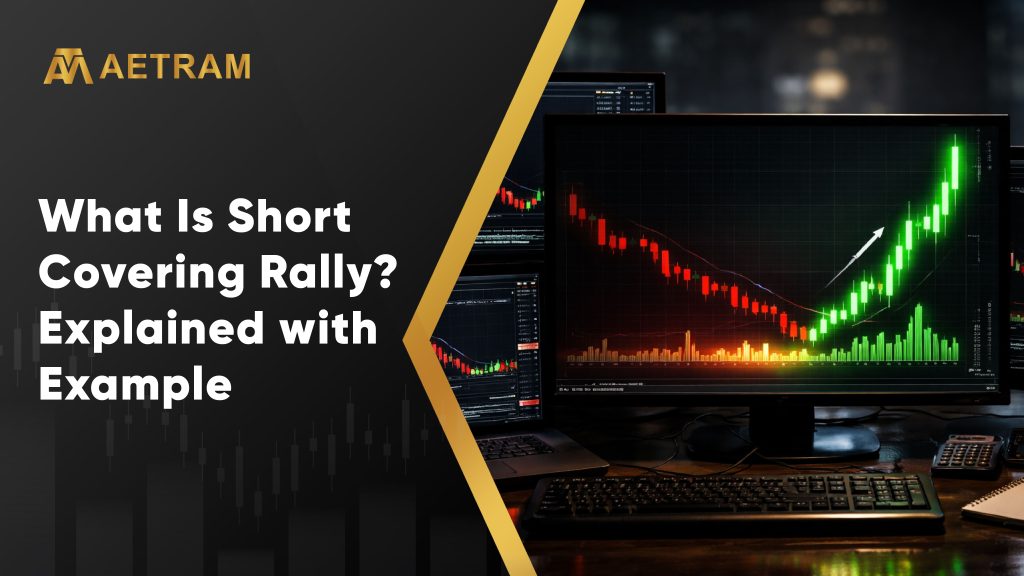
Short covering happens in the stock market when traders close their short positions. When you are trading in the stock market, you can either go long or short in the market. When you go long, you are buying the security initially and then selling. In contrast, when you go short, you will sell the security by borrowing and then buying the security back. In this blog, let us explore why traders short and when short covering rally happens in the stock market.
Understanding short covering
Short covering is a process when traders buy back their shares which they have sold earlier. They would have sold the shares by borrowing the securities from the broker. This is a strategy used by traders when they expect the price of a stock or security to fall. The trader will borrow the security or stock from the broker and sell them in the market. Later, they will buy it at a lower price from the market after the stock price has fallen. This is how short traders will exit their position.
A short covering rally happens when a lot of traders who have shorted a stock, buy back the shares at a higher price at the same time. This pushes the price of the stock higher because there is higher demand for the stock than there is supply. This happens because a lot of traders who have shorted want to cut their losses because they had miscalculated that the shares will fall further.
Short covering example
Assume a trader expects the price of a share XYZ Ltd. to fall from Rs 100 and the trader sells 1000 shares by borrowing it. Once the shares fall to Rs 96, he buys it at that price. So he would have made a profit of Rs 4000 (Rs 1,00,000 – Rs 96,000).
However, if the price increases from Rs 100 to Rs 103 after the trader had bought it, then he would be making a loss. So to avoid further losses if the price increases to Rs 105 or Rs 100, he is forced to buy back the shares at Rs 103 and the loss would be (Rs 1,00,000 – Rs 1,03,000). This is called short covering. If there are more traders buying, then the price will rise leading to a short cover rally.
How to identify short covering rally
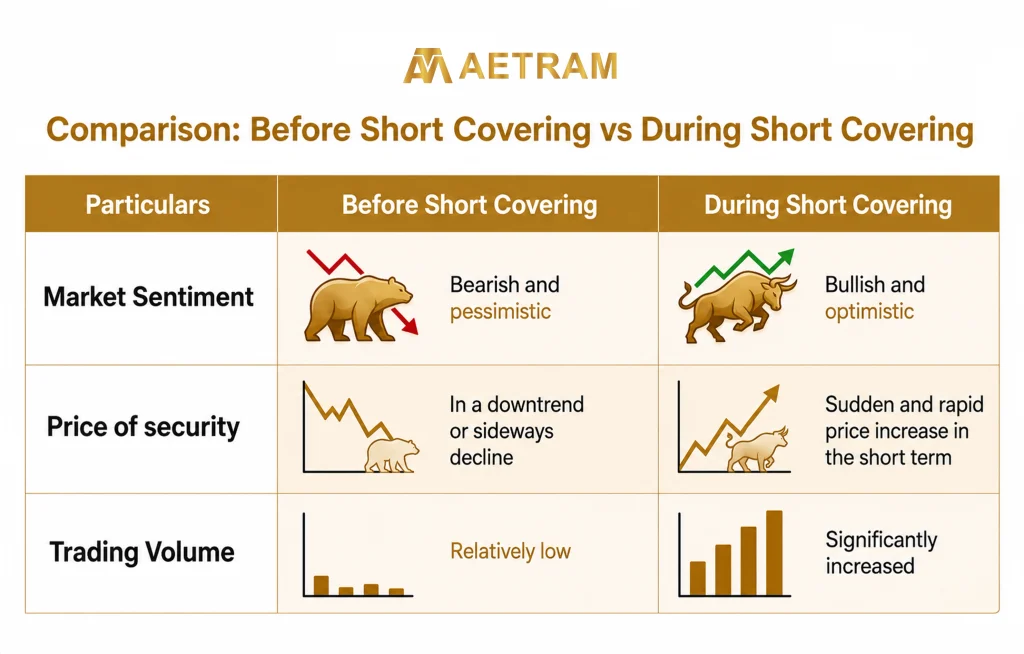
There are many ways to figure out a short cover rally that we will discuss in this section. One of the important signs to watch out for is the prices will jump, while the volume does not increase along with the price. This means that traders are closing out their short positions rather than new buyers buying the stock.
If a stock has been shorted by a lot of traders and it suddenly starts to climb without any major news or events like strong earnings or new orders, it is a sign that short sellers are rushing back to buy and cover their positions to cut significant losses.
The futures and options data can be used to analyze if there is short covering. When prices go up but open interest drops, it usually means existing short positions are being closed by traders.
You might also see a sharp increase in prices before the market closes because there would be a lot of traders scrambling to square off their positions to avoid the risk of holding losses overnight.
Finally, you must be keen to see if there is any follow-up to the increase in price. When there is short covering, there is no follow-up to the price rise and increase in price tends to be short-lived. They do not usually lead to a lasting bullish uptrend, which indicates and tells you the difference between a temporary short-covering rally and a true bullish rally.
Short covering vs short squeeze
Price impact: During short covering, price rise is generally orderly and moderate, whereas during a short squeeze, the price increases drastically.
Cause: When short covering happens, traders are booking profits and traders are gradually exiting the position. But, in a short squeeze traders are forced to buy and as a result there is panic buying to reduce potential losses or meet margin call requirements.
Duration: Short covering happens regularly during any trading day, while a short squeeze happens once in a while and it is usually a short-term spurt in prices which is unsustainable.
Conclusion
Short selling is a strategy used by traders when the price of a stock or security is likely to fall and try to make profit. However, it should be used judiciously as the potential for losses is unlimited. Further, when you short a stock, you are bound to compulsorily buy back shares and offer them to the owners. If the market moves unexpectedly, then the trader would be forced to short cover at a loss and it is important to do technical analysis before you open a short position.
Frequently Asked Questions
What is short covering?
Short covering is a process when traders buy back their shares which they have sold earlier. They would have sold the shares by borrowing the securities from the broker. This is a strategy used by traders when they expect the price of a stock or security to fall. The trader will borrow the security or stock from the broker and sell them in the market.
What is the difference between short selling and short covering?
Short selling is a process where traders will sell shares by borrowing it from brokers because they had predicted that prices will fall. Meanwhile, short covering is a method where traders will buy back the shares they had sold earlier to return those shares to the lenders.
What causes a short covering rally?
A short covering rally is triggered by panic buying by traders to book profits or to minimize losses. There are many reasons for short covering rally and most common reasons are increasing stock prices forcing traders to buy back to minimize losses, unexpected news which results in trend reversal, margin calls by traders due to shortage of funds and to liquidate their position, expiry days for futures and options contracts.
Is short covering bullish or bearish?
Short covering is generally considered short-term bullish because it involves buying back shares by traders that would lead to increased demand for a particular stock pushing the stock prices higher. When many shorts are covered at the same time, it can result in sharp rise in prices even though the overall market is bearish.
Is there is any risk in shorting or short selling?
Traders who short stocks may face potential losses, especially if the price of the security rises suddenly. This risk is inherent in short selling as traders may be forced to repurchase the securities at higher price compared to the price at which they had sold them initially.