Understanding Earnings Per Share (EPS) in Detail

As soon as you begin to research the stock market, one of the things you will most likely encounter is Earnings Per Share, abbreviated as EPS. Although this might seem complex initially, it is very easy to comprehend and has numerous benefits while making an assessment of any business.
What is EPS?
Earnings Per Share (EPS) shows the profitability of an organization with respect to the cost of its stocks per share. It simply means that if an organization makes certain profits, which are to be distributed among all its shareholders on an equal basis, then EPS can be used to figure out how much profit is earned per share. Hence, it solves one basic question: “How much money does my one share earn?”
Calculation of EPS
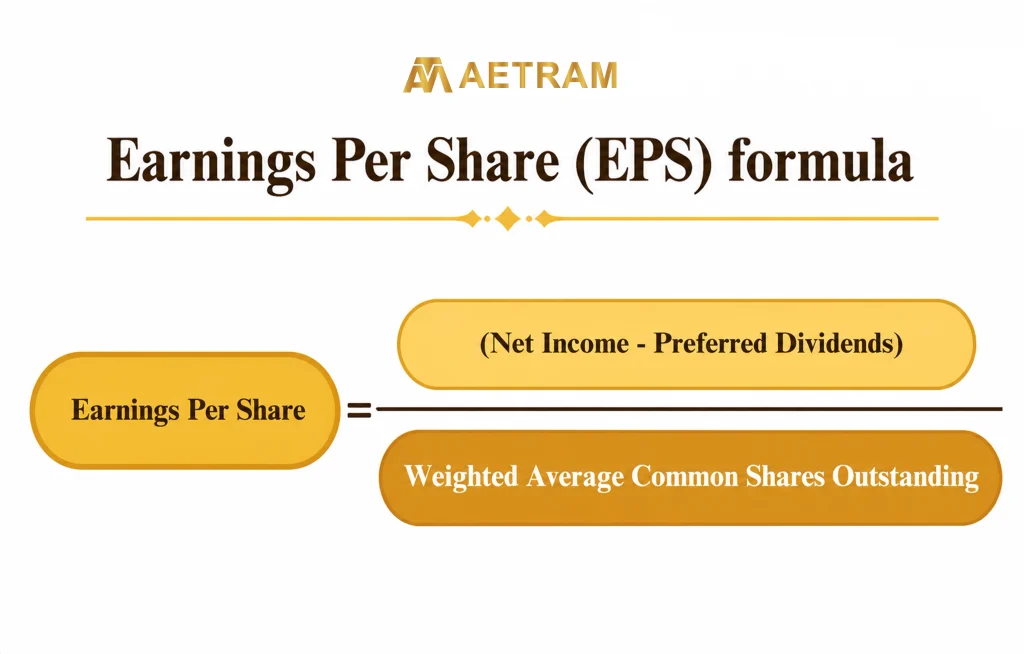
EPS of any organization can be calculated by dividing its net profit by its outstanding shares. For instance, if an organization’s net profit is INR 100 crores, and its outstanding shares are 10 crores, then EPS for each share comes out to be INR 10. So, this INR 10 will become EPS. It becomes easy to compare two organizations regardless of their sizes.
Importance of EPS
EPS is very important for investors because it offers them a clear idea about a company’s profitability. An increase in EPS indicates the company’s high profitability, and vice versa. Additionally, EPS is useful in determining the stock’s worth and whether it should be purchased or not. The calculation of the Price to Earning (P/E) ratio uses EPS, and a low P/E ratio suggests that a stock might be underpriced or a good investment opportunity. An increase in EPS over a period indicates better growth and performance.
Are There Different Types of EPS?
There are two types: basic EPS and diluted EPS. The former represents the simple computation using the existing number of shares. The latter, however, takes into account the potential issuance of additional shares in the future. Diluted EPS usually shows a smaller value and is viewed as the more realistic of the two in certain instances.
Things to Keep in Mind
Even though the metric in question is a helpful one, one cannot rely on it blindly. This is because it does not provide an insight into the amount of actual cash generated by the company. In addition, in certain instances, EPS may depend heavily on accounting practices or changes in the share count. Consequently, this metric should be analyzed together with other indicators such as revenue or total debt.
What You Should Remember
The EPS stands for one of the simplest and most useful metrics in determining a company’s profitability. EPS is an excellent tool for the first-time investors who want to analyze companies’ stocks. Once you learn how to work with EPS, your investing will get much easier and more efficient.
If you’re looking to deepen your understanding of the stock market and learn how to apply concepts like EPS in real-world investing, you can explore expert-led sessions and insights at Aetram.
Frequently Asked Questions (FAQs)
1. What is a good EPS value?
A good EPS depends on the industry and company size. Generally, a higher and consistently growing EPS is considered positive.
2. Can EPS be negative?
Yes, if a company is making losses, its EPS will be negative.
3. Why do investors prefer diluted EPS?
Diluted EPS gives a more realistic picture by considering future shares that may reduce earnings per share.
4. Is EPS enough to decide whether to buy a stock?
No, EPS should be used along with other factors like revenue growth, debt levels, and market conditions.
5. How often is EPS reported?
Companies usually report EPS quarterly and annually as part of their financial results.