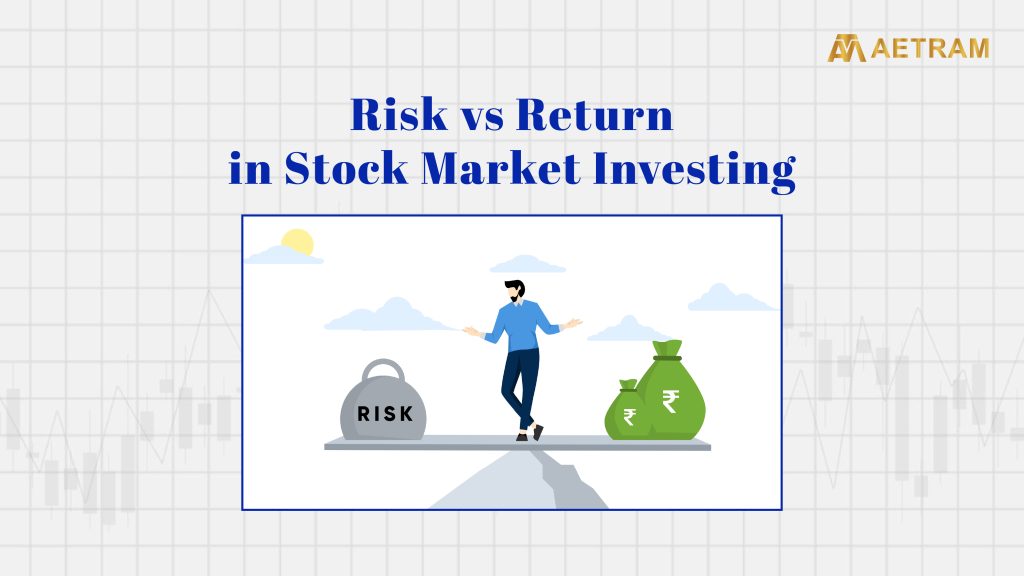
Risk vs Return in Stock Market Investing
The stock market provides one of the most effective methods to achieve wealth accumulation through investment. You need to learn two basic investment concepts which serve as the foundation for all investment choices before you begin your investment journey. The two concepts establish a connection which enables you to understand their relationship for better decision-making which will satisfy your financial goals and risk management needs.
What is Risk and Return?
The definition of risk describes the chance that your investment results will differ from your expectations. Investors purchase stocks with the expectation that the stock will increase in value or provide dividend payments. Stock prices experience price changes which can reach extreme levels because of changes in market dynamics and economic conditions and company performance. This situation represents what we identify as risk.
The returns from your investment represent the compensation you receive for your investment. Your earnings come from stock value increases and dividend payments. Investors want to achieve better returns because higher returns require them.
Relationship Between Risk and Return
Investors use the risk-return trade-off when they discuss investment options. Higher investment returns require investors to take on greater investment risks. Stocks provide investors with better long-term profit potential than bank deposits and government bonds while displaying greater price fluctuations. Investors need to understand potential risks before they pursue high-return investments. Investors select investments that match their expected returns and their capacity to handle risk.
Why Risk Happens in the Stock Market?
There are a few reasons why investing in stocks involves risk:
- Market Volatility: Stock prices keep fluctuating in response to economic announcements, company earnings, interest rates and market moods. These stock price movements can be sudden and unpredictable.
- Company-Specific Issues: At times, a company may not perform well due to poor management choices, poor sales or intensified competition. This can have a negative effect on the stock price of the company.
- External Circumstances: Events such as political turmoil, natural disasters or global economic crises can impact the overall market, leading to widespread losses in stocks.
How Returns Work Over Time?
The most straightforward way to analyze returns requires you to examine their performance across an extended time frame. Stock prices experience short-term fluctuations but they typically exhibit upward growth during extended time frames. Investors who maintain their investment in high-quality stocks or diversified equity funds for multiple years will experience two benefits which include reduced short-term market fluctuations and total market growth.
Keep in mind that returns come in two forms: capital gains (the increase in the price of the stock) and dividends (a share of the company’s earnings paid to shareholders). These two components work together to create the complete investment return that you receive from your investment.
Balancing Risk and Return Through Diversification
Diversification offers investors an effective risk management tool. Instead of putting all your money into one stock you should spread your funds among multiple stocks and various asset classes such as bonds and equity funds. The underperformance of one investment creates an opportunity for other investments to succeed which helps maintain overall portfolio balance. The approach to investment maintains certain risks but it prevents your investment path from becoming dependent upon one particular result.
Understanding Your Own Risk Tolerance
Every investor has a different comfort level with risk. Young investors who have extended investment periods will select more dangerous stocks because they can recover from minor market downturns. The person who is about to retire will choose investments that maintain their capital because they want to avoid losing money even though those investments will bring them lower financial returns. Your risk tolerance lets you create an investment portfolio that matches your financial objectives and your ability to handle uncertain situations.
Why Understanding Risk and Return Matters?
The process of stock market investing depends on two fundamental elements which are risk and return. The risk component describes the chance of losing money or receiving lower returns than what you anticipated while the return component represents your desired financial benefits. Investors who want to achieve higher returns must accept greater risk while understanding this relationship will enable them to make intelligent investment decisions. Your investment returns will increase when you maintain patience through investment diversification and goal-aligned decision-making.
For personalised advice on managing risk and optimising returns in your investment portfolio, consider expert guidance from Aetram.