Difference Between Index Futures and Stock Futures
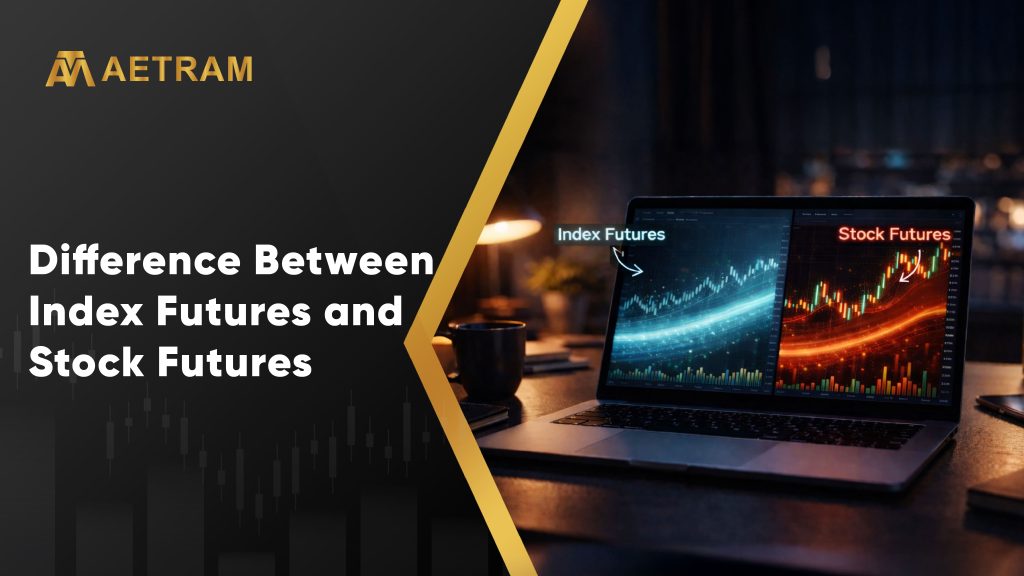
Futures is a derivative product which is used by traders to speculate or use it as a hedge to minimize their risk in the stock market. Futures is also a contract between a buyer and a seller where they decide to buy and sell the underlying asset at a specific price at a specific date in the future and we are going to discuss the difference between stock futures and index futures in this blog.
What are stock futures?
Stock futures is a derivative product where the underlying asset is a stock. It is an agreement between traders who are willing to buy and sell a specific number of company shares at a predetermined price on a specific future date.
These futures contracts are standardized as they follow a set of rules like lot size, expiration dates, pricing units, tick size, trade settlement.
Why trade stock futures?
It offers a lot of benefits for investors and traders. As a trader, you can take a long-term view on a particular stock without having to buy the shares outright.
Further, investors can take a large position with just a small amount of capital because futures is a leveraged product. In other words, you can just pay 20% of the total value of the position and have an exposure that is worth five times your initial investment.
Another advantage is the potential for arbitrage as there is a difference between stock futures price and the spot price of the stock. This difference creates opportunities for traders and investors that can be used by them to make money.
If this derivative product is used cautiously, then it can be a very useful tool for managing risk. For example, if you own shares in a company and are worried that the price of the shares may drop, you can hedge that risk by taking a short position in that stock’s future. This helps protect your portfolio from market volatility and price swings by giving you more control over your exposure.
What are index futures?
Index futures are a type of derivative product where the underlying asset is an index like Nifty 50 or Nifty Bank. These indices represent the broader market or the sector. For example, Nifty 50 index represents India’s top 50 companies by market capitalization and Nifty Bank index represents the top banks of India.
So, when you trade index futures, you are not speculating or betting on individual stocks but you are essentially betting whether the index as a whole will rise or fall.
For instance, if you buy a Nifty futures contract at 23,000 and the index later climbs to 23,300 or 23,500, you will profit from the difference which is multiplied by the contract’s lot size.
Since indices cannot be physically delivered, these contracts are settled in cash at expiry. Your account gets credited or debited based on the difference between your entry price and the final settlement price. Trading in index futures is a simple and efficient way to gain exposure to the broader market movements without owning any stock.
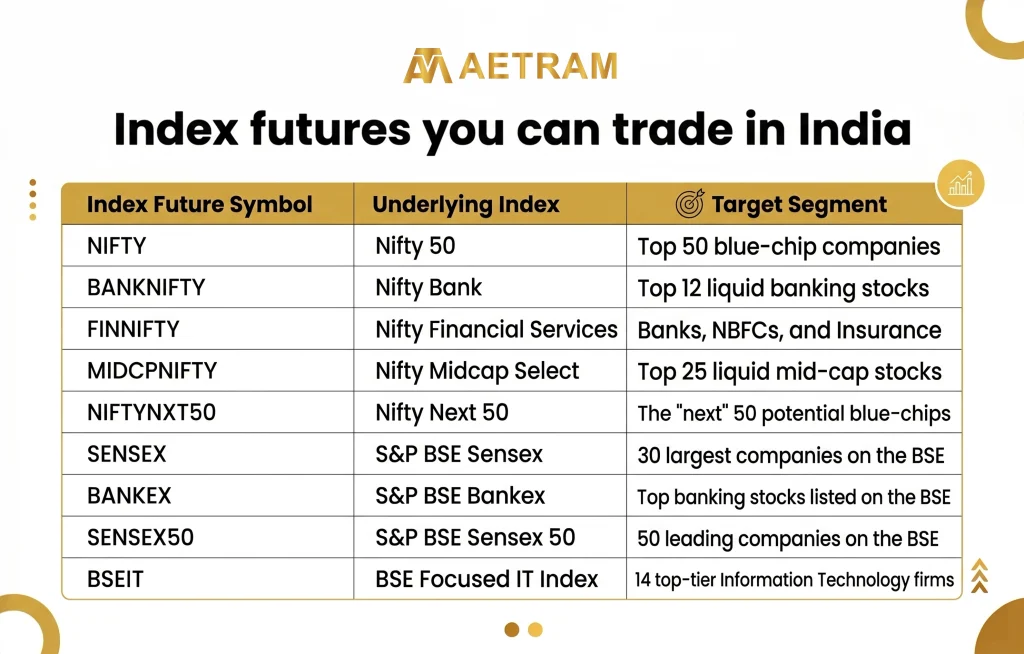
How do futures work?
Assume you are a trader and you think an index for example Nifty 50 will rise, then you go long by buying. In contrast, If you believe that the index will drop, you go short by selling.
You do not need to pay the full value of the trade, just a small deposit which is known as margin is enough to get started. By doing so, you will be able to control a larger position with less initial capital. Your account is updated every day with the profit or loss based on how the market has moved on that specific day and this is called as mark-to-market (MTM).
You should always be cautious with respect to your margin because if your losses rise then your broker might ask you to add more funds and this is known as a margin call.
You can either close your trade at any time before the expiry date or you can keep the position open till the expiry day and the exchange will settle the final value in cash.
As trading in index futures is leveraged, any small movement in the index can multiply your gains or losses. So it is important for you to use stop loss when you take a trade.
Key difference between index and stock futures
| Parameter | Index Futures | Stock Futures |
| Underlying Asset | Tracks a portfolio of stocks (market index like Sensex) | Tracks a single company’s shares |
| Settlement | Always cash-settled (cash difference is paid/received) | Can be cash-settled or physically delivered |
| Risk Profile | Carries systemic risk (generally lower than individual stock volatility) | Carries higher idiosyncratic risk (company-specific risk) |
| Purpose | Used for hedging portfolio risk (e.g., hedging with Nifty futures) | Used to take leveraged positions on specific stocks |
| Margin Requirements | Often higher due to overall index valuation | Allows relatively higher leverage on individual stocks |
| Impact of Corporate Actions | Rarely affected by individual company actions | Adjusted for corporate actions like dividends, buybacks |
Conclusion
Futures are leveraged financial instruments and it should be used cautiously as it would increase the profits or losses. Index futures and stock futures serve different purposes and it should be used based on your strategy and risk tolerance. As a prudent trader, you must remember to use stop loss always and manage margin carefully as well as never risk more than you can afford to lose.