Calendar Spread Strategy in Options Trading
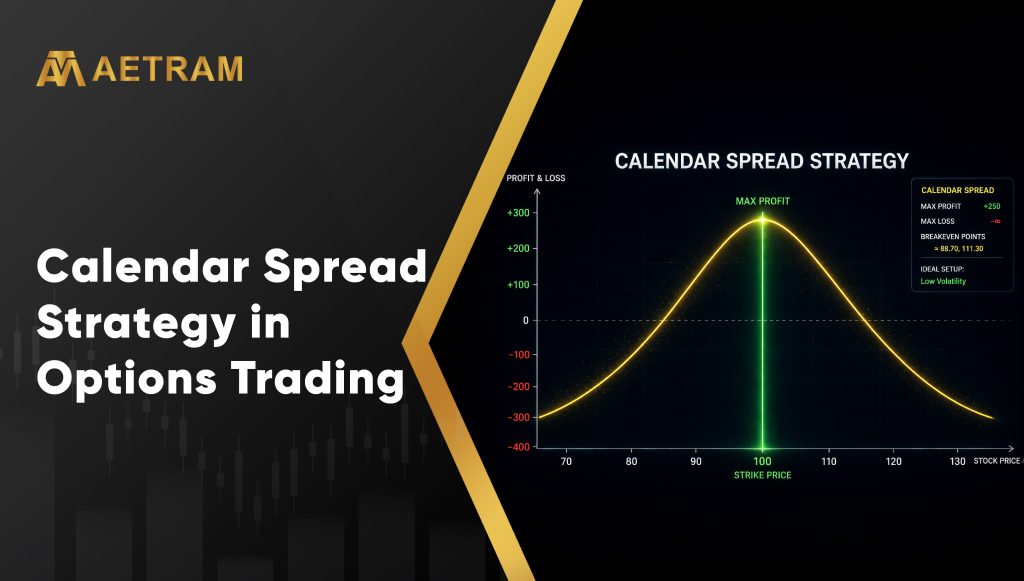
The calendar spread strategy in options trading involves finding trading methods that do not depend on any prediction regarding the future movements of the market. The time spread, which is also called a calendar spread, is one of these methods and is mostly popular during relatively calm markets.
What Is a Calendar Spread Strategy?
A calendar spread is an option strategy where the trader purchases and sells the options on the same type of security (either call or put), having the same strike price and different expiration dates. Normally, the trader purchases an option for a long period and sells a shorter one at the same time. The idea here is to use the difference in how the value of the two options expires.
How Does a Calendar Spread Work?
The important idea behind a calendar spread is that options have time decay, which is also referred to as theta. The more time passes, the less valuable the option becomes. However, short-dated options experience time decay much faster than long-dated ones. In this trading technique, the trader sells a short-term option and holds on to a long-dated one. As a result, the short option loses its value faster than the long option does, which is profitable if the price of the underlying asset remains around the strike price.
When Is a Calendar Spread Best Used?
A calendar spread is best used in situations when the market is steady or when there is a sideways movement. The calendar spread is a good choice if you believe that a certain price will be maintained in the short run. Moreover, a calendar spread is used by traders who believe that increased volatility is imminent.
Variations of Calendar Spreads
Two types of calendar spread exist, including short and long calendar spreads. Long calendar spreads involve purchasing a long-term option and selling a short-term one. It is considered a commonly used variation of this approach that seeks benefits from time decay and stable market prices. Short calendar spreads imply selling a long-term option and buying a short-term one. The latter is considered less popular among investors and more risky.
Advantages of Calendar Spread
The calendar spread has several significant advantages, one of which is low risk. As the long and short positions are entered simultaneously, their risk level is not high. In addition, the calendar spread does not require large changes in market prices as it benefits from time decay. Besides, it is a relatively inexpensive strategy as the short-term position covers the expenses for the long-term one.
Limitations of Calendar Spread
Despite all its advantages, the calendar spread strategy is associated with a number of limitations. First, if the market price changes too much, the strategy is likely to generate losses. Second, a solid knowledge of time decay and volatility are important here. In particular, decreased volatility will negatively affect the profitability of the strategy.
Using Time to Your Advantage
The use of the calendar spread strategy is a valuable technique for investors who anticipate little change in the prices of their assets and hope to leverage the effects of time erosion on their investments. This is a prudent strategy that carries low risk and high rewards but needs proper planning and knowledge of options pricing techniques.
Connect with Aetram if you are looking to explore advanced options strategies with confidence and manage risk effectively in the derivatives market.
FAQs
1. What is a calendar spread in options trading?
A calendar spread is a strategy where you buy and sell options of the same type and strike price but with different expiry dates.
2. When should you use a calendar spread?
It is best used when the market is expected to remain stable or move within a limited range.
3. How does time decay benefit a calendar spread?
Short-term options lose value faster than long-term options, allowing traders to benefit from this difference.
4. Is a calendar spread a risky strategy?
It is considered relatively low risk compared to other strategies, but losses can occur if the price moves significantly.
5. What is the main goal of a calendar spread?
The goal is to profit from time decay and stable price movement rather than large directional moves.