What Is Strangle Strategy in Options Trading?
In options trading, it can be hard for a person to predict accurately whether the market will move upwards or downwards. Sometimes, there are instances when traders anticipate that the market will undergo an extremely volatile period. In such instances, a trader applies strangle to benefit from the move.
What is Strangle Strategy?
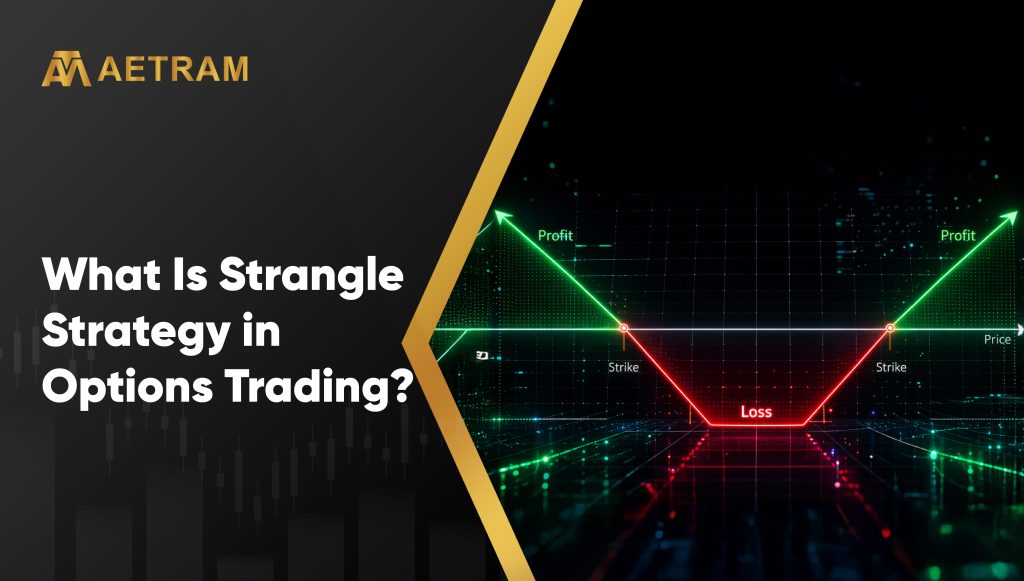
Strangle strategy involves opening positions with both a call option and a put option with the same expiry but varying strike prices. The call option is always above the current stock price while the put option is below the stock price. As a result, both the calls and puts are out of the money at the beginning of the transaction. It is a non-directional strategy that aims to capitalize on volatility in the price of stocks.
Types of Strangle Strategies
The two types of strangle strategies include the short and the long strangle. A long strangle occurs when a trader purchases both the calls and puts. It is applied when a trader anticipates increased volatility in the stock price. On the other hand, short strangle occurs when a trader sells both the calls and puts. It is employed in case of expectations that the stock price will be stable.
How does it work?
In a long strangle, the trader buys both call and put options, paying premiums for each one. In order to make profit, the price of the stock needs to move beyond one of the strike prices significantly. If it goes up strongly, then a call will gain in value. If the price goes down considerably, a put will be profitable. Otherwise, both options can expire without value, resulting in a loss equal to the initial premium.
What situations require using a strangle strategy?
Strangle strategies are used when there is expected to be high volatility on the market. Often, this strategy is chosen by traders prior to some significant event, such as earnings announcement or news release. This strategy can also be used when you expect a breakout from a certain price range, but cannot predict which way it will move.
Main advantages of a strangle strategy
A key advantage of a strangle strategy is that it allows making profits based on price movements without guessing in what way they will go. The cost of a long strangle is cheaper than that of a straddle because both are out-of-the money options.
Risks & Limitations
Low volatility could be the biggest risk factor since if the price does not fluctuate much, then the trader will end up losing their premium. The main disadvantage with the option is that it requires the price to move further than the straddle trade for it to be profitable. A short strangle is more risky when the market changes drastically.
Understanding Volatility in Trading
One of the ways that the strangle trade comes in handy is for investors who believe that prices are going to move drastically but have no clue in what direction. Volatility is the key aspect of the trading method.
Connect with Aetram if you want to explore advanced options strategies with confidence.
FAQs
1. What is a strangle strategy in options trading?
A strangle strategy involves buying or selling both a call and a put option with different strike prices but the same expiry.
2. When should you use a strangle strategy?
It is used when you expect high volatility but are unsure about the direction of price movement.
3. What is a long strangle?
A long strangle means buying both a call and a put option to benefit from large price changes.
4. What is a short strangle?
A short strangle involves selling both options and works best when the market stays stable.
5. What is the main risk of a strangle strategy?
The main risk is low volatility, where the price doesn’t move enough, leading to a loss of premium.