How to Transfer Shares from One Demat Account to Another
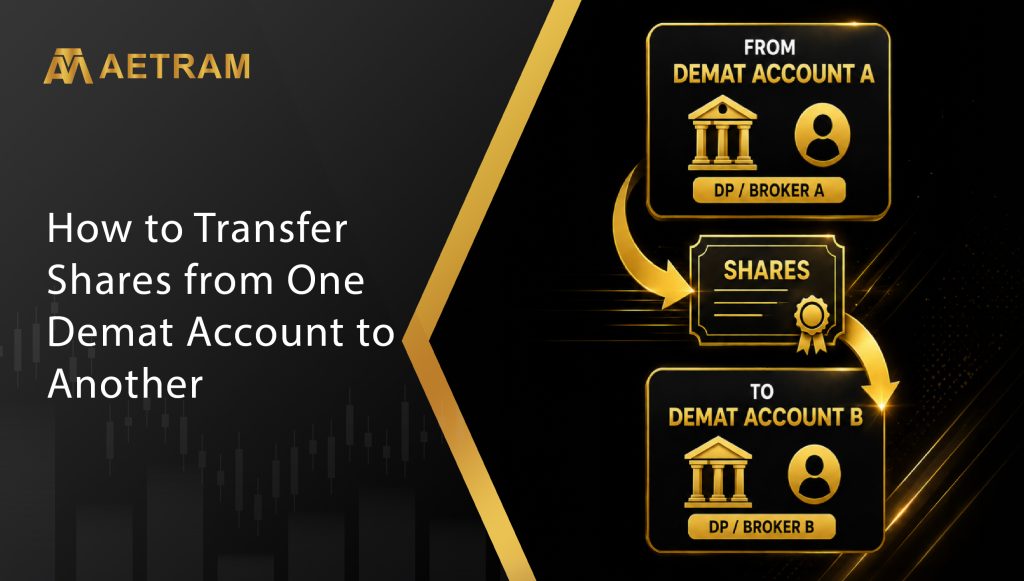
Suppose you have your securities lying in an outdated Demat account and do not use them anymore because you switched brokers or opened a new account. In any case, the next thought comes into your mind: Do you need to sell your shares and repurchase them? No, that’s unnecessary because you can easily move securities between Demat accounts and do not sell them on the stock exchange. It may be difficult to understand how it should be done, but it is possible after figuring out which option suits you.
What Does the Transfer of Securities Between Demat Accounts Mean?
A Demat account is where all your securities are stored digitally, similar to a bank account that keeps your money. If you have shares in one Demat account and you want to move them to a different one, then you can perform a securities transfer. Shares will move from your source Demat account to the destination Demat account. Since there will be no market sale of these securities, their transfer is not similar to selling and buying back securities.
Under What Circumstances Would You Require a Transfer of Shares?
Transfer of shares can be considered in various cases:
• Your stock broker has been changed.
• Your intention is to consolidate the investments in a single Demat account.
• You hold multiple Demat accounts and wish to simplify the tracking process.
• You need to transfer the shares between the accounts for your own financial planning.
• The intention is to transfer the securities to the Demat account of another individual.
It is important to ensure that the Demat account that you are transferring the securities to is active.
Transfer of Shares Post-change of Brokers
Let’s take the case of Prem who owns 50 shares of a particular company in his old Demat account held by Broker A. He has now opened a new Demat account with Broker B and wants to shift all his investments there. He doesn’t have to sell the 50 shares and then buy them back; he can ask for a transfer of the shares from his old Demat account to the new one, depending on the depository and DP process followed.
The shares will be transferred from one Demat account to another without being sold in the market. Hence, Prem doesn’t have to bother about purchasing the shares again at some other price because he has changed his broker.
What information do you need?
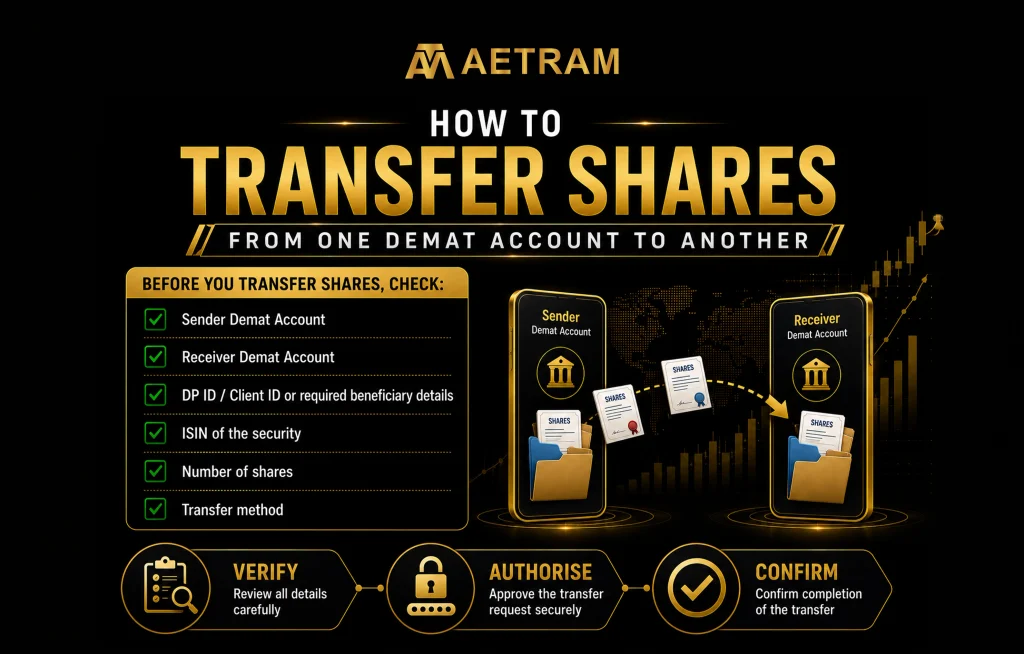
You will normally need to have information about both your Demat accounts, especially the 16-digit BO ID of the destination account. Based on the transfer mode and Depository Participant (DP), some additional information could be required, including:
• Depository name
• DP ID
• Client ID or BO ID
• ISIN of the security
• Quantity of shares
• Destination account details
The specific requirements may differ, so it’s essential to adhere to the guidelines provided by your DP.
How to Transfer Shares Online?
If your DP allows online transfers, then the process can be done electronically. The procedure may include the following steps:
• Register your destination account with the concerned depository system or your DP.
• Confirm your account details.
• Choose the securities for transfer.
• Enter the quantity of the selected security.
• Approve the transfer with the appropriate authentication method.
• The securities will get transferred to the Demat account of your destination account upon completion of the process.
For inter-brokerage transfer of shares, you may have to avail the facility from the respective depository or follow the guidelines from your DP.
What If Online Transfer Isn’t Available?
Where online transfer is unavailable or you would like the traditional route, you might have the option of using the Delivery Instruction Slip (DIS) for transferring the shares. Typically, you need to provide all the necessary details, such as the destination Demat account number and details of the securities that need to be transferred to it and give this instruction to your DP.
Do CDSL and NSDL Have Any Differences?
There are two securities depositories in India, namely CDSL (Central Depository Services Limited) and NSDL (National Securities Depository Limited). A Demat account will be held by a Depository Participant associated with either of these depositories. How the transfer happens could depend on whether the two Demat accounts belong to the same depository or not. Your broker or DP will be able to tell you how this works.
Is There an Implied Sale of Shares in a Transfer?
A mere transfer of shares is not necessarily an implied sale of the shares. In case you are only transferring your securities from one Demat account to another Demat account that belongs to yourself, there is usually no sale of the security since there is no change in ownership of the shares. Nevertheless, the tax treatment would depend on how you made your transfer and under what conditions. If the transfer is from one individual to another, then you should consider checking out the tax implications.
Are There any Charges?
The charges for the dematerialization process may differ according to the DP, depository and the kind of transfer being done. You should first refer to the charges currently levied by your DP before making the transfer.
Things to Check Before You Transfer
Before submitting the request, double-check:
• The destination Demat account number
• ISIN of each security
• Number of shares
• Depository details
• Whether the destination account is active
• Any applicable transfer charges
• Whether your broker requires additional documentation
A small error in the account or security details can delay the transfer.
Transfer vs Selling Shares: What’s the Difference?
| Transfer of Shares | Selling and Buying Again |
| Shares move between Demat accounts | Existing shares are sold |
| No market sale is involved | New purchase is made |
| Market price isn’t relevant to the transfer itself | New purchase happens at the prevailing market price |
| Ownership may remain unchanged when transferring between your own accounts | Sale and repurchase are separate transactions |
| May involve DP-related charges | Brokerage and other transaction costs may apply |
If all you wish to do is to move your current investments without selling them, the process of transfer should be sufficient to achieve that objective.
The Transfer Process Need Not Involve the Sale of Your Investments
Switching depositories or Demat account consolidation need not necessarily imply that you need to liquidate your investments to effect the switch. Direct transfer of securities would help you transfer eligible securities from one Demat account to another without actually selling them. You just need to ensure that you provide the right details and go through the procedure prescribed by the Depository Participant. What needs to be done is that before effecting such transfer, you check the latest process and charges involved in the transfer with your Depository Participant. The most important aspect here is that if you only wish to move your investments without selling them, then you can do so.
For more practical insights on Demat accounts, investing, stock markets and financial planning, explore Aetram.
Frequently Asked Questions
- Can I transfer shares from one Demat account to another?
Yes. Eligible securities can generally be transferred between Demat accounts by following the applicable depository and DP procedures. - Can I transfer shares between two different brokers?
Yes, provided both Demat accounts are active and the transfer is supported under the applicable depository process. - Do I need to sell my shares before transferring them?
No. A direct securities transfer does not require you to sell the shares first. - How long does it take to transfer shares?
The processing time can vary depending on the transfer method, depository and DP. Check with your broker or DP for the current timeline. - Can I transfer shares to another person’s Demat account?
It may be possible, but transfers to another person can have different documentation and tax implications. Check the applicable rules and requirements before proceeding.