What Happens If the Market Crashes Tomorrow?
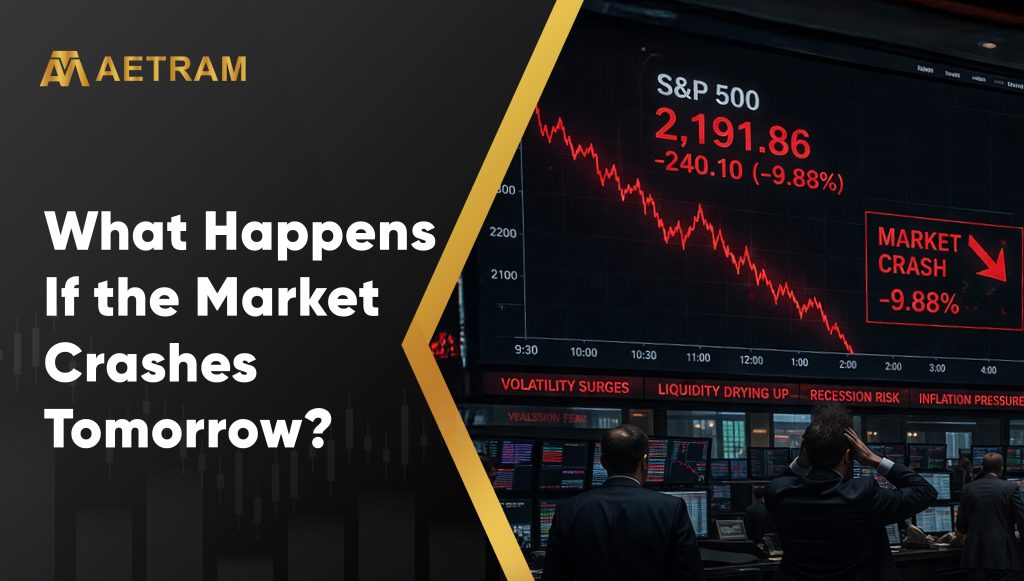
Thinking about a market crash can be intimidating as well because many perceive this event as an apocalyptic one. All stocks will collapse within hours, and you will lose your savings forever. In truth, however, a stock market crash is not a doomsday situation but rather something that happens occasionally and becomes a part of the financial cycle.
It Begins with Fear and Falling Prices
As with any other crash, the first thing that you have to expect during a market crash is falling stock prices and investors’ panic reactions. This could be triggered by economic changes, political events, and even some internal factors that are difficult to predict in advance. After the prices drop and people see their money slipping away, they react with fear and sell their positions. The result is even lower prices and continued panic.
Your Investments May Drop in Value
The first visible indicator of the coming crash is a drop in value of your portfolio. While the market falls, you will see decreasing values on your trading terminal. These values represent potential losses, not actual ones until you make decisions to sell. In case you are patient and continue trading, there is always a chance to recover your position.
Firms Are Affected as Well
While the repercussions of a market crash affect investors, firms may also experience challenges. The decline in stock prices may hinder companies’ ability to obtain financing or develop their business. Consequently, firms may opt to lower costs, postpone initiatives, or limit hiring. This can impact business conduct and expansion.
The Economy Might Enter a Recession
As firms curtail expenditures and consumers hold back on spending, the economy might enter a state of recession. In some instances, however, not all market crashes result in a protracted economic disaster. In fact, certain recessions are short-lived, and the economy rebounds much faster than anticipated.
The Markets Always Rebound
It is worth remembering that markets have always recovered from previous declines. After significant crashes in the past, markets eventually rebounded and experienced growth. Therefore, for long-term investors, a market crash is not always a source of losses but merely a temporary period prior to recovery.
More of an Impact Depends on Your Reaction Than the Crash
While every market crash affects everyone in the same way, it all depends on your reaction to the situation. Acting impulsively by selling when the market goes down can result in significant losses. On the contrary, reacting calmly and implementing your strategy can save you from any further harm.
What to Keep In Mind during a Market Crash
In case of a market crash today, it doesn’t imply anything except for the fact that prices will go down, the level of anxiety will rise, and for some time, there will be slower economic growth. However, as you already know, markets have their phases and cycles. What matters most about the event is not being afraid of it but knowing what to do in this situation.
If you want to learn more about market changes and make sound investments, contact Aetram.
FAQs
1. What happens to my investments if the market crashes?
Your portfolio value may drop temporarily during a crash. However, losses are only realized if you sell your investments at lower prices.
2. Should I sell my stocks during a market crash?
Selling in panic is usually not advisable. Market crashes are often temporary, and staying invested can help you recover when the market rebounds.
3. How long does it take for the market to recover after a crash?
Recovery time varies. Some crashes recover within months, while others may take years. Historically, markets have always recovered over the long term.
4. Can a market crash affect the overall economy?
Yes, a major crash can slow down business activity, reduce spending and sometimes lead to an economic slowdown or recession.
5. Is a market crash a good time to invest?
For long-term investors, a crash can offer opportunities to buy quality stocks at lower prices, provided you have a proper strategy and risk management.