What is Technical Analysis?
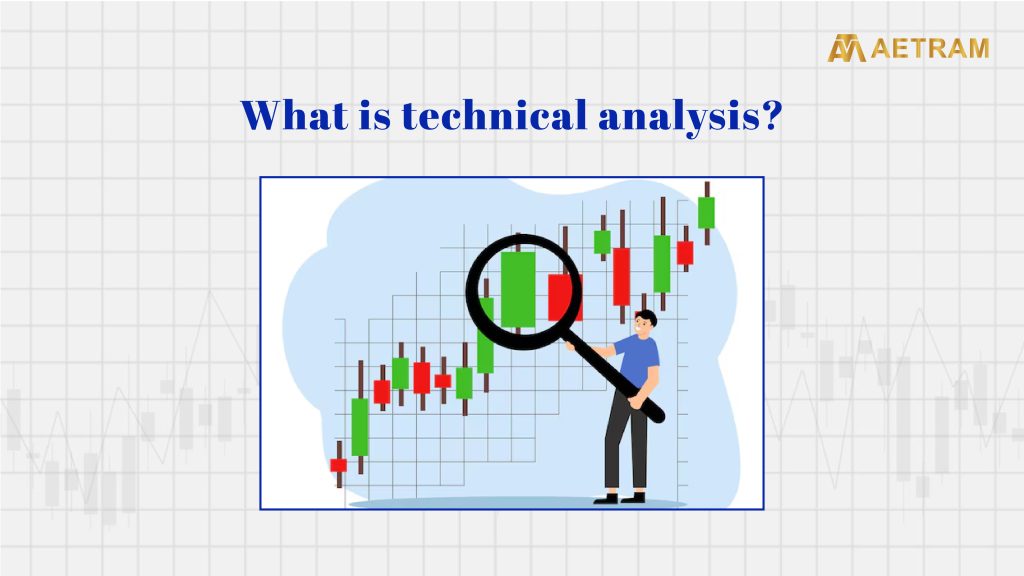
Investing has become quite popular in India and there are two ways of analysing stocks or securities. They are technical analysis and fundamental analysis. While fundamental analysis deals with understanding financial statements and ratios, technical analysis deals with studying historical price movements, current price action, chart patterns and trading volume.
Technical analysis is not a foolproof method in assessing a stock or a security, but it is used by a lot of investors and traders to identify the current trend of a security or forecast its future price direction, which can be upward, downward or sideways. It does not guarantee any right entry and exit points but gives you an idea about the overall trend and market sentiments. This kind of analysis may be used to determine if the overall market or a specific sector or a stock in bullish or bearish.
Technical analysis relies on the price action of a security and this includes opening, closing, high, and low prices over time, as well as the trading volumes executed during specific periods. Traders and investors use this data to understand the trend and direction of a security also try to predict future price behaviour.
Key assumptions in technical analysis
1. Price reflects all available information: According to technical analysis, market prices incorporate all known public data, including news, earnings, and economic indicators.
2. Prices move in trends: Markets tend to follow directional patterns—either rising (uptrend), falling (downtrend), or moving sideways sometime where there is accumulation or distribution.
3. Price patterns repeat: Some patterns keeps repeating that helps traders to recognize familiar formations such as head and shoulders, double top or double bottom, or cup-and-handle, etc. and take informed decisions.
Technical indicators
Technical analysis is not just about price charts like candlesticks, bars, or line graphs, but it also includes a wide range of indicators that analyse the price of a security over a period of time. The most commonly used technical indicators are moving averages, RSI (Relative Strength Index), MACD (Moving Average Convergence Divergence), Bollinger Bands, etc. that help traders to identify the trend, momentum, overbought or oversold conditions, potential reversals, etc.
You can combine many indicators to analyse price, improve your prediction of trend, reduce false signals and create a more robust, well-rounded trading strategy. Relying on one indicator may provide incomplete information and merging complementary indicators like trend indicators with momentum oscillators can filter market noise and indicate potential price movements with higher conviction.
Not just price, even volume data can be analyzed using technical indicators. It can be analysed using indicators like on-balance volume, money flow index, etc. Volume indicators in technical analysis measure the intensity of trading activity and this will give the traders crucial information like market strength and liquidity. By analyzing volume alongside price movements, traders will be able roughly determine how much the price of a stock can move. If a stock’s price rises without above average volume, then the trend is weak and unsustainable with low conviction from trades. This can be a bull trap or also indicate a bull trap.
Are these technical indicators available in trading platforms?
Many trading platforms have made technical analysis more accessible to investors and traders. Some of the popular charting tools such as TradingView and ChartIQ are integrated into the trading platforms and they offer advanced features including customizable indicators, easy-to-use interface, real-time data and backtesting capabilities.
These platforms are now widely adopted by retail traders and have become standard features on many platforms provided by discount brokerages. As a result, even traders who are new to trading and investing can access these tools to study price action and make data-driven decisions.
Conclusion
Technical analysis is similar to learning a new language or a skill and you can use technical charts indicators to read the markets which gives a lot of information to traders. In the beginning, technical analysis can be overwhelming and confusing. But, with practice, they will start to insights about where the market is headed. Whether you’re a day trader or a long-term investor looking for an entry or exit point, understanding technical analysis can improve your trading strategy.