Benefits of a Demat Account: 7 Reasons to Open One in 2026
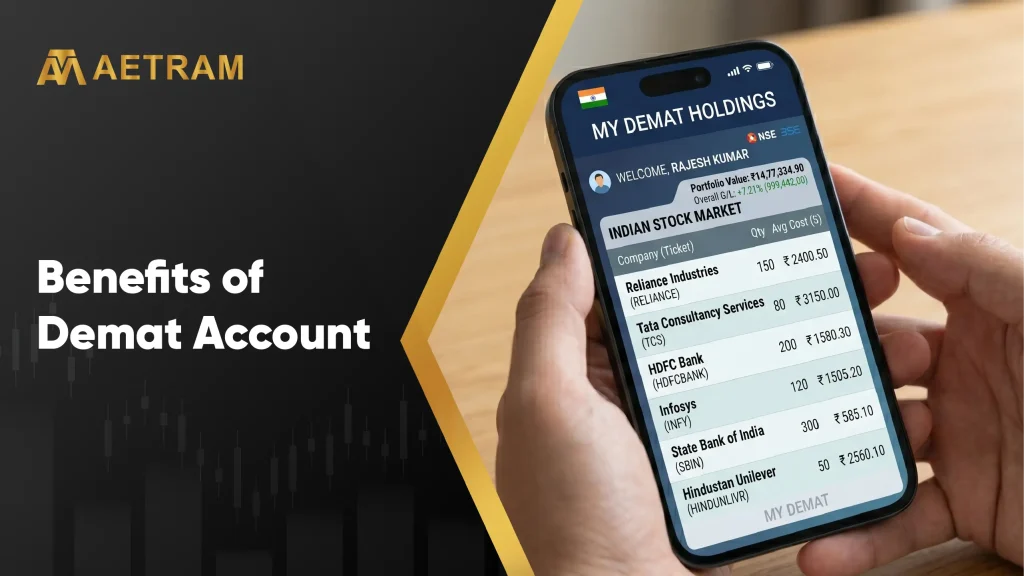
A Demat account, short for Dematerialized account, is needed to buy and hold stocks, futures and options contract, and other financial instruments in electronic form. When you buy the above mentioned financial instruments, they are credited in the demat account and when you sell these financial instruments, the shares or F&O contracts, etc. are debited from the account.
If you’re still holding physical share certificates or have not started investing because you feel the process will be complicated, here is why a demat account solves both problems and why it’s now mandatory for trading and investing in Indian markets.
Who can open a Demat account in India?
- Resident individuals aged 18 and above
- NRIs (Non-Resident Indians)
- Minors, through a guardian
- Hindu Undivided Families (HUFs)
- Corporate entities: public limited companies, private limited companies, LLPs, partnership firms, trusts, and societies
All these entities must have a valid PAN and comply with the required KYC rules with specific document needed for each type of entity.
Top benefits of a Demat account
1. Everything in electronic form
When financial instruments are stored in dematerialized form, it is held in electronic form and it can be accessed through the platform provided by your broker. All you need is an internet connection, a smartphone or computer, web app or mobile app and the login credentials provided byyour broker.
2. Fast, fully online account opening
With discount brokerage companies rising in India, a lot demat account have been opened. All stock broking service companies provide their own web app and mobile app. You can open a demat account with just a few steps in a few minutes right from you home. No need to visit any office. Even account verification is done online. This has led to crores of Indians opening a demat account and a few have more than one demat account.
3. Faster buying and selling
With demat account, it is so much easier and faster to buy and sell shares, futures and options contracts, etc. This was not the case with physical shares. With physical share, it would take a few weeks for this process to be completed. Electronic settlement means you can act on market movements in real time instead of waiting for paperwork to clear.
4. Seamless fund transfers
These days, demat account, trading account and your bank account are all linked. So if you want to add funds or if you are short of funds to buy a share or derivatives contract, you can easily transfer funds from your bank account and start trading and investing.
5. Higher market liquidity
Since more demat accounts have been opened compared to a decade back and it is easier to buy and sell stocks using a demat account, more liquidity has been created in the overall market. It is also easier to receive your money when you sell your holdings. Without a demat account, this would have been a tedious task because of the paperwork and the lengthy process of selling your physical shares to receive your amount in your bank account.
6. Lower risk of loss or damage
If you have your holdings in physical form, there is always a risk of it getting lost or damaged. This is not the case if you have your holding in dematerialized form. Even of you forget your credentials to access your demat account, it can be easily recovered or reset. This is the advantage of a demat account over a physical share.
7. Easy nomination and asset transfer
If you have a demat account, it is easy for you add a nomination and change an existing nomination. Adding nomination is important because it is easy to transfer your assets in case of any unfortunate event. Without a nominee, it will become too complicated to transfer your assets. You may have to submit a lot of documents like death certificate, succession certificate, etc. which are time-consuming and expensive. Updating the nominee ensures smooth transfer of assets, avoid any disputes, save time and legal costs.
How to open a free Demat account with Aetram
Opening a Demat account with Aetram Trades is completely online and takes only a few steps. By following these steps, you can easily open a free demat account with Aetram Trades.
All you have to do is keep a few documents handy. Keep your PAN, Aadhaar, and bank details ready, then follow our detailed step-by-step account opening guide to get started. The account opening process is completely online and 100% digital.
Conclusion
If you are trading or investing, a Demat account is not optional anymore, it is a necessity for all traders and investors in India. It makes buying and selling faster, safer, and far less time-consuming than dealing with physical certificates. It also gives investors and traders a lot benefits like easy nomination and conversion of shares into money quickly. Browse Aetram’s research reports to inform your first trade, then open a free Demat account with Aetram and start investing in minutes.
Frequently Asked Questions
1. Is it mandatory to have a Demat account to invest in stocks?
Yes. SEBI regulations require all listed shares to be held in electronic form through a Demat account; physical share trading is no longer permitted for most transactions.
2. Is opening a Demat account free?
Demat account opening with Aetram is free. Some brokers charge an Annual Maintenance Charge (AMC); To know more, check Aetram’s brokerage and charges for details.
3. Can I have more than one Demat account?
Yes, you can have more than one demat account, but you can only open one demat account with the same PAN with the same stock broker. In other words, the second demat account or the third demat account must be with a different stock broker or depository participant. Each stock broker can have different brokerage charges and annual maintenance charges, etc.
4. Is a Demat account safe?
Yes. Demat accounts are regulated by SEBI and maintained through depositories like NSDL and CDSL, with strong security protocols. Even if you lose your login credentials, they can be securely recovered.
5. What documents do I need to open a Demat account?
You’ll need a PAN card, Aadhaar (with a linked mobile number), bank account details, and a live selfie for KYC verification.