What Is Delisting of Shares?
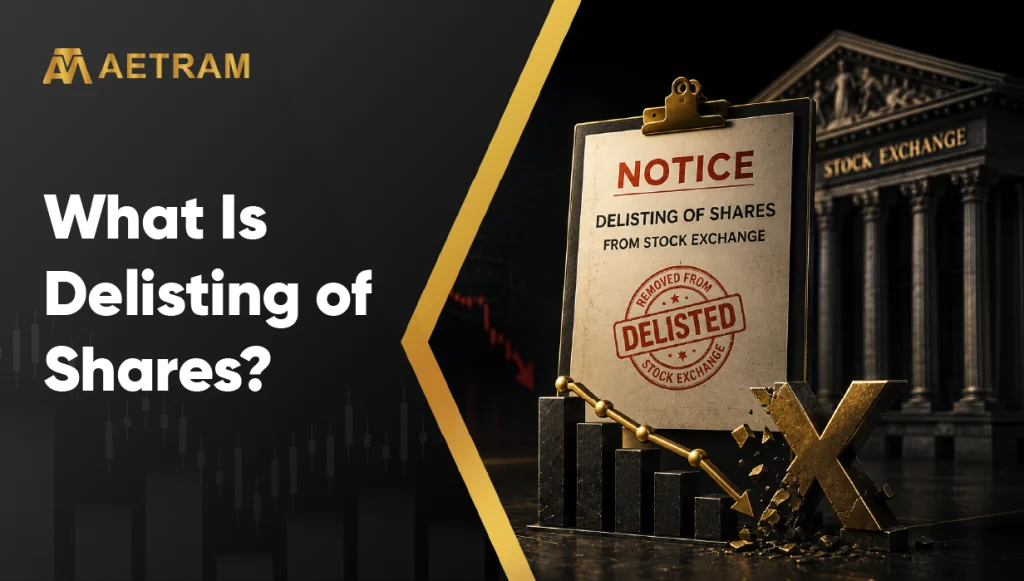
Consider this scenario where you open your Demat account and find out that the shares of a company that you have been investing in for several years have been delisted from the stock market. Since you have not sold the shares, the very first question that arises is “Where have my shares gone?” Such situations arise when the shares of a company are delisted. Though a situation of delisting sounds like something dangerous, it doesn’t mean that your shareholding will be affected in any way.
What does Delisting of Shares mean?
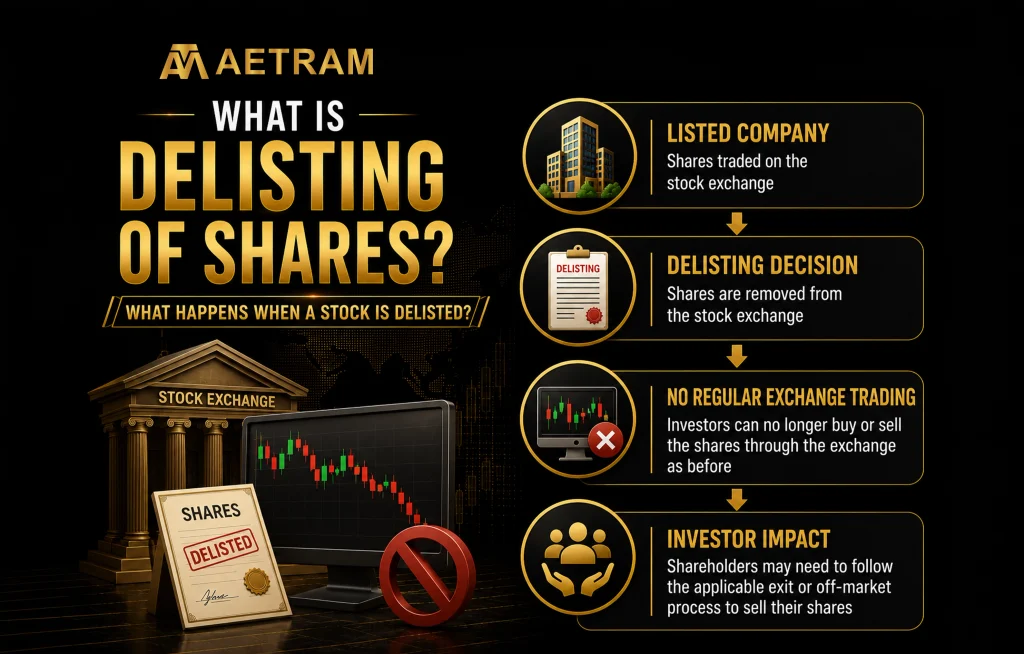
Delisting of shares is basically the action of taking off the shares of a company from a recognized stock exchange. As a result of such delisting, the shares will no longer be available for normal buying and selling from the exchange. It may happen that the company decides to delist itself from the stock exchange or the shares might be delisted from the stock exchange compulsorily due to some listing problems. As an investor, it is important to know why and how the delisting is taking place rather than just finding out that it is delisted.
Why Would You Decide to Delist?
There could be various factors influencing this decision of delisting. In the event of a voluntary delisting, one of the possible motives could be to privatize the company. There are regulatory and other compliances involved in keeping the stock exchange listing of a company. In the case of a mandatory delisting, the company is forced to do so because it has failed to comply with certain listing rules or is non-compliant for a long period of time. In each case, there could be very different circumstances prevailing and hence, an investor needs to know all about it.
What Will Be the Fate of Your Shares in Case of a Delisting?
If you have shares in a company being delisted, the shares will not just vanish from your Demat account. However, after the process of delisting is over, you will no longer be able to sell your shares in a stock exchange manner. In the case of voluntary delisting, there may be an offer to public shareholders to exit the company via delisting route. The terms, valuation method, timelines and eligibility criteria would be dependent upon applicable regulations and the offer itself.
Delisting Doesn’t Mean the Company Is out of Business
A prevalent myth is that the company goes out of business after the delisting process. But it isn’t necessarily so. The firm will be able to continue its activities despite the fact that its stocks aren’t traded anymore. Delisting applies to the listing and trading of the stock, but doesn’t mean the company is out of business. At the same time, there may be certain problems with the firm, if the delisting was mandatory and investors need to analyze the situation.
How Does Delisting Affect Investors?
The main problem for shareholders may be related to the liquidity of their investments. While the stock is listed, the investor can trade it via the stock exchange with the known market price.
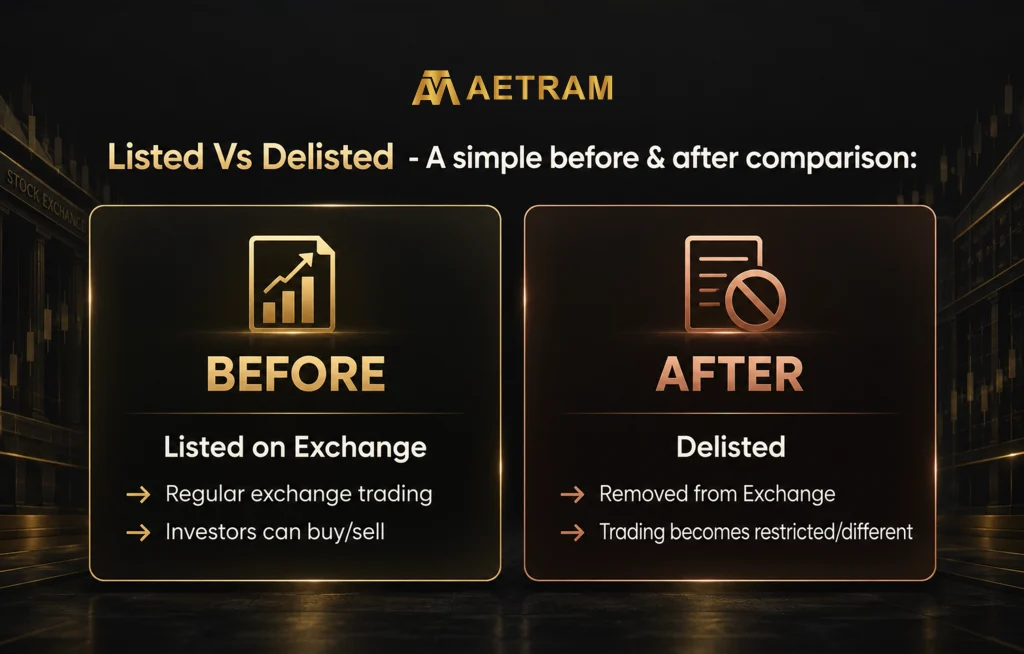
| Listed Shares | Delisted Shares |
| Traded on a recognised exchange | Regular exchange trading is unavailable |
| Market price is readily available | Price discovery can be more difficult |
| Generally easier to buy or sell | Liquidity can be limited |
| Public market participation | Exit may depend on applicable mechanisms |
Reduced liquidity might affect the investors as the process of exiting the investment will become harder.
Should You Take a Delisting Offer?
In the case of voluntary delisting, when the exit offer is being provided, shareholders need to analyze whether they should take the offer or not. Don’t be tempted to accept the offer because of the price, but rather consider all factors including the performance of the company, its prospects, value, the price at which you have acquired the shares and the conditions of the delisting. The fact that after delisting you will be facing much less liquidity needs to be taken into account as well.
What Do Investors Need to Look for?
If you receive a delisting announcement, pay attention to:
- Why the company is being delisted
- Whether the delisting is voluntary or compulsory
- The proposed exit mechanism
- The price or pricing process
- Important dates
- Eligibility requirements
- The company’s financial and business position
Always refer to official company and exchange communications rather than relying solely on market rumours.
What About Taxes?
Depending on the fate of the shares involved in the deal and how the transaction is made, there could be implications on taxes. For instance, selling the shares using an appropriate exit strategy could attract capital gain taxes. Holding onto delisted shares also has its own implications. Because tax treatment largely depends on the nature of the transaction and your situation as an investor, it is recommended that you first verify the relevant tax regulations for yourself or contact a professional tax advisor.
Do Not Panic If Your Stock Has Been Delisted
Discovering that one of your investments has been delisted may sound very intimidating, but it does not necessarily mean that your shares have become worthless or gone into thin air. It all boils down to figuring out the reasons behind delisting, your shareholder rights and exit strategies that you have at your disposal. Forget about what the headline says and make sure to carefully read the official announcements and get acquainted with the conditions of the delisting. The more informed you are, the easier it will be for you to decide.
For more practical insights on stock markets, investing and financial planning, explore Aetram.
Frequently Asked Questions
1. What is delisting of shares?
Delisting is the removal of a company’s shares from a recognised stock exchange, after which the shares are no longer available for regular trading on that exchange.
2. Do I lose my shares if a company is delisted?
No, your shares do not automatically disappear from your Demat account. However, your ability to trade them through the stock exchange may be affected.
3. Can I sell shares after a company is delisted?
This depends on the type of delisting and the applicable process. In a voluntary delisting, eligible shareholders may receive an opportunity to exit under the prescribed mechanism.
4. Is delisting the same as a company shutting down?
No. A company can continue operating even after its shares are delisted. Delisting relates to the company’s stock exchange listing, not necessarily its business operations.
5. What should I do if a stock I own is being delisted?
Read the official announcements carefully, understand the reason for delisting, review the exit mechanism and important dates and evaluate your options before making a decision.