What Are The Risks To India’s Farm Output In 2026-27?
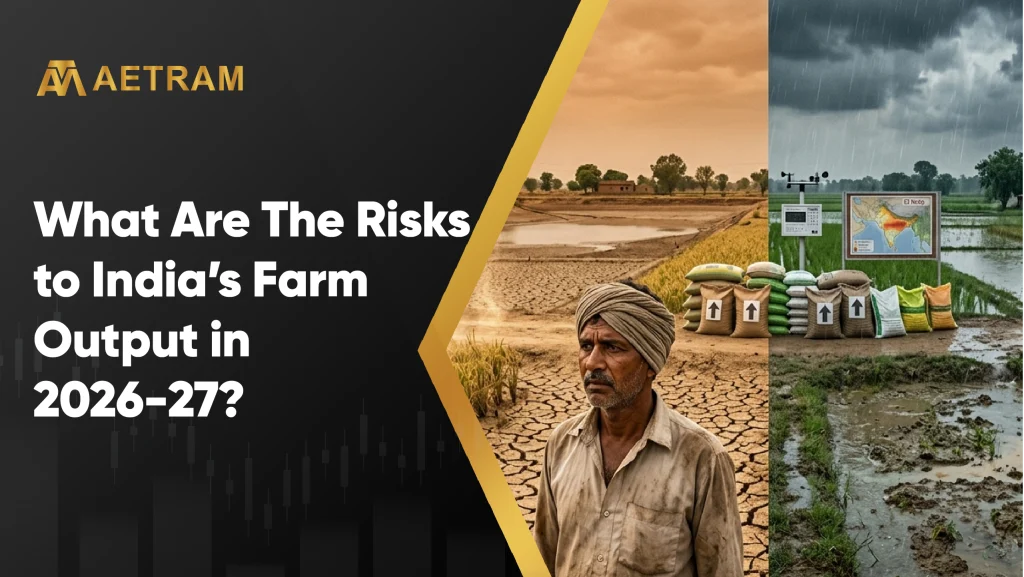
India’s agriculture sector is very important to the economy as it supports nearly 50% of the population. Even in 2026, many villages and families are dependent on agriculture for their sustenance and survival.
So, if the agriculture sector is disrupted, then it will have an impact on the livelihood of many farmers and also the Indian economy. India’s agriculture sector which has weathered plenty of storms over the decades is expected to witness uncertainty in the coming months as the south-west monsoon season has set in.
There is not just one risk factor that is likely to play spoil sport with respect to the sector. A weak monsoon forecast has collided with a geopolitical shock to global fertilizer supply chains. This has forced economists, policymakers and bankers to recalibrate their assumptions about rural growth, food inflation and government finances for the year ahead.
For a sector that still contributes roughly 15% to GDP, even a moderate disruption can create ripples in urban and rural India. In this blog, we will take a look at what’s driving the risk and what could soften the blow.
Why Farm Output Matters
Though India has become a service-based economy, it is easy for us to think of agriculture as a shrinking share of India’s economic story. It is true in terms of GDP, but its influence on the broader economy is disproportionate to its size.
Income from farming is what drives rural consumption which leads to higher demand for two-wheelers, tractor sales, housing, FMCG, etc. Food prices feed directly into headline inflation, which shapes RBI policy and the central bank has a separate metric called Consumer Food Price Inflation.
Further, agricultural credit quality affects the health of rural and semi-urban bank branches. When farm output wobbles, the tremors show up in quarterly results far removed from the farm itself — in retail sales data, in bank asset quality, and in the Consumer Price Index print that everyone from mutual fund managers to policymakers watches closely.
Monsoon Shortfall and El Nino Threat
India is reasonably a big country area-wise and many parts of India are arable but the irrigation system is not good. That’s why many parts of India depend on the south-west monsoon and north-east monsoon. The single biggest swing factor for 2026-27 is likely to be the monsoon and the early signals are not encouraging.
The Reserve Bank of India released an Annual Report for 2025-26 which said that the outlook for the agriculture sector for next year is dependent on the progress and distribution of the south-west monsoon. It also warned that if there is any likelihood of El Nino conditions, then it poses a downside risk to the agriculture output.
Private forecasters have also pointed out that the seasonal rainfall will be at around 94% of the long-period average which is a below-normal classification. This matters because it follows a strong 2025 monsoon and the shift is expected to be like the disruptive 2023 deficit that dented Kharif output, leading to dampening of rural consumption for months afterward.
If 2026 happens to be like 2023 then it would impact the cultivation and production of paddy, pulses, cereals, oilseeds, etc. This is crucial since a large share of India’s cultivated area remains rain-fed rather than irrigated.
Uneven Rainfall Across Key States
As the rain shortfall is expected to be spread unevenly, the risk associated with it is harder to assess. The deficit is likely to be concentrated in the second half of the season which is August and September.
Geographically, north, west and central India is likely to be affected the most. Punjab, Haryana and Rajasthan may particularly be vulnerable during the critical late-season months. Eastern and northeastern states are expected to fare comparatively better.
This regional unevenness matters for two reasons. First, Punjab and Haryana are core grain-producing states, so a shortfall there has bigger implications for national foodgrain stocks.
Second, it means the aggregate rainfall number can look only mildly “below normal” while masking serious localized stress. This kind of stress shows up in farmer distress and localized price spikes rather than in the headline statistics.
Fertilizer Costs Spike Sharply
In addition to monsoon uncertainty, farmers are facing another issue which is not due to domestic reasons but due to geopolitical conflict. The escalation of the US-Iran conflict, which intensified with strikes beginning in late February 2026, disrupted shipping through the Strait of Hormuz. This is the route that carries a substantial share of the world’s fertilizer trade along with crude oil and LNG.
Due to the conflict, the price of fertilizers increased quickly. Urea prices, ammonia, phosphate, etc. at major import hubs increased. For a country that imports a significant portion of its fertilizer requirement, this has a direct impact on the cost of cultivation as the cost would increase at a time when farmers can least absorb it.
Disruption at Strait of Hormuz
It’s worth understanding why this particular chokepoint matters so much. The Strait of Hormuz is a critical route for global commodity flows which carries a large share of globally traded fertilizer inputs like ammonia, phosphoric acid, and sulphur, alongside roughly a fifth of global LNG and over a quarter of globally traded oil. Any disruption here doesn’t just nudge prices; it can trigger the kind of sharp, compressed price moves seen in the fertilizer market this year.
For Indian agriculture, which relies heavily on imported raw materials for fertilizer production even when the final product is manufactured domestically, this translates into higher subsidy outlays for the government and higher out-of-pocket costs for farmers who aren’t fully covered by subsidized pricing.
Rural Credit Quality at Risk
The financial sector angle here deserves attention from anyone tracking bank stocks or NBFC exposure. Banks with significant rural and agricultural loan books face a real risk of rising non-performing assets if crop output falls short and farmer incomes take a hit. This isn’t hypothetical because the 2023 monsoon deficit produced visible stress in rural credit quality at the time, and a repeat scenario in 2026, compounded by higher input costs that weren’t a factor back then, could make the current cycle more damaging to farmer margins and loan servicing capacity.
Investors watching microfinance institutions, rural-focused NBFCs, and regional banks with concentrated agri-loan portfolios would do well to track monsoon progress reports through the third quarter of the fiscal year.
Government’s Fiscal Burden Widens
A weak monsoon combined with elevated input costs creates a compounding fiscal problem. Higher fertilizer subsidies, increased food subsidies to keep a lid on retail inflation, under-recoveries on petroleum products, and greater demand for the rural employment guarantee scheme all draw on the same limited pool of government resources. During the 2023 deficit, demand under the rural jobs scheme surged by roughly 28-30% during the affected months, and a similar pattern is anticipated this time if the shortfall materializes as forecast.
This matters for the fiscal deficit math that bond markets watch closely, and it’s one of the reasons agriculture-related risks tend to show up in discussions well beyond the farm sector itself.
Food Inflation Pressure Builds
The RBI has projected CPI-based inflation for FY2026-27 is likely to be at 5.1%. with risks tilted slightly to the upside and farm output is one of the swing factors behind that assessment. If there is a weak harvest, then it tends to push up prices for cereals, pulses and vegetables. This is expected to have an impact on India’s inflation basket.
However, the central bank has noted that food stocks remain strong and farm output has been broadly stable in recent years, which can provide some relief. But a shortfall in monsoon along with costly raw materials could test the resilience of the agriculture sector and economy also.
Policy Support and Mitigating Factors
The RBI has pointed to several offsetting factors that could soften the impact of a weak monsoon. A better irrigation system, new technology adoption by farmers and targeted government initiatives are all expected to support the sector.
The Union Budget has also proposed Bharat-VISTAAR, a multilingual platform integrating digital agricultural infrastructure with AI-based advisory services. This initiative is aimed at helping farmers make better decisions around crop choice and input use.
On the weather front, there’s a genuine silver lining too. Positive Indian Ocean Dipole conditions are expected to emerge toward the latter part of the monsoon season, which historically supports enhanced rainfall over India and could partially counteract the El Niño drag. Continued Minimum Support Price support across 22 crops, expanded crop insurance coverage under the PM Fasal Bima Yojana, and direct income transfers under PM-KISAN also provide a partial buffer for farm households against income shocks.
Conclusion
In FY27, India’s farm sector may face a two-front challenge. One is a shortfall in monsoon in regions that matter the most with respect to grain output, Second is a rise in fertilizer cost which may come at the worst possible time in the crop cycle.
Both the risks are not so severe on its own to derail the broader economic growth story of India. The RBI’s own projections still point to resilient overall GDP growth.
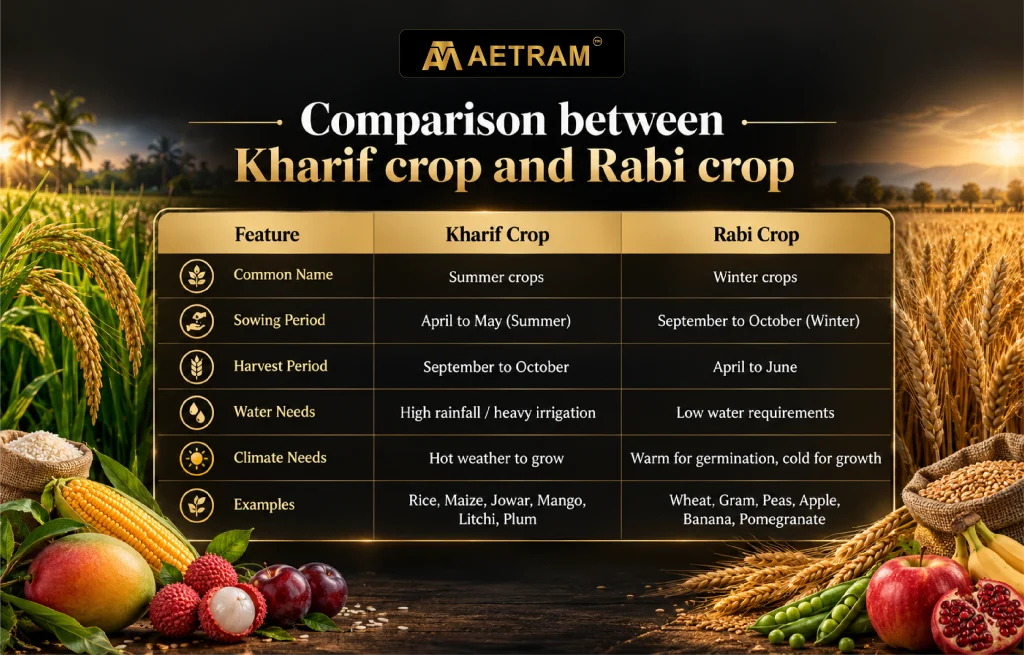
But the combination of these two reasons may deserve close tracking through the Kharif and Rabi crop seasons. If you are an investor with any exposure to rural consumption themes, agri-input companies or banks and NBFCs with concentrated farm-credit books, then you must be cautious.
The next few months, particularly, how the monsoon distributes itself through August and September, will likely determine whether this turns into a manageable soft patch or a more consequential drag on rural India’s economic momentum.
Frequently Asked Questions (FAQs)
1. What is the biggest risk to India’s farm output in 2026-27?
The biggest risk is a below-normal monsoon linked to El Niño conditions, which was flagged by the RBI in its 2025-26 Annual Report. States in north, west, and central India are likely to be affected.
2. How is the West Asia conflict affecting Indian agriculture?
The US-Iran conflict disrupted shipping through the Strait of Hormuz which is a key route for fertilizer raw materials. As a result prices of urea, ammonia,and phosphate could spike sharply and also increasing cultivation costs for Indian farmers.
3. Which states are most vulnerable to the 2026 monsoon shortfall?
Punjab, Haryana, and Rajasthan face the highest risk, especially during August and September, while eastern and northeastern states are expected to see comparatively better rainfall distribution this season.
4. Will weak farm output affect food inflation in India?
Yes, the RBI has projected CPI inflation at 5.1% for 2026-27 with slight upside risk, and a monsoon shortfall combined with higher input costs could add further pressure to food prices.