Why Constantly Watching the Market Can Hurt Your Trading?
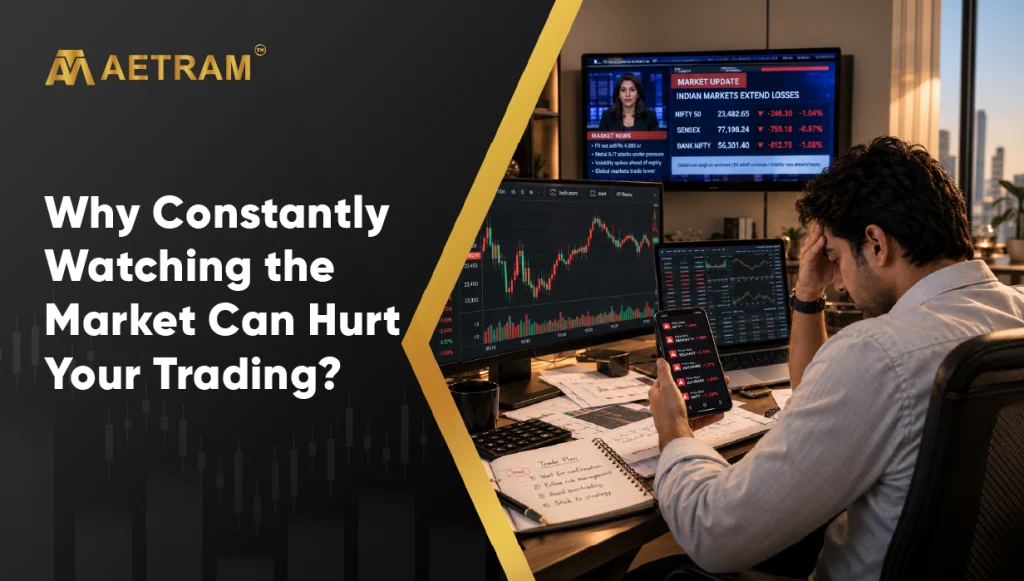
One enters into a trade only after carefully analysing the stock. One has a plan for entry, an exit point through stop loss and one knows what one’s target is. And then one begins to monitor the price. The price falls by 1 percent. One monitors the price again and sees that the price falls by another 0.5 percent. One wonders whether one should get out. A few minutes later, the price rises up and then one regrets having exited. This is one of the hidden dangers of constant monitoring of the market. Sometimes, more time spent on the screen does not necessarily imply more effective trading. There are times when constant price movements could even increase the emotional response of a trader, prompting unnecessary trades and distracting him/her from the original strategy he/she was planning to implement.
Every Market Movement Does Not Require a Response
There can be lots of reasons why stocks can go up and down during the day, and some of them are really important, whereas some of them are just fluctuations. When you constantly keep your eye on them, even the smallest movement can begin to seem like something big. For instance, consider the situation in which you have taken a position in a stock due to the fact that its trend was fitting your approach and its technicals were good. A sudden fall by 1% in the stock price can make you feel scared without altering anything at all. And, in case you keep checking constantly, you will find it hard to distinguish noise from signals.
Constant Monitoring Can Create Emotional Decisions
Since trading requires dealing with uncertainty, constant monitoring can heighten its feeling. A fall of prices will generate fear. A surge in the prices will bring about some excitement. A fast reversal will make the trader frustrated. Such emotions can affect decisions which were meant to be rational in nature. For example, from “Has my trading setup changed?” one starts asking questions such as “Why is the stock falling at this point?”
It Can Lead to Overtrading
While not keeping track of the market, one can be happy to wait for his trading setup. But while constantly watching it, one will observe many price moves. A stock breaks out; another one makes a sudden jump; and there is a third stock that falls hard and seems to recover. All of these price movements can become opportunities for a trade. This way, one can be tempted to start trading just for the sake of trading and not for the sake of profit. Such an approach can result in positions not being consistent with the initial strategy.
You May Start Following Price Fluctuations
Watching the stock price all the time might also raise the temptation to trade based on price action. Imagine your stock rises 4% following some major news event. Being able to see such fluctuations in real time will cause fear of missing out. You will think: “If I do not enter now, then I will miss the whole thing.” However, there is no guarantee that fast-rising stock is a good buying opportunity. By the time you make a decision, it will already be up quite a lot. Jumping into a stock just because it is rising puts you into a completely different risk profile than what you wanted initially. The same goes for falling stocks.
Constant Observation Will Lead to a Change in Stop Loss
Stop loss is meant to help determine how much risk one is willing to tolerate before executing the trade. However, constant watching will lead to changing that plan. Assume that you have entered a trade with the stop loss already determined. The stock is close to reaching that stop but hasn’t done so. You will adjust the stop in an effort to prevent taking a loss on the stock. If the stock drops even more, you may continue adjusting the stop. Ultimately, the risk of the trade becomes very different from what was initially set.
Monitoring Should Correlate With Your Trading Timeframe
One of the most effective methods of preventing unwanted impulses is to correlate the frequency of your monitoring with your strategy. Suppose a trader makes his decisions according to a long-term trend but monitors the stocks every few minutes. The strategy relies on a more extended timeframe. At the same time, the decisions are taken under the influence of short-term price fluctuations. There is a lack of correspondence. Depending on whether you have an intraday strategy or a longer-term one, the degree of monitoring can vary significantly.
Too Much Screen Time Can Create Decision Fatigue
Trading involves making decisions repeatedly. Which can be:
- Should you enter?
- Should you exit?
- Should you hold?
- Should you book profits?
- Should you move the stop-loss?
- Should you take another trade?
Such continuous decision-making can mentally become exhausting. The higher the fatigue, the more impulsive and inconsistent traders will become. At times, this may lead to executing a trade because there was nothing else going on, and you felt like you needed to do something. However, being a market player does not mean you always have to be engaged. Non-participation may also be a correct strategy.
The Difficulty in Overcoming FOMO
Continuous monitoring of the market may make FOMO especially strong. While you observe a certain stock rising very fast and some other stock breaking out, suddenly you spot yet another stock with a huge price movement. Thus, the stocks you were following start looking boring. It becomes tempting to change your plan and pursue whatever has been moving. However, the opportunities provided by the market will not vanish due to your non-participation in a particular price movement.
How to Keep Tabs on the Market Without Being Too Reactive
The answer is not in being ignorant of the market. Rather, devise a way by which you will know what times to be paying attention.
Plan First Before Entering into a Trade
Before entering into a trade, first determine:
- Conditions for entry
- Stop loss
- Target/exit conditions
- Position size
- Acceptable risk
- Reason for entering into the trade
Now that you know all this, you already have a plan for handling any kind of price movement.
Use Price Alerts
When waiting for your stock to hit a certain price, there is no need for you to monitor your stock every now and then. Price alerts will tell you when your stock hits the certain level you are monitoring.
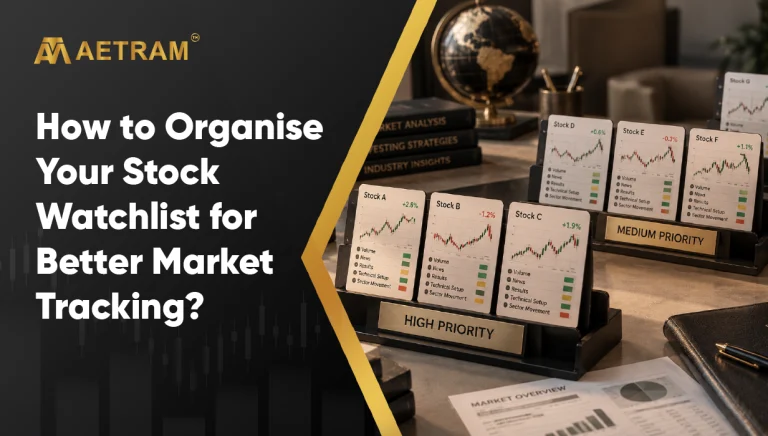
Create Specific Watch Lists
Rather than monitoring hundreds of stocks, you will need to make a more focused watch list according to your requirements. Such as:
- Stocks for long-term analysis
- Stocks with trading setups
- Sector-wise stocks
- Stocks at crucial price points
- Stocks having an important event or results coming up
It helps you to differentiate between stocks that you need to keep track of and those which you just want to keep track of.
Set Specific Times to Review Positions
According to your strategy, you may want to set certain timings to monitor your stock rather than always looking at it. If you have a long term strategy, then this might require periodic reviews rather than intraday actions.
Step Back a Little
If you find yourself feeling stressed due to the habit of checking your positions again and again, then taking a break from your screen will help. It doesn’t mean that you will stop trading in the market. You need to do it to analyze things in a better way.
Awareness versus Reactivity All the Time
Knowing about the market is good. Reacting to it all the time is something else. Your monitoring system should enable you to recognize crucial developments but not to overreact to each small development. Your trading strategy should tell you what is important; there will be many ticks on the price graph which do not need to attract your attention.
Trading with Your Strategy, Not Each Tick
The market does not need your constant attention. Prices will go up and down and turn around during the course of a day. Certain movements will be important for your strategy; certain others will not be important. With clear criteria for entering or exiting the trade, sound risk management and alerts together with a focused watchlist, you can stay engaged with the market without being affected by each fluctuation.
Looking for a smarter way to monitor stocks? Explore Aetram.
FAQs
1. Can watching the market too often affect trading decisions?
Yes. Constant monitoring can increase emotional reactions to short-term price movements and may encourage impulsive decisions.
2. Does more screen time make someone a better trader?
Not necessarily. The value of screen time depends on the trading strategy. Watching the market continuously can sometimes create unnecessary noise and distractions.
3. How can I avoid overtrading?
Having predefined entry and exit conditions, limiting unnecessary trades, maintaining a focused watchlist and following a risk-management plan can help.
4. Are price alerts useful for traders?
Yes. Alerts can notify you when a stock reaches a specific level, reducing the need to constantly monitor its price.
5. Should long-term investors watch the market every day?
Not necessarily. Long-term investors generally have a longer investment horizon, so constantly reacting to short-term price movements may not align with their investment approach.