What is Moving Average in Technical Analysis?
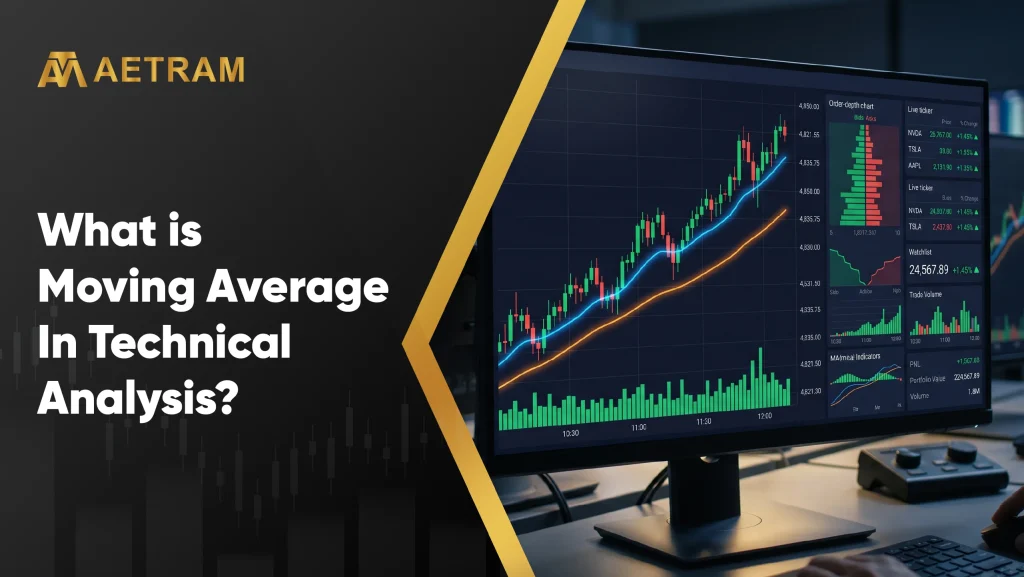
Technical analysis includes a lot of indicators and each indicator has its own benefits, but one of the most widely used technical indicators is the moving average.
Moving average is the average price of a security over a specific period of time. It is called moving average because it takes the latest price of the security for that specific period and the average is calculated periodically. Let us a take a look at moving averages in detail and how it can be used for understanding markets in this blog.
Three Popular Types Of Moving Average
There are many types of moving average but only the most popular ones are discussed in this session. Though you do not have to calculate the different types of moving average as the technical analysis software applications will do it for you, it is better to understand the different types. The moving average can be calculated on opening, closing. Low and high prices.
Simple Moving Average (SMA)
This type of moving average is the most straightforward among the three types of moving averages and the easiest to calculate. In SMA, the average price is calculated by giving equal weightage to all the data points or prices.
The formula is:
SMA = (Sum of Closing Prices for n Periods) / n
For example, to calculate a 21-day SMA where n = 21, you will add the closing prices of the past 21 days and divide by 21.
Exponential Moving Average (EMA)
EMA is another way to calculate moving average where the this method gives more weightage to the most recent prices and EMA is more responsive to the current market conditions compared to SMA.
The formula is:
EMA = (Current Price – EMA Previous Day) x Multiplier + EMA Previous Day
Here, the multiplier is calculated by the formula: 2 / (1+n), where n is the period. For example, if you want to calculate for EMA for 10 days, then the multiplier would be 2 / (1 + 10) = 0.182.
Weighted Moving Average
Weighted Moving Average is similar to EMA where the recent prices are given more weightage and older prices are given less weightage, but the there is no multiplier factor, similar to EMA formula, while calculating WMA.
The formula is:
WMA = (P1*n) + (P2*(n-1)) + ((P3*(n-2))/ (n+n-1+n-2)
Where P1 is the closing price of today, P2 is the closing price of yesterday, P3 is the closing price of the day before yesterday and so on. ‘n’ is the weights assigned to each period and these weights can be based on various criteria.
For example, to calculate WMA for three days and if we are using linear weightage then n=3, n-1=2, n-2=1and so on.
Why To Use Moving Average
Moving average has a lot of uses for traders and investors as it shows the underlying trend. The various uses of moving average are as follows:
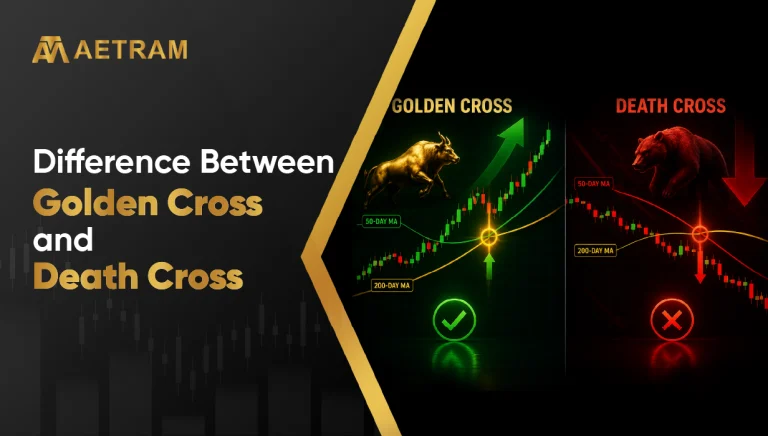
Identifying trends: Moving average is really useful in identifying trends which includes upward trend, downward trend and sideways trend. When the price of a security is continuously above a moving average, it denotes there is strong momentum and buying interest among market participants. If the price of a security is below a moving average for a period, it denotes there is selling pressure. Moving average also indicates if a security is in sideways trend or consolidation phase. This could be either accumulation or distribution phase.
Noise reduction: Moving average helps in reducing noise in the financial markets by smoothing prices. Financial markets can be volatile, which is nothing but noise that is caused by rumours, sentiments, news, etc.
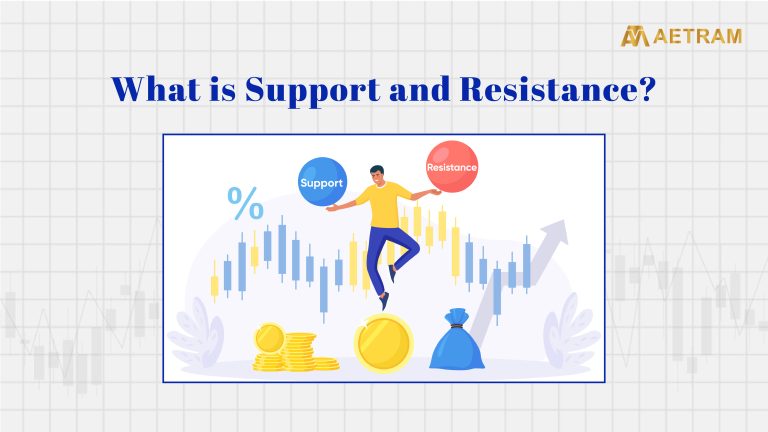
Support and Resistance: Moving average can be used as a dynamic support and resistance levels. Sometimes when the price of a security nears a moving average, there are chances the direction may change. It may also signal potential reversals.
Entry and Exit: Traders and investors can use moving average to identify any buying and selling opportunities. Moving average can also be used to identify if you can go long or short based on breakout or breakdown of a security’s price.
Compatibility: Moving averages are consistent and compatible across various asset classes like stocks, futures and options contracts, commodities, forex, cryptocurrencies, etc. It is a versatile technical indicator which can be used across various timeframes also and you can tweak according to your trading plan and strategy.
Conclusion
Moving Average is a simple and effective technical indicator that acts like a GPS in providing direction to both new and seasoned investors. It can also indicate trends and momentum, and provide support or resistance levels. Having said that, moving averages are even more useful when it is paired with other indicators and strong risk management rules. This would help them in understanding the market better and make data-driven decisions in real-world market conditions.