What are the various risks in bond investing?
Bonds are one of the safest investment avenues for all kinds of investors, be it conservative or aggressive. This asset class brings in the much required balance to one’s portfolio as they are less volatile than the stock market and provide steady income to bond investors. Bonds are issued with different tenures and interest rates. But no financial instrument is immune to risks and bonds also carry some set of risks which we will look into in this article.
Interest Rate Risk
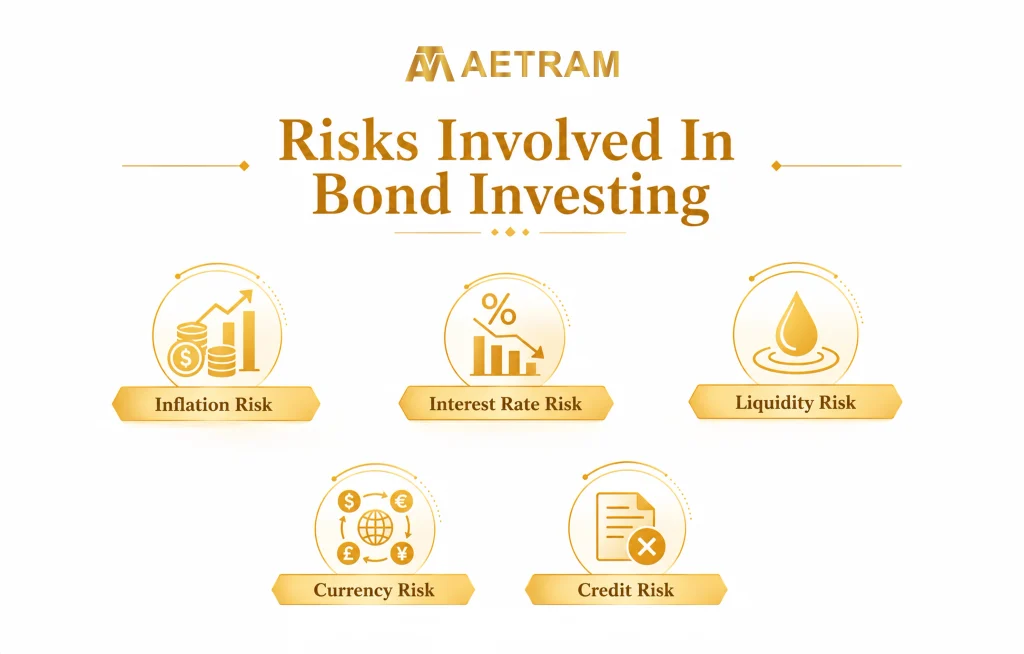
Bond prices and interest rates are inversely proportional and they move in the opposite direction. When interest rates rise, bond prices fall and vice-versa. So this increase and decrease in interest rates will affect the bond prices and make it volatile. Not all bonds with different tenures are affected in the same way when there is a change in the interest rate. Bonds with longer duration are more affected and are more prone to risk due to a change in interest rates. Having said that, bonds with shorter tenure are also prone to interest rate risk, which is also known as price risk, but to a lesser extent.
Inflation Risk
A rise in the price of goods and services is called inflation and it poses risk to bondholders. Higher inflation will weigh on the purchasing power and it will erode the value of the money. If the rate of inflation is higher than the interest rate received by the bondholder, it will lead to negative returns and lower purchasing power. To avoid this, the bondholder can purchase inflation-indexed bonds or bonds with floating rate. These bonds are likely to protect the bondholder’s principal and interest payments as they will adjusted accordingly.
Market Risk
Bonds can succumb to market risk due to overall systematic and structural problems in the economy. This type of risk affects the entire market due to economic slowdown, recession, high inflation, higher unemployment rate and worsening macroeconomic factors.
Credit Risk or Default Risk
Credit risk in a bond happens when the bond issuer fails to pay interest or the principal amount to the bondholder. Governments may default on bond payments due to political instability in the country, rising debt levels that are unmanageable and not repayable, slowing economy or economic recession, etc. Corporates can default on bond payments due to negative cash flow or poor performance year after year. Even corporate governance issues can impact bond payments negatively. Due to the credit risk, the investor can lose some or all of the interest payments and principal amount.
Liquidity Risk
Liquidity risk in bonds arises when you are unable to sell the bonds you hold and raise cash. This situation is due to lack of buyers, low trading volumes and higher bid-ask spread and it makes the investor cash strapped. Liquidity risk is more prevalent among corporate bonds compared to government bonds.
Currency Risk
Currency risk are faced by investors who invest in international bonds or bonds issued by foreign governments or corporations. If an investor invests in US dollar denominated bonds and the US dollar weakens against other world currencies like the euro, Japanese Yen, etc., then the bondholder is likely to get lower returns on their investments.
Rating Downgrade
Bonds issued by governments and companies receive ratings downgrade from credit rating agencies as the institutions signal their inability to pay debts. This is called rating risk. The creditworthiness of the bond issuer might decline due to worsening financial health, poor economic conditions, bad management decisions or government policies. This may result in investors dumping the bonds or avoiding the bonds altogether or demanding higher yields. Consequently, it will increase the borrowing costs for the issuer.
Reinvestment Risk
If your reinvestment of money does not yield you the same rate of interest as the earlier bond, then it will result in reinvestment risk. When a bond matures, you will receive the money, and due to lack of opportunities, you invest in bonds with lower interest rates. This will affect your return on investment and financial objectives.
Call Risk
Callable bonds have call risk. These callable bonds are those bonds which can be called back by the issuer before the maturity date. The issuer of the bond does it because the interest rate falls and the issue can issue new bonds at a lower interest rate.
This affects the interest payment for investors and the investor is forced to invest in bonds with lower interest rates resulting in lower-than-expected yields.
Conclusion
As an investor, you must understand all the above mentioned risks associated with bonds. You must consider these risks before you decide to invest in a bond so that your risk and rewards are balanced and your capital is protected.
Frequently Asked Questions
1. Is it safe to invest in bonds?
Yes, it is safe to invest in bonds as they offer steady income and are less volatile compared to the stock market. However, it will be wise to select investment grade bonds rather than junk bonds.
2. How does interest rate affect bond prices?
Interest rates and bond prices are inversely proportional. When the interest rate rises, the bond price decreases. In contrast, when interest rate falls, the bond prices increase.
3. What is a risk?
Risk in bond investing refers to various factors that can negatively impact the return on investment.
4. What is inflation?
Inflation is the rate at which the prices of goods and services increase in an economy. Inflation erodes the money value and decreases the purchasing power.
5. What is the tenure for bonds?
There are different kinds of bonds based on the tenure — short-term, medium-term and long-term bonds.