Understanding Risk and Reward Before You Invest
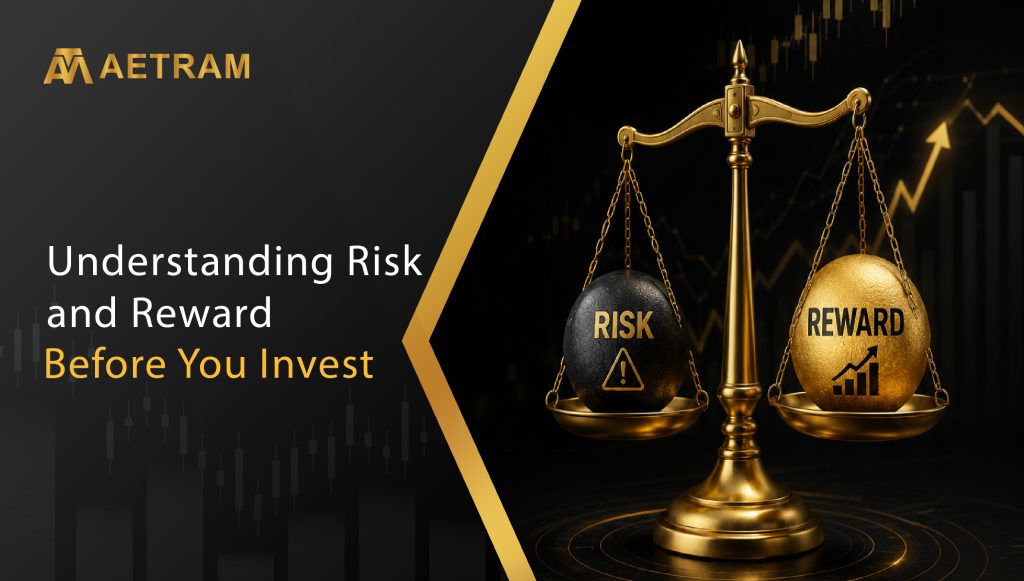
Now think of an investment opportunity that could make you rich in one fell swoop. Doesn’t it sound tempting? Before investing even a rupee into such an opportunity, however, ask yourself a simple question: “What am I going to lose in case things don’t work out?” The majority of novice investors pay too much attention to the profit they are likely to gain, neglecting all potential risks. However, wise investing is not about maximizing your gains – it is about knowing the level of risk and its appropriateness for your portfolio.
Risk vs. Reward Definition
In finance, risk means the probability of losing value or earning less than expected due to an investment made. As for reward, it means the potential gain that can be realized if you take a certain risk. Usually, high-return investments are highly risky ones, while low-risk investments usually provide little to no room for profits. To illustrate, equity investments may yield high returns, but at the same time be subject to huge changes in prices.
Higher Gains Mean Higher Risks
Consider two investments with vastly different prospects of gains. While one guarantees steady gains, the other promises higher returns but is highly volatile. However, the second option isn’t necessarily better. Higher gains are typically associated with higher risks. Whether the investment is suitable for you depends on whether you can bear the risk of losses.
Understanding Risk and Potential Reward
| Investment Characteristic | Potential Benefit | Key Risk |
| Lower risk | Greater stability | Lower return potential |
| Moderate risk | Balance between growth and stability | Value can fluctuate |
| Higher risk | Higher potential returns | Greater possibility of losses |
| Very high risk | Significant return potential | Substantial losses are possible |
Knowing Your Risk Appetite
Before you invest, consider whether you will be comfortable with the loss of value of your investment in case of any volatility in the markets. Will you be comfortable if an investment worth ₹1 lakh becomes ₹85,000 due to market volatility? If you will be uncomfortable with that kind of risk, investing too much in such risky ventures may not be suited for you based on your risk appetite. Your risk tolerance is based on various factors.
Same Investment May Not Suit Everybody
Consider Arun and Meera who both have ₹1 lakh available to be invested. Arun has a stable income source, emergency fund and a long-term horizon to make his investments. Arun finds it easy to keep his investments fluctuating to ₹85,000 without worrying about anything else. Meera needs her ₹1 lakh within the next year for making a down payment for buying her own house. A drop of ₹1 lakh to ₹85,000 would have an impact on Meera’s financial plans.
Both have same amount available to invest, however, the same high-risk investment option may not suit both. This is because Arun may be comfortable in tolerating short term volatility whereas Meera would prefer safety of capital. Right level of investment risk should not be judged just by the expected returns, but should also consider the time period during which funds are needed and risk of loss which can be tolerated by an individual.
How Long You Can Stay Invested Makes a Difference
The period during which your investment horizon extends can play a role in the level of risk that you are able to bear. Short-term funds require stability and liquidity, while long-term investments will have more time to compensate any losses that were experienced in the markets in the meantime. The money you require for a down payment on a home next year should not necessarily be considered the same as the money you plan to invest in the distant future.
Don’t Confuse Risk with Volatility
If the stock price is falling, it does not automatically imply that you have made a bad investment. The markets may fluctuate for all sorts of reasons, ranging from economy-related, corporate or interest rate factors to mere investors’ sentiments. But loss of capital, low-quality stocks, over-concentration and risk-taking without adequate knowledge are other issues. Understanding the difference between normal market fluctuations and true investment risk is part of learning how to invest.
Portfolio Diversification Can Be Beneficial in Mitigating Risk
Investing all of your capital in one security, market segment or asset type may put your entire portfolio at higher risk. Portfolio diversification involves spreading your capital among different assets or securities in a way that may help mitigate the risk from the underperforming one. Nevertheless, diversification does not mean eliminating risk or ensuring certain return on investment.
Avoid Making Investment Decisions Based Only on Returns
There is a common practice when people select their investments based on the impressive returns those investments have generated in the past. However, past performance of any investment cannot be the guarantee for its future performance.
Thus, instead of asking about returns, one should also question about the risks involved in obtaining those returns.
Matching Risk and Rewards with Objectives
Not all investments that yield high returns are appropriate for you. You need to consider what your investment objectives are before making any decision.
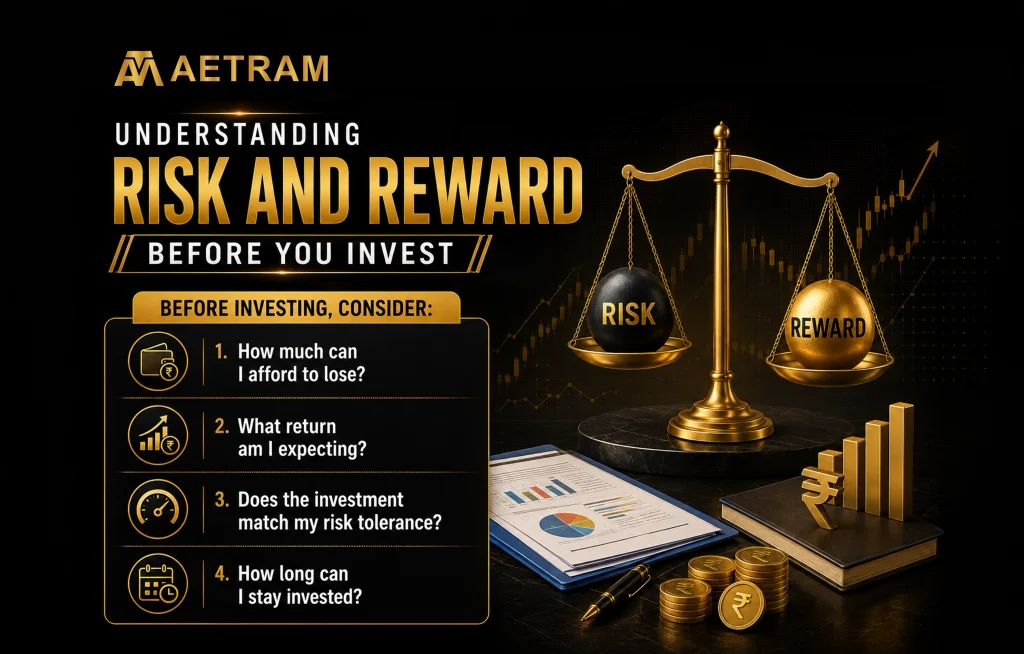
Match Your Investment to Your Financial Situation
| Investment Consideration | Question to Ask Yourself |
| Goal | What am I investing for? |
| Time horizon | When will I need this money? |
| Risk tolerance | How much loss or volatility can I comfortably handle? |
| Liquidity | How quickly might I need access to the money? |
| Diversification | Is too much of my money concentrated in one investment? |
| Return expectations | Are my expected returns realistic? |
Avoid Chasing Returns at All Costs Without Recognizing the Risks
Each investment comes with a balancing act between the level of risk involved and the associated rewards that come with it. You do not need to remove all risks in order to be a successful investor, rather, you must be aware of them and take an amount of risk that suits your financial situation. Before investing, do not be swayed by the amount of returns. Know what you are putting your money into and its behavior in adverse conditions. The most intelligent investors will not only seek to maximize their returns but will also think about how much they can afford to lose in the process. This risk-return balance might give you an insight into making better decisions for your investments.
For more practical financial insights and investment strategies, explore Aetram.
Frequently Asked Questions
- What is the relationship between risk and reward in investing?
Generally, investments with higher potential returns involve greater risk. Lower-risk investments typically offer more modest return potential. - How do I know how much investment risk I can take?
Consider your income, financial responsibilities, investment horizon, goals and how comfortable you are with temporary losses. - Does higher risk always mean higher returns?
No. Higher risk means greater potential for both gains and losses. Taking more risk does not guarantee higher returns. - Why is diversification important?
Diversification can reduce concentration risk by spreading investments across different securities or asset classes. However, it cannot eliminate investment risk. - Should I choose an investment based on its past returns?
Past performance can provide information, but it doesn’t guarantee future results. Consider the investment’s risks, suitability, costs and alignment with your financial goals before investing.