Understanding balance sheet and how to read it
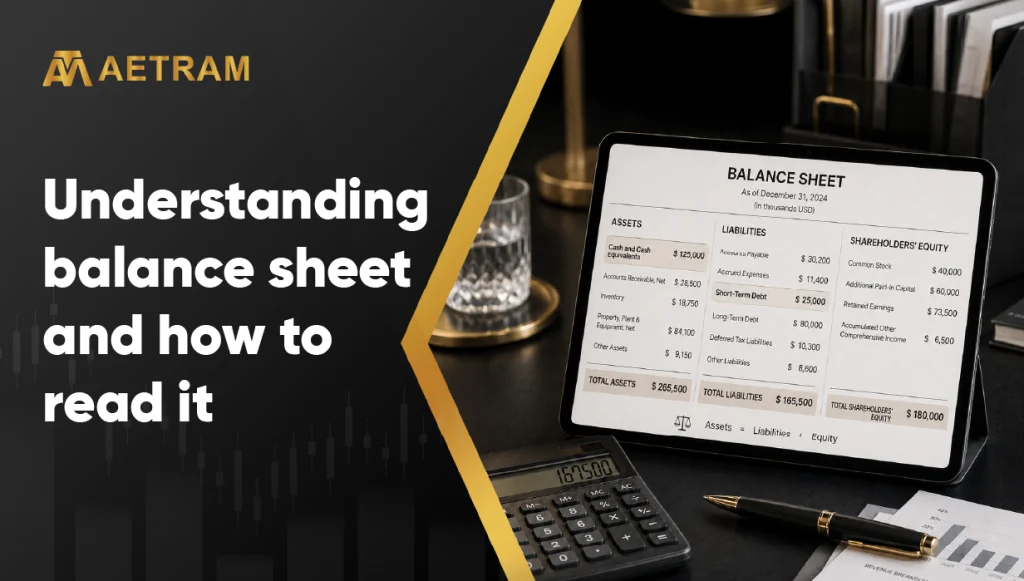
As an investor or credit officer or a business owner, there is one document which is very important and nobody can ignore. It is the balance sheet. Although the balance sheet is made up of numbers, columns and financial jargons and looks confusing, it is the document which tells the financial health of a company. Be it a small partnership firm, or private limited company or a listed company.
By looking at the balance sheet you will get answers to questions like how much a company owns, what does it owe and what’s left over for its shareholders?
To understand the balance sheets of Indian listed companies, or to understand one’s own company’s finances, learning the basics of how to read a balance sheet is a valuable skill. In this blog, we will look at how to read a balance sheet and the rules or format Indian companies are required to follow.
What is a balance sheet?
A balance sheet is a financial statement which gives the readers a bird’s eye view about the financial health of the company, normally, for a particular financial year. While the profit and loss account statement, tells you the total revenue, operating profit, net profit, etc. balance sheet tells you what the company owns and what it owes.
In other words, everything a company owns (its assets) has been either funded by money that the company owes to other entities (its liabilities) or is funded by money put in by its owners (its equity). This equation, as its name suggests, must always balance. If it does not, then there is an accounting discrepancy. By understanding this equation, you’ve unlocked most of the mysteries of a balance sheet!
Balance sheet format under Schedule III of the Companies Act, 2013
Schedule III of the Companies Act, 2013 defines the presentation format for companies to follow when presenting their financial statements. It lays down rules for the presentation of financial statements, such as the layout of the document, the order of line items, and the disclosures that must be made alongside the numbers. Companies previously followed Schedule VI, which presented information horizontally. The move to Schedule III makes the vertical presentation (assets below liabilities and equity) the only option now.
Schedule III has several sections, as it applies to different entity types. Division I applies to companies following the older Accounting Standards, Division II applies to companies following Indian Accounting Standards (Ind AS), and Division III applies to NBFCs. As an investor, you’ll probably not be interested in the differences between these divisions. The idea is that the presentation of a balance sheet is consistent across entity types. So that an investor can compare the balance sheet of a listed FMCG company with a listed bank’s balance sheet using the same visual grammar, even though the two businesses are fundamentally different in terms of operations.
Assets side in a balance sheet
Assets are everything a company owns that has a future economic value. Assets are split into two categories under Schedule III.
Non-Current Assets are the long term assets that a business is not planning to liquidate within the next year: property and equipment (land and building, machinery), intangible assets (patents, software), and long term investments.
Current Assets are expected to be used up or sold within twelve months. It includes inventory (raw material + finished goods stored in a warehouse), trade receivables (money owed to the company by a customer for goods supplied or services rendered), cash and banks, and investments. A manufacturing company will typically have a large inventory on hand, whereas a service company will have little or no inventory.
Understanding the assets side of the balance sheet tells you what a company has to work with, and how liquid (convertible to cash) the base of operations is.

Liabilities side
The liabilities side of the balance sheet which also includes equities will tell you the source of funds. Without these funds there is no way a company can create assets. So this side will inform the investors or the assessor how the assets are being funded.
The amount of money invested by different investors in exchange for shares is called shareholders’ equity. Then there is reserves and surplus. This is the profits which have been accumulated and reinvested for the growth of the business without being distributed as dividends.
Non-Current liabilities include long term borrowings which could be from banks, bond markets, big global financial institutions that a company has taken. The interest and the principal will be repaid over time which is more than one year. It also includes deferred tax liabilities and long term provisions.
Current liabilities are loans taken by a company for the purpose of continuing their operations. These liabilities must be serviced or repaid within one year. Some examples of current liabilities are trade payables (amounts owed to suppliers for goods bought on credit), short term borrowings, and other current liabilities like accrued expenses.
A company can appear very profitable but it may be at risk of becoming defunct or insolvent if its current liabilities is much higher than its current assets.
Interpreting a balance sheet
When looking at an Indian company’s annual report, here’s a practical sequence of steps to follow. First, look at the total assets, total liabilities and equity figures at the bottom.
Make sure that they match as they should for a balance sheet. Next, look at the percentages of equity and debt funding the business. If a company is funded heavily by debt, then it may have a higher risk of defaulting.
Then compare the current assets and current liabilities to understand the short term financial position and obligation of a company. Compare the numbers this year and last year which appear in the annual reports and quarterly earnings they publish and try to spot the trends. Lastly, read the notes to accounts (placed right after the balance sheet) to understand numbers that are worth investigating further.
Financial ratios and its uses
Financial ratios are simple mathematical relationships between two or more values from a company’s balance sheet and profit and loss statement. You can use the number in the balance sheet to calculate the different financial ratios and gauge the financial health of a company. Ratios turn numbers on the page into valuable information by comparing how much a company makes versus how much it spends, or how much of a company is owned by its shareholders versus lent to it. On their own, figures from the balance sheet or the profit and loss statement rarely provide much useful insight without the context of a ratio. For example, the total amount of debt a company holds is less valuable as an insight without knowing how that compares to the size of the company’s total assets.
Ratios also allow comparison of companies of different sizes (since they are expressed as relative values on a common scale), enable comparison of a company’s performance to itself (by comparing ratios from year to year), and provide a baseline for comparison to other companies in the same industry. Ratios provide much more insight than any single number can hold on its own: that is why they’re so valuable to investors and lenders.
Knowing how to read ratios is about knowing what they mean and never looking at one ratio in isolation, and we’ll explore how to do that in our guide to the key financial ratios that every Indian investor should understand.
Warning signs to see in balance sheets
There are certain red flags to be aware of when looking at Indian company balance sheets. A sharp increase in debt without a corresponding increase in revenue or profits is an early warning sign of potential financial distress ahead. Large related party loans and advances should be investigated, as this issue has plagued many Indian companies. Increasing inventory or receivables compared to sales growth should be investigated, as it indicates a possible buildup of unsold stock or customers who are not paying on time. And a mismatch between profits and cash flow from operations is often the first sign that the numbers should be investigated more closely.
How is balance sheet different from profit and loss statement
The two financial statements are different because they answer different questions. The balance sheet is an overview of how a company sourced its assets and how much liabilities and assets they have. The profit and loss statement is more about operational efficiency and about how much revenue did the company make, how much was the expense over a specific entire period, which will give us the information if the company ended up making net profit or net loss.
Neither of the financial statements tell you the full story alone. A company can show healthy profits on its P&L but its balance sheet may reveal mounting debt, or vice versa. In other words, they may be making losses but they might have a lot of assets which are either idle or not generating enough income for the company. Reading them together gives the investor or the credit officer a far more reliable picture than either in isolation.
Conclusion
Knowing to read a balance sheet and understanding the number will give a lot of insights into a company’s financial health. By understanding the basic accounting equation that forms the basis of the balance sheet, the presentation format (as per Schedule III of the Companies Act, 2013) and what to look for on the assets side, liabilities and equity side of the balance sheet, any Indian company’s balance sheet should become much less intimidating and much more useful for you.
Frequently Asked Questions (FAQs)
1. How often is a balance sheet prepared in India?
Normaly, companies prepare it annually. In some cases, companies also publish quarterly or half-yearly balance sheets for regulatory and investor reporting.
2. What’s the difference between reserves and share capital?
Share capital is money raised by issuing shares. Reserves are accumulated profits the company has retained rather than distributed as dividends.
3. What is the difference between assets and liabilities?
Assets are what a company owns and controls that hold future value, such as cash or property. Liabilities are what it owes to others, like loans or unpaid bills.
4. Why does a balance sheet always have to balance?
Because every asset a company owns was funded either through debt or through owners’ money. If assets don’t equal liabilities plus equity, there’s an error somewhere in the accounts.
5. Are intangible assets shown on the balance sheet?
Yes, intangible assets like patents, trademarks, and software are listed under non-current assets, valued at cost minus any accumulated amortisation over their useful life.