Small Expenses That Quietly Drain Your Wealth

People normally assume that the root cause of their financial troubles is big-ticket items such as home loan EMIs, car EMIs or even purchasing something. While this is certainly true, what they do not realize is that it is the small expenses that erode away at their finances slowly but surely. An expenditure of ₹100 does not matter, but these expenses can take a toll on your savings.
The Trouble with Small Expenditures
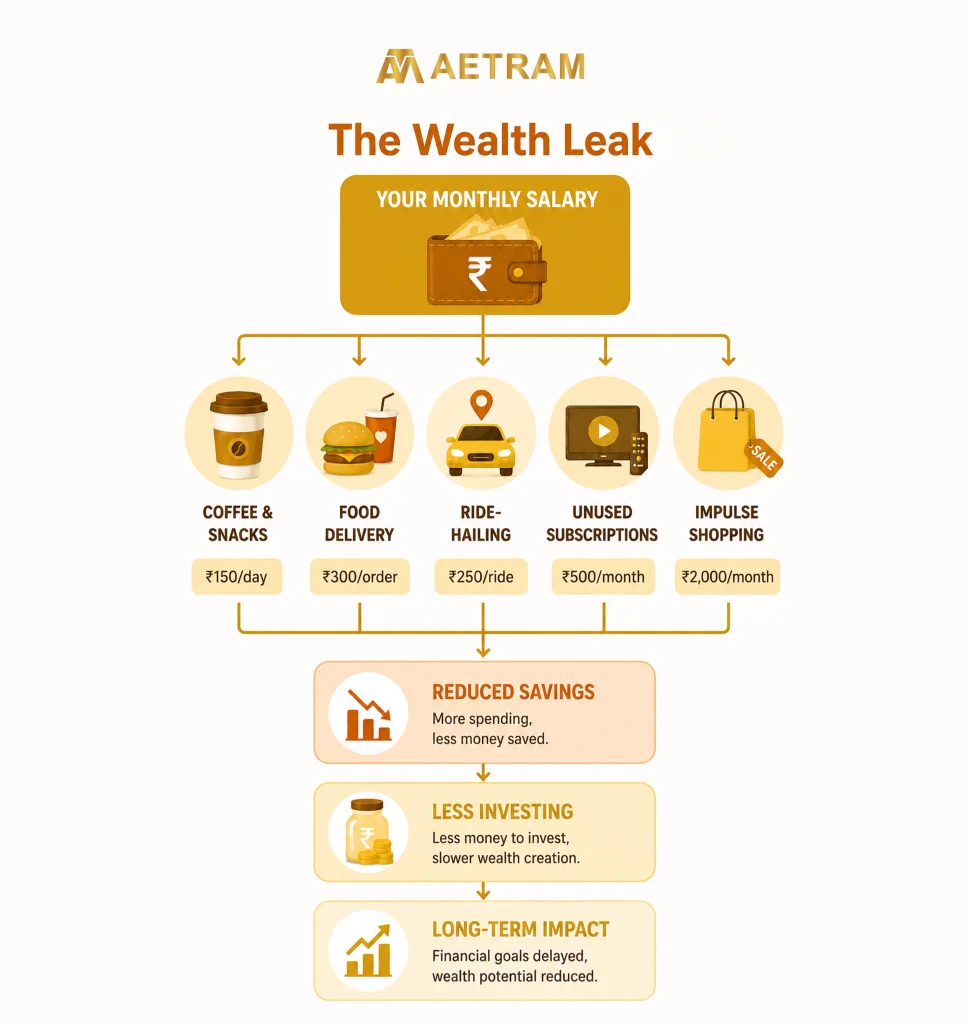
It is easy not to give a second thought to small expenses because you might think they are negligible. Buying coffee on the way to work, paying for a delivery service, paying for subscription services or making a random purchase online is something that happens daily, which may not be an issue per se. The problem lies in the fact that these expenses tend to become a habit.
Frequent Food Deliveries and Convenience Purchases
Making a food order occasionally is totally acceptable. The problem arises when people make food deliveries or use quick commerce on a consistent basis. These habits of spending can end up eating up more than you actually think.
Hidden Subscriptions
From streaming services, premium applications, cloud storage, gaming subscriptions or other recurring subscriptions that are automatically charged monthly. Such subscriptions can go on even when the service is no longer required by you since these are automatically billed.
Impulse Buys During Online Sales
There is an illusion that one is saving money through such online sales. But when something that was not required is bought, that counts as expenditure. Small impulse buys that occur in the course of online sales become huge over time and limit savings.
Miscellaneous Fees and Charges
Delivery fees, platform fees and other similar costs do not get attention since they are small. When added up, they become a considerable expense for you since they don’t involve any big buy at all.
What Might That Money Become?
While it is easy to see how small expenses cost you financially, what is really lost when that money is spent? The true cost is the potential opportunity that is missed by investing that money into savings, investments, emergency funds or long-term goals instead.
Awareness Comes First
It is not necessary to remove everything that gives you some small pleasures. But it is important to become aware of the money flow. Monitoring your expenses over a month will help you uncover some spending habits that you might not notice otherwise. Having recognized them, you will be able to make better-informed decisions.
Watch the Small Leaks Before They Sink the Ship
As insignificant as little expenses might seem, they could have an effect on your financial future. Though it does not matter whether you have a single cup of coffee, a single delivery order or a single impulse buy, the regular habits do matter. The key to wealth creation lies both in earning and in monitoring the expenses.
Connect with Aetram if you want to take control of your spending and build stronger financial habits.
FAQs
1. Why are small expenses important to track?
Small expenses can add up over time and significantly impact your savings and investment potential.
2. What are common examples of wealth-draining expenses?
Food deliveries, unused subscriptions, impulse purchases, convenience fees and frequent online spending.
3. How can I identify unnecessary expenses?
Review your bank statements and spending history to spot recurring or non-essential purchases.
4. Should I stop spending on things I enjoy?
No, the goal is to spend intentionally and ensure your spending aligns with your financial priorities.
5. How can reducing small expenses help build wealth?
Money saved from unnecessary spending can be redirected toward savings, investments or other long-term financial goals.