Primary vs Secondary Market: Key Differences Explained
Financial markets serve an essential function because they enable companies to obtain capital while they permit investors to buy and sell securities. Capital markets consist of two primary divisions which are the primary market and the secondary market. The two markets trade securities which include stocks and bonds but their operational functions and business objectives differentiate them from each other. Investors need to learn about these market operations because it helps them understand the process of managing their investments.
What is the Primary Market?
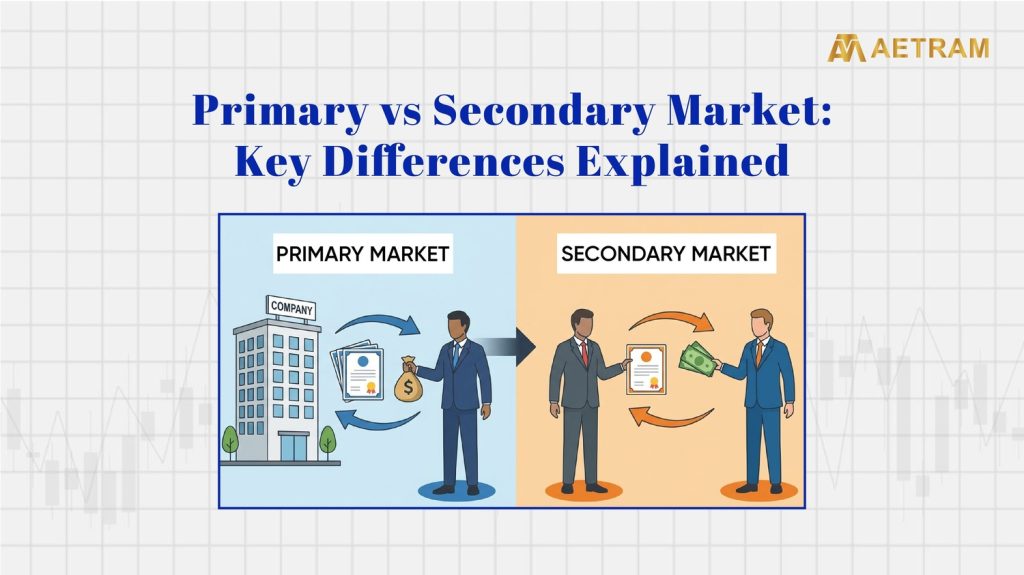
The primary market is the venue through which companies and governments introduce their securities to the market for the first time. Through their initial stock and bond offerings companies and governments enable investors to purchase their newly created securities. This process typically occurs through Initial Public Offerings (IPOs) and bond sales. In the primary market investors purchase securities which companies and governments issue directly to the market. The capital enables companies and governments to fund their business growth and development of new initiatives.
A company will sell its stocks through an IPO in the primary market when it chooses to do so. These investors who buy company stocks at this stage are actually providing capital for business expansion.
Features of the Primary Market
One of the main features of the primary market is that it is focused on raising fresh capital for businesses or governments. The securities are traded at a fixed price, which could either be fixed or determined via a book building method. Another important feature of this market is that direct interaction occurs between businesses or governments and investors. In this market, securities are issued only once.
Examples of transactions that occur in this market include IPOs, right issues, private placements and government bond issuances.
What is the Secondary Market?
After securities are issued in the primary market, they are then traded in the secondary market. In this market, securities are traded amongst investors and there is no involvement of the company that issued those securities. This market is also known as the stock market. Stock exchanges such as the NSE and BSE in India are examples of a secondary market. In this market, securities are traded based on demand and supply. Investors can buy or sell securities based on various factors.
Importance of the Secondary Market
The main advantage of a secondary market is that there is liquidity in the market. This means that investors are not obligated to hold onto their investments in the market for a long time. They are allowed to sell their investments at any time they need cash. The secondary market is also important in price discovery, whereby the price of a security is constantly determined in relation to trading in the market. This helps investors to know the real price of their shares and bonds.
Key Differences Between Primary and Secondary Markets
The primary market issues securities while the secondary market handles their exchange which creates the essential distinction between these two markets. The primary market exists to sell securities to investors while the secondary market enables investors to trade securities with each other. The other difference is that in the primary market, money is transferred to the issuing firm to enhance its operations, whereas in the secondary market, money is transferred to the investor selling a security. The primary market establishes a fixed price which the secondary market operates at different prices that depend on market demand and supply.
Understanding Market Structure for Better Investment
The primary and secondary markets are both vital constituents of the financial market. The primary market assists businesses and governments in raising capital, whereas the secondary market offers flexibility to investors to buy and sell securities as and when they wish to. Investors can gain confidence and become capable of making sound decisions in the capital market by grasping the difference between these two markets.
If you are looking to navigate capital markets with confidence, Connect with Aetram.