Growth vs Value Stock Investing – Which is Better?

In terms of investment in the stock market, one of the major issues that is often debated is whether to invest in growth stocks or value stocks. Both methods promise investors good returns, but their approach is quite different. Learning about how both methods work will help you determine which one is better suited to your investment style and needs.
What are Growth Stocks?
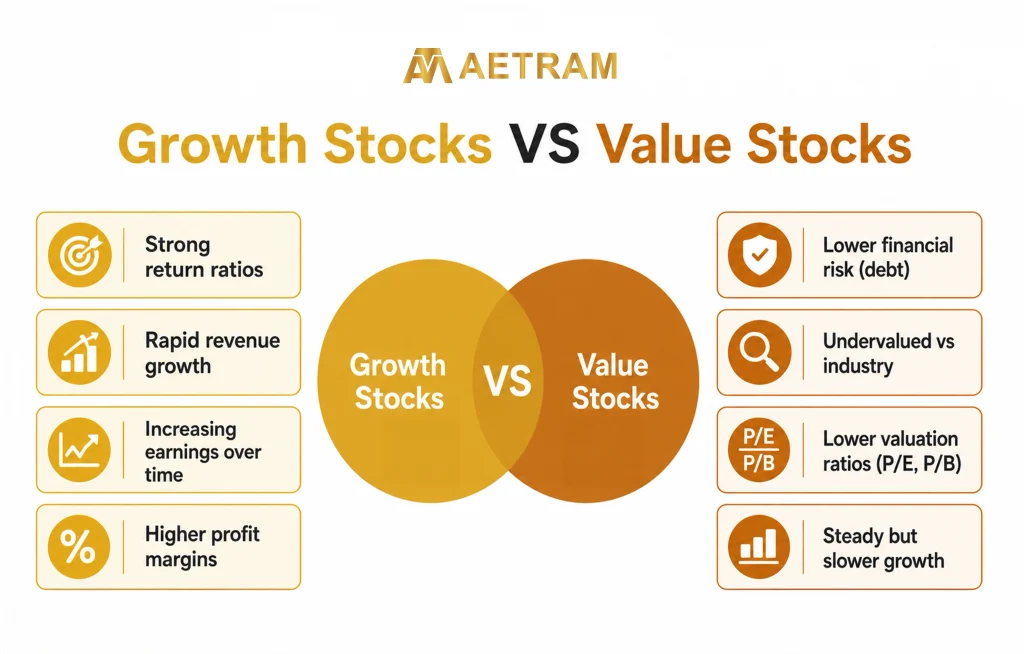
Growth stocks are those that are issued by companies that are likely to grow faster than the average company. These are usually companies that have high growth rates and often do not distribute their earnings to shareholders but instead invest them back in the company. These stocks are usually high priced since investors are willing to pay a premium to own a share. Growth investors invest in these stocks with the expectation that their value will grow substantially.
What are Value Stocks?
Value stocks are those shares of companies which are considered to be undervalued in the stock exchange. This means that the price at which these stocks are currently trading is lower than their actual value. Value stocks are normally those of companies with well-established earnings. Value stocks differ from growth stocks in several ways. One of these is that, unlike growth stocks, value stocks pay dividends. Another difference is that value stocks are normally priced lower than growth stocks. Value stocks are based on the principle that at some point, the stock exchange will realize the true worth of these stocks, hence raising their price accordingly.
Key Differences Between Growth and Value Stocks
The main difference between growth and value stocks is based on pricing. Value stocks are normally priced lower than growth stocks. Another difference is based on the payment of dividends. Value stocks pay dividends, while growth stocks do not. The third difference is based on the nature of these two types of stocks. Value stocks are normally more stable, while growth stocks are more volatile.
Risk and Return Potential
Growth stocks have high potential for returns, especially in good economic times. However, there is a high risk factor too. This is because these stocks are highly dependent on future growth. If there is no growth in the coming years, there will be a significant fall in prices. Value stocks are considered to have low risk as their prices are already low. They may not promise high returns, but there will be consistent returns in terms of dividends. However, there is a chance for the stocks to remain low for a long time.
When Do They Perform Better?
Market conditions are important for deciding which method performs better. Growth stocks perform better during good economic times or low interest rates. This is because there will be high growth in terms of earnings. Value stocks perform better during economic recovery or high interest rates. This is because there will be high returns in terms of dividends. This shows that both methods are not better than one another.
Which is Better?
There is no specific answer to which is better between growth stock investing and value stock investing. This is because the best approach depends on what you want to achieve. Growth stock investing is better than value stock investing when you want high returns and are ready to take risks. Value stock investing is better than growth stock investing when you want high returns but are cautious about risks. Many experts have recommended both approaches because they can provide better returns compared to individual approaches.
Finding the Right Balance Between Growth and Value
Growth stock investing and value stock investing are different approaches to the same goal, which is wealth creation. Growth stock investing is for those who want high returns from their investments, while value stock investing is for those who want high returns from their investments but are cautious about risks. A combination of both approaches can provide better returns compared to individual approaches. Growth stock investing is different from value stock investing in several ways, which can enable you to make better decisions.
Looking to build a balanced portfolio with the right mix of growth and value stocks? Connect with Aetram for expert guidance and personalized investment strategies tailored to your financial goals.
Frequently Asked Questions (FAQs)
1. What is the main difference between growth and value stocks?
Growth stocks focus on companies expected to grow rapidly, while value stocks are undervalued companies trading below their intrinsic worth.
2. Which is safer: growth or value investing?
Value investing is generally considered safer due to lower valuations and stable earnings, whereas growth investing carries higher risk but offers higher return potential.
3. Do growth stocks pay dividends?
Most growth stocks do not pay dividends because they reinvest profits back into the business for expansion.
4. Can I invest in both growth and value stocks?
Yes, many investors choose a mix of both to balance risk and returns and benefit from different market conditions.
5. When do growth stocks perform better than value stocks?
Growth stocks typically perform better during economic expansion and low-interest-rate environments when future earnings expectations are high.