What is a Short Position in Capital Markets?

Most people who invest are aware of the concept of buying a stock and then waiting for its price to increase. This is referred to as taking a long position. However, in the stock market, there is also the concept of attempting to make money from a falling stock price. This is referred to as taking a short position.
What is a Short Position?
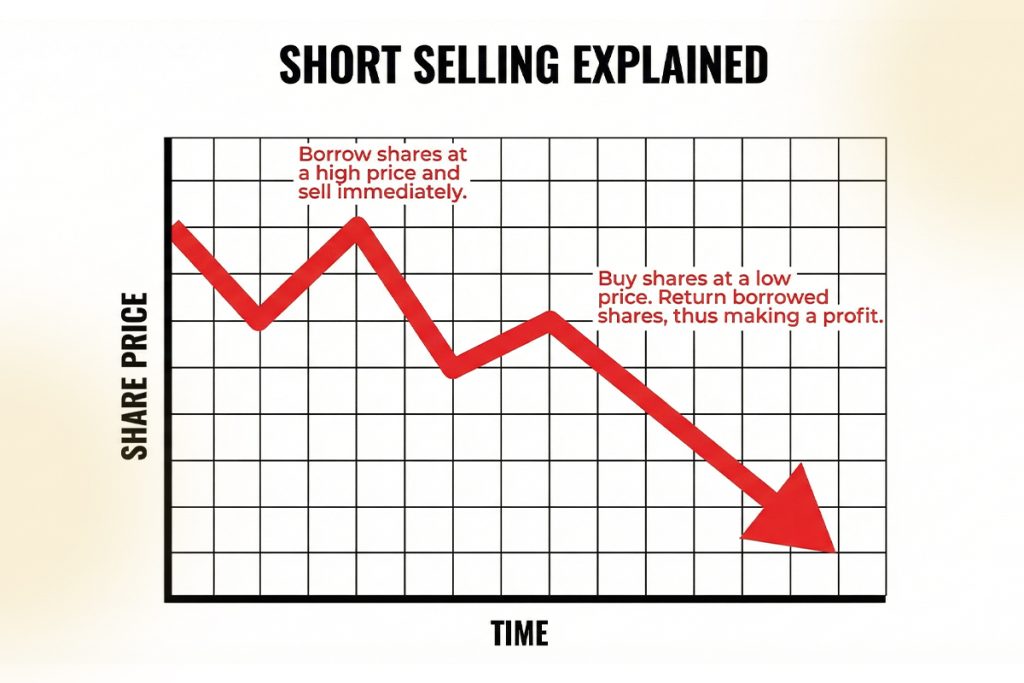
A short position refers to the act of selling an asset that you do not actually have, with the aim of buying it back at a cheaper price later. The aim of this process is to make money from the difference in price. While the normal process of buying and then selling involves buying first and then selling, a short position involves selling first and then buying. This process is most commonly practiced in the stock market but can also be applied to commodities, foreign currencies and other financial assets.
How Short Selling Works?
The broker provides the investor with stock shares after he selects short selling as his trading strategy. The investor sells these borrowed shares at the prevailing market price. The investor purchases identical shares at their decreased value to return them to the broker when the stock price decreases.
The profit from the transaction results from subtracting the buying price from the selling price. For instance, assume that you sell the borrowed shares for ₹500 each. When the price goes down to ₹350, you can buy them back at ₹350 and return them. The difference of ₹150 per share (fees not included) is your profit. But if the price goes up instead of going down, you will have to buy the shares back at a higher price, which means you incur a loss.
Why Do Investors Take Short Positions?
Investors can take a short position in a stock if they feel that the performance of the company is deteriorating or the market is expected to fall. Traders also use short positions to benefit from the temporary fall in the stock price. Short positions are also used for risk management. For instance, if an investor expects the market to fall temporarily, they can take a short position in some stocks to hedge their portfolio.
Risks of a Short Position
Short selling is more risky than buying stocks. When you buy a stock, the risk of loss is limited to the amount of money you paid for the stock. A stock price cannot go below zero. But when you engage in short selling, the risk of loss is unlimited. A stock price can keep rising and your losses can also keep rising.
Another risk associated with short selling is the margin call. When you engage in short selling, you have to borrow stock. Brokers will require you to maintain a certain amount of money in your account. If the stock price rises, you may be required to deposit more money. There is also something called a short squeeze. This is where many people have shorted a stock and the stock price starts to rise. Short sellers start buying back the stock to cut their losses and this causes the price to rise even more.
Understanding the Risks and Rewards of a Short Position
A short position provides an opportunity for investors to make profits from the fall in the prices of assets. The strategy requires investors to borrow an asset and sell it before they buy back the asset at a reduced price. Short selling enables investors to profit from market downturns but it presents significant financial dangers. The process of short selling requires your study because it provides essential knowledge for understanding financial market dynamics.
Looking to explore advanced trading strategies like short selling? Connect with Aetram for expert guidance and smart risk-managed investment solutions tailored to your financial goals.