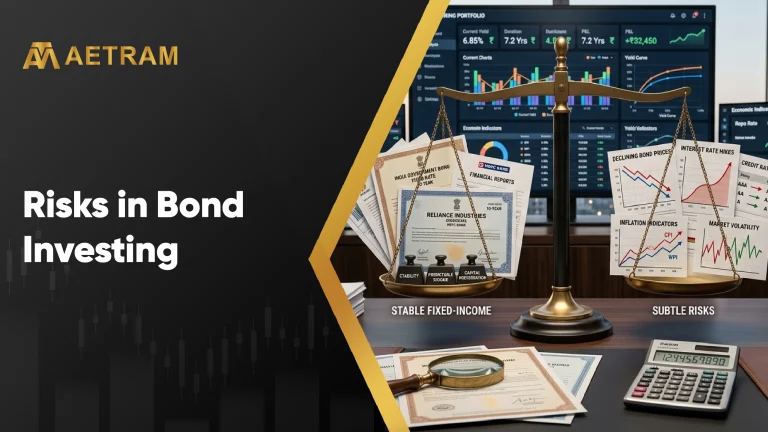
Bond Investing During High Inflation Periods

Investing in fixed income securities is a safe way to protect your capital and earn decent regular income but it may not be the best investment option during high inflation periods. They offer reliable and low-risk investment options for conservative investors but they are also likely to give you lower returns.
Investing in fixed-income securities like bonds or debentures offers a reliable, low-risk way to generate regular, predictable income while preserving your capital. These securities reduce overall portfolio volatility, serving as a defensive balance against risky equity investments, and often provide better, safer returns than traditional savings accounts.
What are bonds?
A bond, which is a fixed-income security, is essentially a loan given to governments or companies by investors. There are many ways to raise capital and issuing bonds is one of the ways. Bonds are issued by governments, municipalities or corporations (bond issuers) to raise capital to fund projects, buying machinery, equipment, setting up manufacturing plants, paying off old debts, etc. Investors are called bondholders.
Key components of bonds
- Face value: It is also known as par value, is the amount the bond is worth when it matures. It’s also the base amount the issuer uses to calculate the interest payments.
- Coupon rate: It is the fixed interest rate, which is represented as a percentage, that will be paid periodically by the bond issuer.
- Coupon date: These are the specific days when the bondholder receives their interest payments which is paid by the bond issuer.
- Maturity date: It is the date on which the bond matures and the bond issuer pays the principal amount of the bond to the investor.
- Issue price: It is the amount at which the bond is first sold to investors and most bonds are issued at par value.

What is inflation?
Inflation means the increase in prices of goods and services over a specific period of time. Inflation rate is the rate at which it increases. According to India’s central bank, The Reserve Bank of India, their headline retail inflation target is 4% (measured by CPI) with a tolerance band of +/- 2% (2% to 6%).
When inflation increases, the real returns from any investments will decrease and the purchasing power of consumers will also decrease. This gradual erosion of real returns and purchasing power is what makes inflation a key concern for households and investors alike.
What causes inflation?
Inflation increases due to mismatch in demand and supply in the economy. Whenever demand is higher than supply due to booming economies or rising consumer spending, etc. demand increases and leads to price rise.
If the cost of manufacturing goods goes up due to expensive raw materials, rising oil prices, higher salaries, business entities pass those costs on to consumers.
There are also situations where the central bank lowers the interest rate to push credit growth which leads to higher liquidity and inflationary pressures as more money is chasing the same amount of goods.
How is inflation tracked?
In India, inflation is tracked using two main metrics. The main metric is the consumer price index (CPI) and it tracks how prices change for a basket of goods and services at the retail stage or which is consumed by households. Another less used metric is the wholesale price index (WPI) that tracks price changes in goods before they reach consumers, often acting as an early warning sign of future inflation.
Inflation affects many areas of the economy and it also impacts investments including bond investments. When inflation is elevated for a longer period of time, it will erode the real returns of any investment including bonds.
Impact of Inflation on Bond Investments
Bond is a fixed income security meaning when you invest in bonds, investors will receive regular interest periodically till the bond matures and you hold the bond till maturity.
So when inflation rises, this increase will eat into your real returns. In other words, the real returns will drop as the buying power of various goods or services from these returns drop.
Inflation also affects bond prices and yields. When inflation increases, the central bank will increase the repo rate (also known as interest rate) to control the inflation. When repo rate increases, then newer bonds will carry higher coupon rates. As a result, many will sell the older bonds and prefer new bonds that offer better returns and hence market price of existing bonds will fall. When the interest rate is increased, the bond prices will fall and the bond yield will increase.
For instance, imagine you own a bond that pays 5% interest and if inflation increases, the central bank will raise the rates to 6%. New bonds will offer higher yields and people will sell the older bonds and shift their money to those newer bonds. This will weigh on the price of your 5% bond in the secondary market.
So, when there is higher inflation and interest rates are increased, existing bonds tend to lose their value. It means that you might be selling the existing bond before it matures and also at a lower price compared to your buying price.
Conclusion
Bonds and other fixed-income securities have been a go-to investment vehicle for conservative investors who want regular and consistent income. But, when inflation increases, their appeal starts to fade. So, investors must keep in mind that the key to building a balanced portfolio is to diversify across bonds and other asset classes like equities, real estate, etc.