Why Your First Crore Is More About Habits Than Income
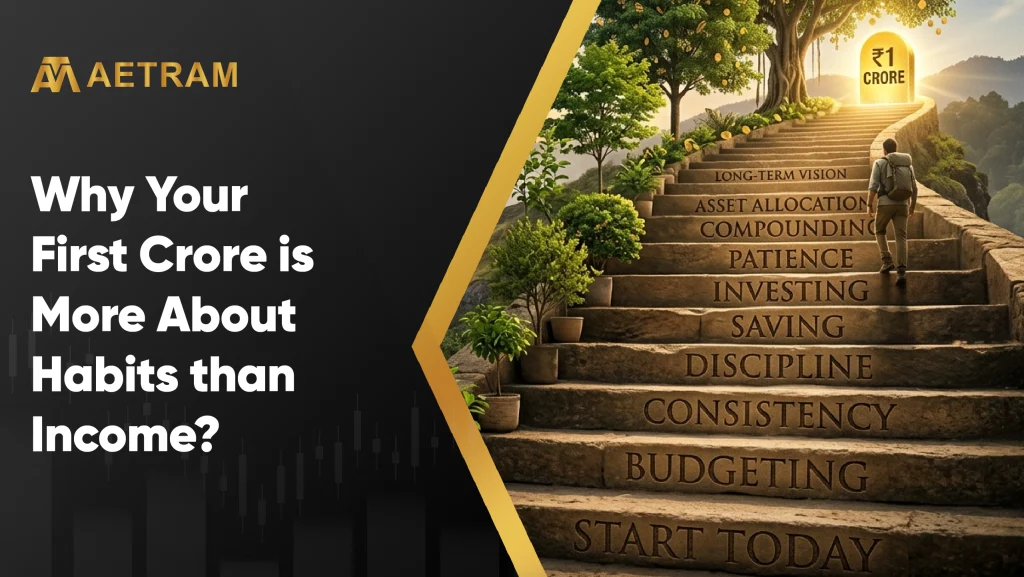
India is a lower-middle-income country and nearly 81 crore people receive free food grains under the Pradhan Mantri Garib Kalyan Anna Yojana (PMGKAY). In such a scenario, an Indian citizen reaching his/her first crore (₹1 crore or 10 million rupees) is a massive milestone.
It indicates that the individual has some level of financial security, freedom and tasted relative success compared to the other half of the population. Even then, a lot of high-earners in India who have salaries of ₹25 lakhs or even ₹50 lakhs annually struggle to build meaningful wealth, while others with modest incomes quietly cross this threshold.
In this blog, let us look at the psychology and math in reaching your first crore and how to compound your wealth with modest income.
The Myth of High Income: Why Salary Alone Won’t Get You There
India is a country where many want to be a salaried individual rather than taking risks with their own venture. They prefer the security of a well paying job over taking risk to run their own business. So, a lot of Indians believe that a fat paycheck is the golden ticket.
A ₹1 crore salary sounds luxurious and an uphill task as lifestyle creep often erodes it. People upgrade cars, homes, vacations, and gadgets, leaving little for investments.
There are many people sharing their personal stories in social media saying that even with salaries around ₹1.5 lakh per month they were able to reach ₹1 crore in total financial assets through frugality and consistent SIPs, while others with higher incomes stay stuck due to debt and frivolous spending.
Income or salaries is just a tool, but habits are the engine. Without habits, even ₹2-3 lakh monthly salaries may not be enough for many people to reach ₹1 crore. With habits, even individuals earning around ₹80,000-1 lakh income can build a crore over 10-15 years via compounding.
The Power of Compounding: Math Behind Habits
If you have started investing and read a lot of finance-related blogs or articles, you could have read that compounding is often called the “eighth wonder of the world.” Small, consistent investments can do wonders in building wealth.
Consistent investing may help you reach ₹1 crore or more, assuming 10-12% CAGR over a period of 20 years or 30 years. When it comes to compounding, starting early is more important because time plays an important role in compounding. Starting at age 25 vs. 35 makes a massive difference due to extra compounding years.
There are a lot of calculators and broking platforms like Aetram Trades provide calculators to plan your investments. The thumb rule for building wealth is not chasing 20-30% returns which can be risky but it is time and consistency.
Habits ensure you stay invested through market crashes (like 2020) and avoid panic selling. Income fluctuations happen, but habits die hard.
Track Every Rupee As Awareness Is the Foundation
The first habit to become wealthy is to know where your money goes. There are many apps to track your spending and expenses and the apps will automatically categorize your spending. Try to follow the 50/30/20 rule where 50% is used for your necessity, 30% is for your wants, 20% is for your savings and investments. You can even tweak the percentage of your savings and investments and aim for a higher savings rate.
When you track your spending and net worth monthly, it will build mindfulness and it will also help you catch any leakages in your spending like unnecessary subscriptions, eating out, or impulsive buying.
To avoid any unnecessary spending, you could spend one weekend reviewing last one or two months’ bank statements. Categorize and cut 10-20% of non-essentials.
Automate Savings and Investments
If you plan to save and invest then you must treat savings like a non-negotiable ritual. You must save the amount consistently every month and use it to invest in SIPs, equities, PPF or NPS. You can also automate investing in SIPs regularly through numerous apps available in the market. Use salary accounts with sweep-in features or direct debit to mutual fund platforms. Start small and try to step-up your SIP investments when you have higher income.
If you save first and plan your expenses accordingly, this habit will separate you from spenders. High-income folks without automation often see money disappear into EMIs and luxuries.

Live Below Your Means
To invest and build wealth, the first step is to save and for that you have to live a frugal life. Frugality is not deprivation but buying things that are necessary and not spending money lavishly. People who built their first crore often drive modest cars, eat home-cooked food, avoid unnecessary shopping and also avoid status purchases to impress the streets.
These people also believe in delayed gratification and they focus on buying assets that generate income rather than the one which depreciates in value.
Lifestyle inflation is a silent killer and you must make sure it does erode your savings. A 20% salary hike shouldn’t automatically mean 20% more spending.
Build Multiple Income Streams
While habits focus on the save and invest side, smart income growth accelerates the journey without relying solely on salary or a single income. Side hustles like freelancing, conducting YouTube or Spotify podcasts, blogging, content creation, becoming advisors or consulting can help you generate second income.
You can also look at investing in assets that will pay you passive income like dividends, rentals or selling digital products in various online forums.
Continuous Financial Education
Read one finance article or investment or finance-related book monthly. Classics like Letter To Shareholders by Warren Buffet, The Psychology of Money by Morgan Housel, books by Mark Minervini, or books written by Indian authors like Let’s Talk Money by Monika Halan, Stocks to Riches by Parag Parikh, etc.
Follow credible voices on YouTube, X.com, LinkedIn or Spotify. Since finance is closely associated with the economy, try to read and understand economic concepts like GDP, inflation, fiscal deficit, taxes. Also read about risk management and asset allocation, if you believe in diversification and want to spread out the risks associated with investing.
When you read good quality books written by good authors, you are actually learning from their experience and mistakes and knowledge can turn good habits into great ones and prevent you from making costly mistakes.
Manage Debt Aggressively
Clear high-interest debt first because it will save you a lot of money. When you have debt and if you don’t pay the debts promptly, it will compound and eat into your hard-earned money. Further, avoid any lifestyle loans or personal loans unnecessarily. Do not buy any electronic or household appliances on credit. Many high-earners stay poor due to EMIs eating into investable surplus.
Good debt like taking home loan for building a home is an appreciating asset as against bad debt like credit cards loans or personal loans for consumption.
Common Pitfalls That Derail the First Crore
- Waiting for the “perfect” income and not starting now with what you have.
- Chasing quick riches like Crypto memes, intraday trading where most lose money. Habits favor boring, consistent index investing.
- No emergency fund saved for 6-12 months expenses. Having liquid savings prevents forced withdrawals.
- Don’t fall into the comparison trap by watching stories and reels in social media platforms like Instagram, Facebook, etc. Focus on your journey.
Change in Mindset
So when you reach the first crore mark, it is not just a milestone but it changes the way you look at money. It becomes not just a tool to survive but it becomes a partner in your life. You start asking bigger questions: Can I take risks? Can I step away for a year to learn, travel, or just breathe?
Reaching the crore milestone will give you freedom and you’re no longer defined by a 9-to-5 grind or the fear of not having enough. You have options like pivoting careers, taking sabbaticals, starting a side project. And with this freedom comes responsibility, because money doesn’t just grow when you have it. Money grows when you use it wisely.
The real thing is not in reaching the first crore but the habits you build before you reach it. How you manage your money, how you save, how you think about risk which shape your financial destiny.
That’s why setting up a SIP (Systematic Investment Plan) is not just a suggestion but the foundation. It is like planting a tree today so that you can see the fruits of it after a few years because you know it will grow stronger with time.
Conclusion
The first crore is the hardest because early compounding relies heavily on your contributions, not returns and the first crore is more about habits than income. Once you hit it, momentum kicks in.
Your high income without discipline often leads to lifestyle inflation. Solid habits like saving consistently, investing cautiously and controlling expenses compound into massive wealth over time, regardless of starting salary.Whether you’re a salaried professional, freelancer, or entrepreneur, these insights will help you build wealth systematically.