What is ASBA? How can it be used to apply for an IPO?
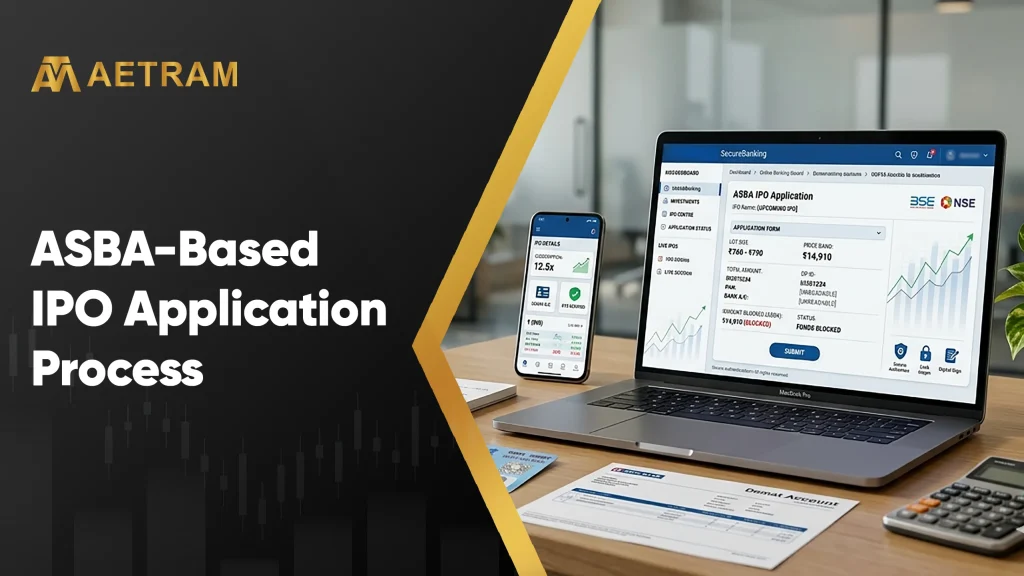
The Indian stock market has seen an unprecedented boom since 2020, the year in which the world was hit by the Covid pandemic. Around March 2020, the number of demat accounts was hovering around 4 crore which has increased exponentially to slightly over 20 crore as of July 2025, according to various media reports and data from the exchanges – NSE and BSE.
As a result, there has been an overwhelming interest from retail investors in applying for IPOs and many IPOs in recent years have been oversubscribed. One of the easiest ways to apply for IPOs is ASBA. In this article, we will be discussing various aspects of the ASBA process.
What is ASBA?
ASBA is the acronym for Application Supported by Blocked Amount and it was introduced by the market regulator Securities Exchange Board of India (SEBI) in 2008 to simplify and streamline the process of applying to an Initial Public Offering (IPO). The ASBA mechanism of applying to IPOs is through a bank account. Without a bank account, you as an investor cannot apply to an IPO through the ASBA mechanism.
So when an investor applies to an IPO through ASBA, the application amount is blocked in your bank account and no upfront payment is made by an investor to apply for an IPO. Only upon successful allotment of shares, the application amount is debited from the investor’s bank account.
Advantages of ASBA
- As the application amount is blocked in the investor’s bank account, they continue to earn interest on the blocked amount until shares are allotted.
- Since the application amount is only blocked in the investor’s bank account and not debited, the investor need not fear about maintaining low monthly average balance
- If the shares are not allotted when applied through ASBA process, the blocked amount is released immediately, improving liquidity.
- In case of no allotment of shares or only partial allotment, the blocked amount is released automatically, and there is no need for refund process
- ASBA process can be completed online through the investor’s bank account which is linked to his/her demat account, and this eliminates the need for physical cheques or demand drafts. ASBA process does not involve any additional transaction charges and it is free.
- Since funds remain with the investor’s bank until allotment, the risk of misuse, loss in transit, or fraud is eliminated.
- Investors can easily modify as well as withdraw their IPO application during the bidding period. However, they cannot modify or withdraw the application after the issue close date.
- ASBA process done online eliminates any manual paperwork and it ensures smooth fund blocking/unblocking automatically
- The blocked and unblocked application amount is clearly shown in the investor’s bank account, resulting in transparent fund handling.

How to Apply for an IPO through ASBA Using an Aetram Trades Demat Account
Before you start applying for an IPO through ASBA, as a demat account holder in Aetram Trades, you must make sure you have the Demat ID number (16 digits), active demat account and this demat account must be linked to a bank account, required funds in the bank account. Please note that Aetram Trades is registered with CDSL and not NSDL. So, it is mandatory for you to know the Demat ID (16 digits) for applying to an IPO via the ASBA route.
Steps To Apply For An IPO
- Fetch the Demat ID by logging into Aetram and head to the profile section
- Login to your net banking account that is linked to the demat account. Logging into any other bank account is useless.
- Go to the IPO application section in your bank account.
- Select the company you want to bid and enter the details like minimum lot size or the number of shares present in 1 lot or in its multiples that is required to apply for the IPO, bid price, 16 digit Demat ID number (also known as DP number) and PAN (if required).
- If you are applying under the retail category, you can bid up to Rs 2 lakhs. If you want to bid more than Rs 2 lakhs, you have to select HNI.
- Click the submit button to place the order and confirm it.
- Once the application is submitted, you can track its status on the NSE and BSE websites.
Checklist for applying to an IPO via ASBA
- Valid PAN card.
- Active Demat account with 100% compliance and KYC completed successfully.
- Active Bank account with any Self-certified Syndicate Banks (SCSBs) that meet the rules set by the Securities and Exchange Board of India (SEBI) with KYC completed successfully. This bank account must be mandatorily linked with the demat account opened with Aetram Trades for successfully placing the order.
- Adequate funds in the bank account
Conclusion
ASBA has become a popular method among investors to apply for an IPO as it is simple, secure, convenient, transparent and cost-effective. It has boosted investor confidence and changed the way they enter the primary market. As more companies go public and many investors apply for an IPO, ASBA will see more adoption among investors.
Frequently Asked Questions (FAQs) on IPO Investing
1. Can I apply for an IPO through ASBA with an Aetram Trades Demat account?
Yes. You can apply for an IPO with an active Aetram Trades demat account linked to a bank account. You also must know your 16-digit Demat ID for using the ASBA route.
2. Can I apply for Mainboard IPO and SME IPO via ASBA route?
Yes. you can apply for Mainboard IPO and SME IPO via ASBA. Not just that, you can also apply for Rights Issue and Follow-on Public Offer (FPO) via ASBA.
3. Is there a better chance of getting allotment if I apply through the ASBA process?
No. The probability of getting an allotment is the same for all applicants. It does not matter if an investor applies via ASBA route.
4. Will my ASBA application be rejected?
Yes. There are chances of your application getting rejected due to:
- Insufficient funds in your bank account linked to your demat account.
- Bank account not linked to your demat account.
- Demat account or bank account not 100% KYC compliant.
- Name mismatch between your PAN card, demat account, or application.
- Multiple applications submitted by an investor under the same PAN.
- Incorrect or incomplete information provided in your application.
5. What is a Self-Certified Syndicate Bank (SCSB) in ASBA?
An SCSB is a bank authorized by the market regulator SEBI (Securities and Exchange Board of India) to provide ASBA services, allowing clients to apply for IPOs. You can check the authorized banks by clicking the link