How to check IPO allotment status?

With IPOs in India attracting millions of investors and many IPOs getting oversubscribed, allotment of shares through IPOs have become a game of odds.
Earlier it used to take a few days to know the IPO allotment status, but now it takes only one day after the issue close date to know your IPOs allotment status.
Even then, after applying for an IPO, it really becomes a test of patience as you wait for the result. That’s why it is important for you or any investor to know how to check the IPO allotment status and where to check it that will be discussed in this article.
What is IPO allotment?
IPO allotment is the process of allotting shares to select investors who have applied for the IPO during the subscription phase which generally lasts for three days. The allotment is totally random in case of oversubscription.
An IPO is one of the ways of raising funds by companies to fund their growth and for that the company has to allot or sell shares to the public for the first time. These public investors are classified into different categories namely retail investors, high net worth individuals and qualified institutional buyers which includes domestic institutional investors and foreign institutional investors.
Details required to check the IPO allotment status
- Name of the company you had applied for
- PAN (Permanent Account Number)
- Application Number
- BOID (16 digits) of your account in Aetram Trades
To check IPO allotment status through BSE or NSE website
To check through the BSE website, click the link and enter the details. You will know whether shares have been allotted or not.
If you are using the NSE website to track your IPO allotment status, click the link, select the right segment and enter the details to know your allotment status.
To check IPO allotment status via registrar’s website
The registrar of an IPO is the entity that is responsible for processing all IPO applications received from the investors and allotment of shares to the investors. Registrars like MUFG Intime and KFin Technologies are popular registrars and investors can go to their website to check the IPO allotment status.
To check the status in MUFG Intime, click the link
To check the status in KFin Technologies, click the link
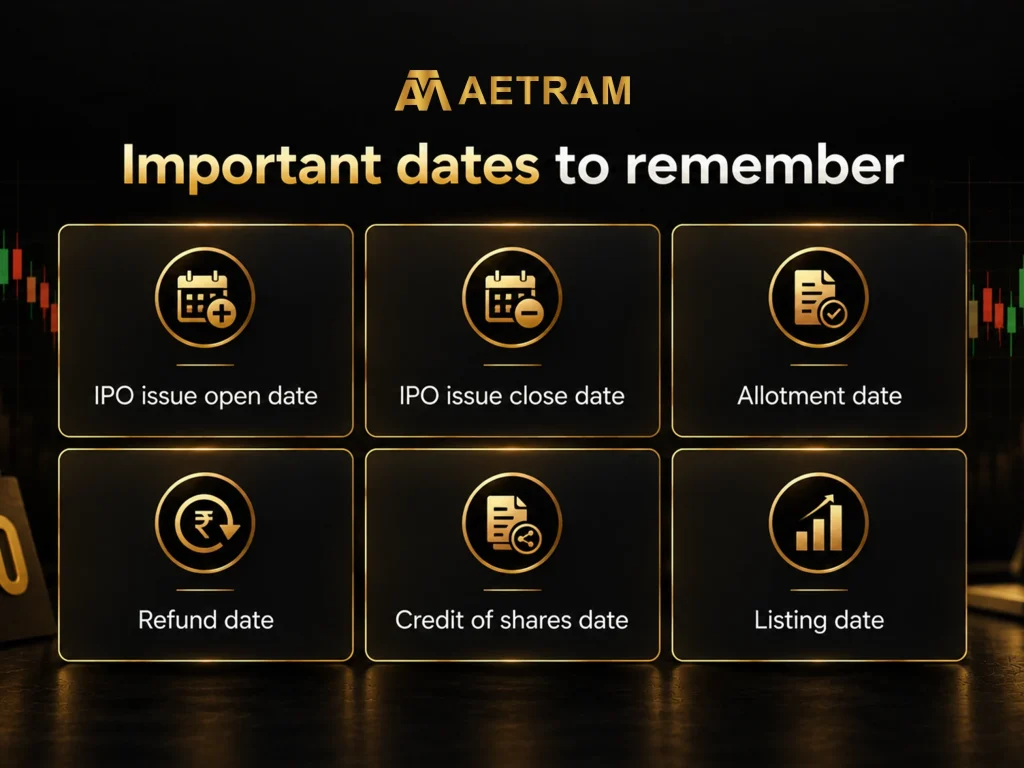
Important dates to remember in chronological order
What factors are likely to influence your IPO allotment?
- The investor category namely – retail, HNIs, QIBs or employees – through which you subscribe will determine your allotment
- The total number of applicants because if the IPO is oversubscribed, the chances of allotment decreases.
- If the KYC details like the name of the applicant does not match or if there is any error, then your application will be rejected.
- If you apply through different demat accounts under the same PAN, your application is likely to be rejected.
- Most of the IPOs come with an issue price band and if you apply at the higher price band or cut-off price, the probability of you getting an allotment is better than applying at a lower price band.
- If you do not approve your UPI mandate and submit, then your IPO application will not be considered.
Conclusion
Although an IPO is a good way to own the shares of a company, there is no guarantee that you will be allotted the shares in an IPO.
If you are allotted shares, then you can always hold on to the shares for long-term capital appreciation or sell the shares in the secondary market for listing gains.
If you are not allotted shares, you can always wait for the right time to buy the share after looking at the price action of the share price and fair valuation.
All said and done, it is better to add the stock to your watchlist in the Aetram Trades web app and track the stock for future decision making.
Frequently Asked Questions
1. What are the different categories under which I can apply for an IPO as an individual investor?
As an individual investor, you can apply under the retail category (up to Rs 2 lakhs). If you want to apply for more than rs 2 lakhs, you can apply under the HNI category. If you are an employee, you can apply under the employee where employees get a discount to issue price.
2. How long should I wait to know the IPO allotment status?
Nowadays, it takes only one working day after the issue close date to know whether the shares have been allotted to you or not. However, it will take a couple of more days for the shares to reflect in your demat account.
3. Where to check the IPO allotment status?
You can check on the BSE or NSE website. You can also check in the popular registrars’ websites like MUFG intime or KFin Technologies.
4. Shares have been allotted in the IPO. Can I sell it before the listing day?
Officially you cannot sell the shares before the listing date. You have to wait till the listing date to sell your shares through your stock broker. However, there are a few investors who sell those shares in the grey market which is considered riskier.
5. What is oversubscription in an IPO?
Oversubscription of shares occurs when the demand for a company’s shares exceeds the supply of shares in an IPO.