Types of Stock Market Orders
As the stock prices are continuously moving, it becomes difficult for a trader or an investor to execute a trade at a desired price. That’s when you can choose from different types of stock market orders to execute your trades.
An order is a request placed by an investor or a trader to buy or sell a particular stock at a specific price based on certain conditions. For traders and investors, it is crucial to know the different types of orders as they help them to make smarter decisions and adapt their strategies to different scenarios in the market.
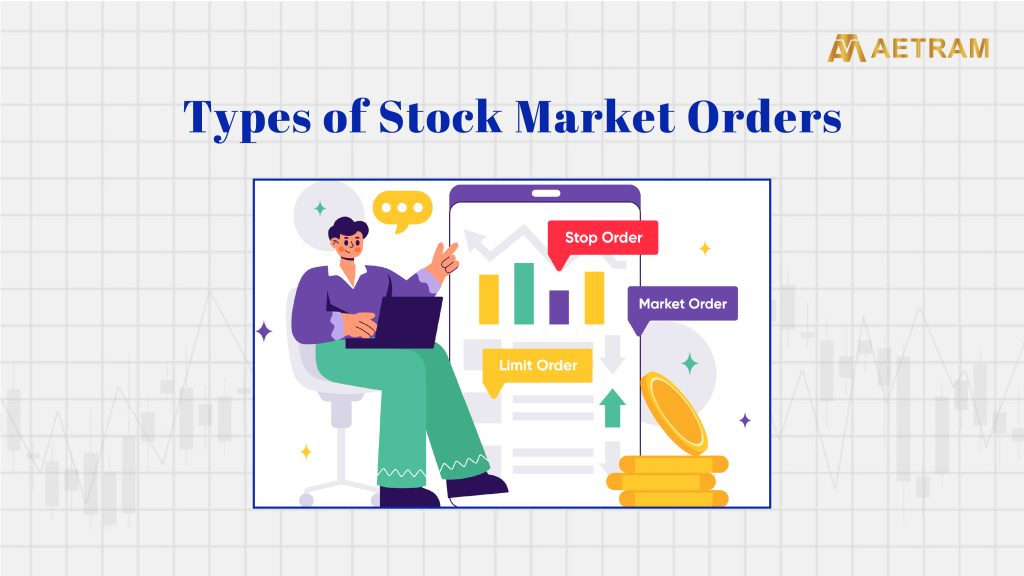
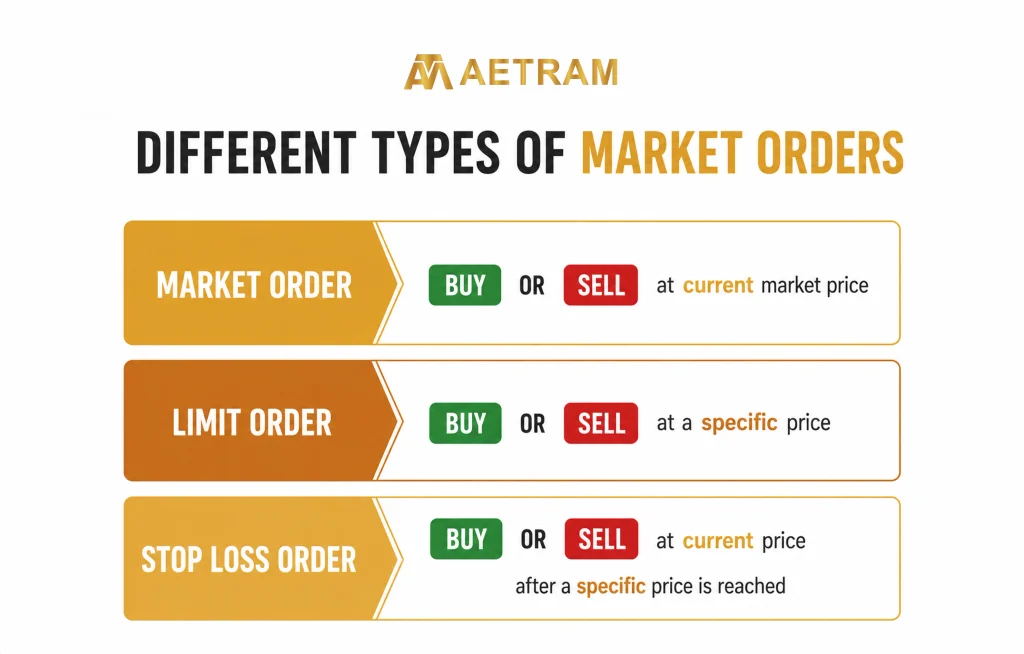
The type of order you choose to execute a trade can make a huge difference on the outcome of the trade. That’s why it’s worth taking a closer look at the three most common order types: market orders, limit orders and stop-loss orders available across all trading platforms. These orders serve a unique purpose and can be used based on different market situations.
Market Order
A market order is one of the types of orders where you can place orders at the prevailing market price instantly and the order gets executed immediately. If you believe the price is ideal to buy or sell a security, then you can complete the transaction right away. This type of order can be used by a trader or an investor when they are certain about their decision and do not want to wait for a stock to hit a specific price.
Generally, a trader will be able to see the last traded price on the platform but when you execute the trade, your average buying price or selling price may be different from the last traded price. This is because not everyone wants to sell or buy at the same price and the market price is dynamic. In fast-moving markets, prices can shift quickly in just minutes and relying on the last traded price is not reliable.
Market order is typically placed during regular trading hours and you cannot place an order after the market closes. If you want to place an order after market hours you can place After Market Order. Once placed, the market order will be executed on the next trading session. However, during this period there can be any new developments with respect to companies reporting earnings, news or rumours about the company, economic data, or broader market events can all shift stock prices overnight. So, timing matters and being aware of these changes will help you before trading or investing.
Limit Order
A limit order is a type of order where you intend to buy or sell a security at a specific price, but this is not guaranteed. You may use a limit order when you believe you have a chance to buy a security at a lower price or sell a security at a higher price.
Having said that, even if the stock hits your set limit price, your order might still not get executed because other traders may have placed orders which can be ahead of yours. In addition, there might not be enough buyers or sellers at that limit price you have set.
Stop-loss Order
A stop-loss order is a type of order which is used to minimise the losses in a trade or protect your unrealized gains. If you have taken a long position, you will put a stop-loss order on the lower side of your buy price or the current price at which it is trading. If you have taken a short position, you will put a stop-loss order on the higher side of your sell price or the current market price at which it is trading.
If the stock price hits your stop-loss price, the order will get executed at the pre-determined price or the next available price. If the stock price does not reach the stop-loss price, the order will not be executed. A stop-loss order can be useful in various situations.
For example, if you already own a stock which has risen and you are worried that the price might drop, a stop-loss order can help you lock in some of your gains before the price falls too much.
Another example is when you have bought a stock and don’t want to lose more than a certain amount, a stop order can act as a safety net and it will help you protect your capital from bigger losses.
There is also something called the trailing stop-loss order where the stop-loss price gets adjusted as the price of the security increases or decreases. A trailing stop-loss price is set based on pre-determine amount or as a percentage of the price at which the security was bought or sold. So, if the stock price moves as expected, the stop-loss price will follow the stock price. However, if the market is volatile and the price fluctuates unexpectedly, the stop-loss price can be hit prematurely, which might reduce your potential gains.
Conclusion
As a trader or an investor you must explore the different order types available to you based on different market situations rather than solely relying on one order type to execute all kinds of trades. Whether you’re buying or selling, you should always assess what your goal is. Once you know your objective, you can pick the order type that best fits your needs.