Old vs New Tax Regime: How to Choose

Selection of the Old Tax Regime and the New Tax Regime is the most crucial decision that taxpayers make while filing their Income Tax Return (ITR). Both the systems have their own pros and cons depending on the income, investments and tax savings. Instead of making an assumption about which regime is better than the other, it is essential to know both the concepts.
What is the Old Tax Regime?
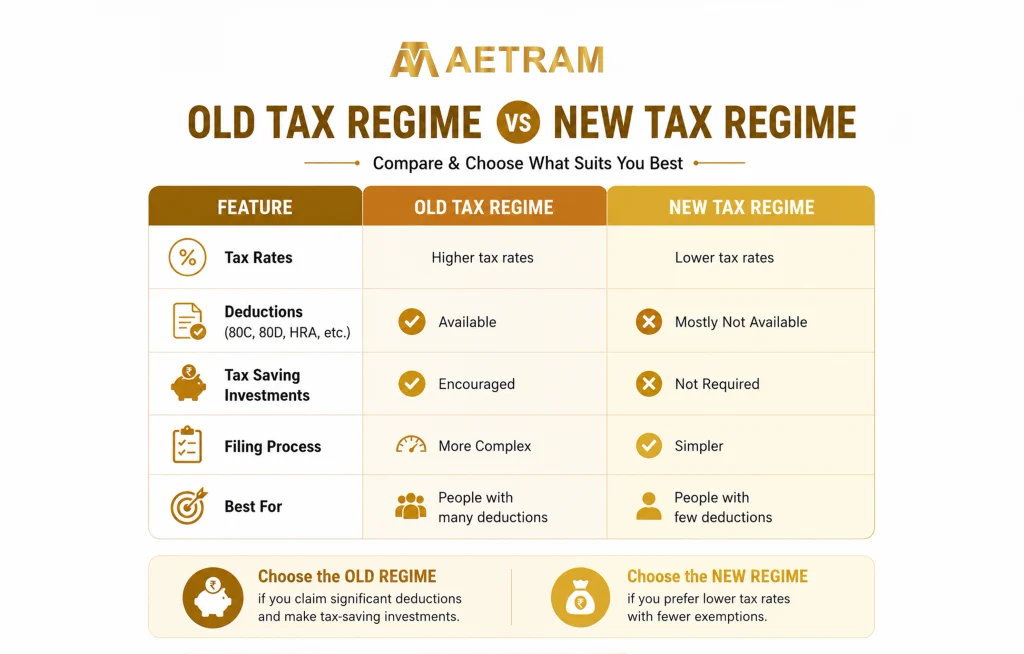
In the Old Tax Regime, a person can claim numerous deductions and exemptions to reduce his or her taxable income. This might include investments made through Section 80C, health insurance premium payments, deductions related to home loans and several others. It is usually recommended to people who save tax using different methods.
What is the New Tax Regime?
In the New Tax Regime, lower tax rates can be claimed, but most deductions and exemptions available under the old tax regime cannot be claimed. It aims at simplification of tax filing as it avoids the requirement of tax-saving investments. Most of the salary earners can easily opt for this tax regime.
Which Regime Works Best for You?
The answer may differ from person to person. Based on your personal finances, you need to determine which regime is better for you. If you are someone who often pays for various tax-saving plans, makes payments on home loans and claims numerous deductions, Old Tax Regime can reduce your tax outgo.
Compare Before Filing Return
Before filing your tax returns, do compare your tax liability in both regimes. Look at your total income, allowed deductions, exemptions and financial planning before you opt for one regime over the other. Most people just end up filing their returns based on the default regime without considering the differences between the two.
Don’t Let Taxes Drive Your Investments
Though it is necessary to save money through taxes, investments should not be done only for the sake of saving on taxes. Invest in such a way that it fits into your plans of earning in the future. The benefit from taxes can be considered as an added benefit of investment.
Choose What Is Suitable For You
Both the Old Tax Regime and the New Tax Regime serve different kinds of tax payers. There is no regime that suits all – the best regime will depend on your income and deductions. Compare both regimes before filing your ITR and choose the regime which suits you the most.
Connect with Aetram if you want to make smarter financial and tax planning decisions.
FAQs
1. What is the difference between the Old and New Tax Regime?
The Old Tax Regime allows various deductions and exemptions, while the New Tax Regime offers lower tax rates with fewer deductions.
2. Which tax regime is better for salaried employees?
It depends on your income and the deductions you are eligible to claim.
3. Can I compare both tax regimes before filing?
Yes, comparing your tax liability under both regimes can help you choose the more beneficial option.
4. Should I invest only for tax savings?
No. Investments should primarily support your financial goals, with tax benefits being an additional advantage.
5. Does the New Tax Regime require fewer documents?
Generally, yes. Since most deductions and exemptions are not available, tax filing may be simpler under the New Tax Regime.