Markets Are Volatile: Is Fear the Real Reason You’re Losing Money?
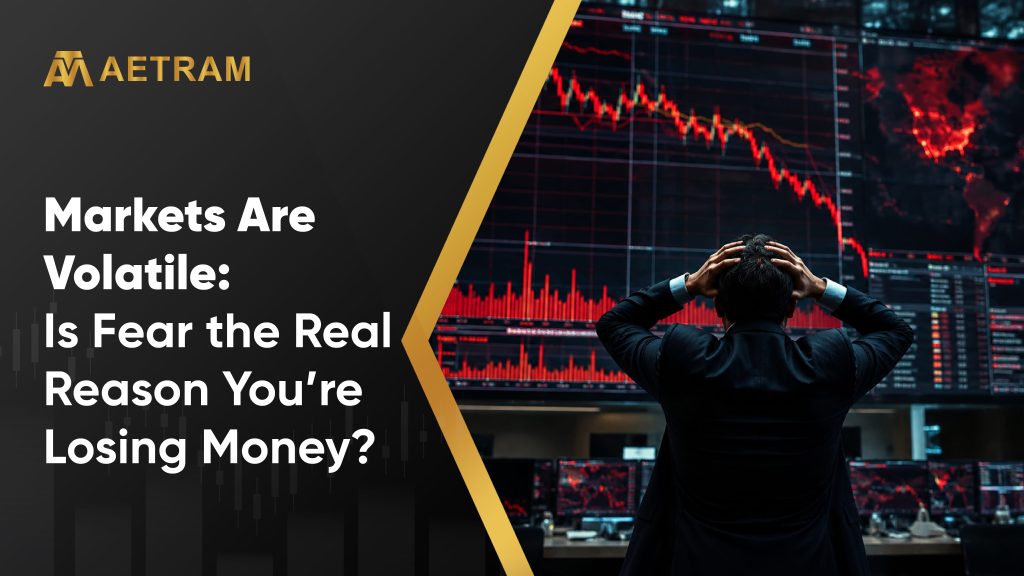
Capital markets are volatile inherently and the Indian stock market is no exception to it. One day the market rises and the following days it may keep falling due to negative sentiments, FII selling pressure, global cues, geopolitical events, etc. But what is the cause for this volatility? Is it a rational decision taken by market participants to make the markets fall or is it due to any other emotions that lead to the fall. Let us look at the psychology and the events that lead to you losing your money in the market in this blog.
What is volatility?
Volatility in the financial market happens when prices of a security rises and falls quickly and suddenly because many market participants or investors or traders are buying or selling at the same time.
Volatility is not just present in the stock market but it is present in other segments like bonds, commodities and derivatives segments also.
If a security or investment’s price moves up and down more from its average, then the security has high beta which is nothing but more volatile. High volatility means the investment is riskier because prices can change quickly and unpredictably. In contrast, low volatility means the prices stay stable and it means it is relatively safer and less risky.
The stock market in India has seen a lot of price fluctuations. Back in 2008, during the global financial crisis, the Nifty dropped by about 55%. In 2020, when the world faced the covid pandemic, the market fell by about 38–40% in just a few weeks. However, the market rebounded pretty quickly. Most of the time, the overall market is likely to see a correction of 10% to 20% during the financial year or calendar year and may recover.
Even in 2026 so far, we have seen some big fluctuations and the India VIX, which is a measure for market fear, has spiked sharply, sometimes reaching over 100 in the month of March 2026 and this shows the market was driven by fear.
But history proves one thing and that is the markets will always recover, except that, we do not know the timeframe for recovery. People who have stayed invested through these tough times or drawdowns have seen strong returns over 10 years or more. The real problem is when fear makes you sell when the market is down but you miss out during the rebound phase.
Reasons for losing mooney
Though many Indian investors have entered the stock market by opening a free demat account, thanks to discount brokerage, easy-to-use apps, fast mobile internet connection, etc. they have a long way to go in terms of psychology, being disciplined and patient. There are few reasons for investors losing money which we will discuss in this section.
Panic selling: Whenever there is a sharp fall in the market due to heavy selling by institutional investors and negative geopolitical events, then retail investors are more likely to sell in panic and sometimes book losses instead of staying patient.
Loss aversion: People tend to hate losses because losses cause more pain for investors than profits causes more joy. They stay invested in losing stocks instead of cutting losses because it is very hard for them to let go of those losing stocks because they hope the stock will recover and hold on to them and eventually end up losing a lot more money.
FOMO at Tops: FOMO stands for Fear Of Missing Out and it is an intense emotion, driven by overconfidence and a strong urge to buy overvalued assets due to some social media hype and the fear of losing potential profits.
Fear at Bottoms: This is also a kind of fear but this fear is triggered among the investors when the price of the security keeps falling and they are forced to sell at a lower price than they bought, eventually leading to booking losses.
Herd Mentality: Many investors have a herd mentality because these types of investors blindly follow the actions of others. They buy or sell when they see or hear other investors are buying/selling without doing their own independent analysis or research.
Recency bias: It is a tendency for investors to give more importance to recent events and data rather than long-term market trends. This thinking affects their investment decisions because they end up selling during short-term corrections or start buying irrationally at higher prices.
How to offset fear in investing
Systematic Investment Plan (SIP): Whether you are investing in direct stocks or not, start an SIP and invest regularly. Because this will help your money to compound over a longer period of time and it will also help in rupee cost averaging.
Diversification: Don’t invest your money only in mid-sized or small companies. Keep a balanced mix of large-cap companies, index funds, some debt and some commodities like gold or silver ETFs or in the physical form because asset allocation is important. Review your portfolio every 6 months or yearly.
Emergency Fund: You do not when an emergency like sudden medical expense or job loss will happen. So it is better to be cautious and have an emergency fund for 6 to 12 months of your monthly expenses in easy-to-access savings or liquid funds. By doing so, you won’t have to sell your investments at lower profit or at a loss when the market falls.
Focus on long-term: One of the ways to reduce risk in investing is by thinking long term and investing in good quality companies which report consistent revenue growth and profit after tax. You should never get distracted by news, rumours or short-term market chatter.
Journaling: Keep a simple investment journal and write down why you bought a stock or fund and the reasons behind it and how long you plan to hold it and for what reasons.
Turn off notification: If you use an investment app, you must turn off the price alerts because they can cause panic and force you to do impulse buying or selling.
Improve knowledge: Read some classic books based on mindset and psychology like The Psychology of Money by Morgan Housel or The Disciplined Trader by Mark Douglas or Warren Buffett’s letters to learn how smart investors think or .
Seek professional help: If you’re feeling overwhelmed about the market or the money you have invested, talking to a trusted financial advisor who is registered with the market regulator SEBI can help you stay calm and make clear decisions.
Conclusion
Despite India’s long-term growth story being strong, many retail investors end up losing money or badly underperforming the market and it is not market volatility. The main reason is fear-driven reactions to the market and drifting away from your long-term investment plan and running behind short-term profits.
Unless you train your mind to be calm and think clearly during market corrections or crash and invest in good quality stocks at a bargain, you are going to end up buying and selling at the wrong time due to fear.