Main differences between REIT and InvIT: Explained
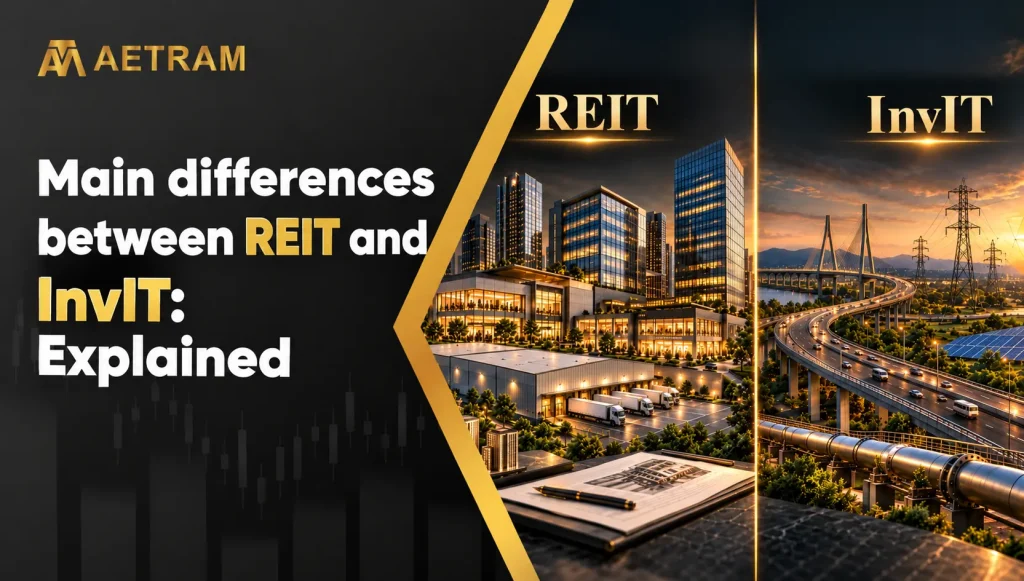
Indian investors have a lot of options in terms of different types of investment products. Of late financial products like REITs and InvITs have become popular among investors due to their advantages like both are regulated by the market regulator SEBI and considered to give steady income. They are listed on stock exchanges and therefore trade like stocks.
Though REITs and InvITs look similar, there are some differences between these investment products. There are even two Nifty indices, namely, Nifty REITs & InvITs and Nifty REITs & InvITs 90:10.
As India focuses on building its infrastructure and India’s Asset Monetisation Plan for 2025-30, the sector is expected to unlock fresh opportunities in roads, railways, power, telecom, etc. Therefore it is important for investors to understand REIT and InvIT, and we will be discussing about these two in this blog
Understanding REITs
A Real Estate Investment Trust (REIT) is a trust which pools money from investors and uses that money to own and manage income-generating commercial real estate. It is a SEBI-regulated trust and they own commercial properties like office parks, shopping malls, etc. These entities do not own residential flats.
So, when investors buy REITS through the stock market, they buy units of the trust and not the entire commercial space. This is similar to buying shares of a company on the NSE or BSE.
What is an InvIT?
An Infrastructure Investment Trust (InvIT) is also similar to REIT with respect to pooling investor money, buying and owning income-generating assets. These assets could be physical infrastructure like highways, power transmission lines, gas pipelines, telecom towers, etc. Though the trust distributes earnings, the assets remain with them.
InvITs typically earn through long-term agreements with government bodies or public sector counterparties. A highway InvIT, for instance, earns toll revenue for a fixed period, a power transmission InvIT earns fixed tariffs under long-term power purchase-style agreements. This is in contrast to REITs which lease space to multiple corporate tenants.
Differences between REIT and InvIT
| Parameter | REIT | InvIT |
| Underlying asset | Commercial real estate (offices, malls, business parks) | Infrastructure (roads, power lines, pipelines, telecom towers) |
| Revenue source | Rent and lease income from corporate tenants | Toll collections, tariffs, or concession-based cash flows |
| Counterparty | Multiple corporate tenants across sectors | Often government bodies, PSUs, or long-term concession authorities |
| Regulatory classification (from Jan 2026) | Reclassified as an equity-related instrument for mutual funds and SIFs | Remains classified as a hybrid instrument |
| Cash flow predictability | Relatively stable, but tied to office/retail occupancy cycles | Very predictable where contracts are fixed-tariff; more volatile where revenue is traffic or usage-linked |
| Minimum mandatory distribution | At least 90% of net distributable cash flows | At least 90% of net distributable cash flows |
| Typical distribution frequency | Quarterly | Quarterly (some pay half-yearly) |
| Listed on | NSE / BSE | NSE / BSE |
Similarities
Having discussed the differences, these two instruments have something in common and it is the three-tier governance structure. They are the sponsor, investment manager and trustee.
Sponsor is the one who sets up the trust and appoints the trustee of the trust. The sponsor will transfer all the shareholding of the underlying SPVs to the trust prior to the allotment of units of
REIT/InvIT except for the minimum investment requirement by sponsor as per applicable guidelines. It must hold mandatory minimum units.
The investment manager is responsible for managing day-to-day operations. They are the one who chooses new assets, handles the portfolio and is responsible for performance as well as compliance.
Trustee acts as an independent body which holds the assets in trusts on behalf of the unitholders. It supervises the sponsor and manager so that investor interests are protected.
Capital appreciation
REITs may offer moderate but growing distributions with the added possibility of capital appreciation if commercial real estate values rise. InvITs, on the other hand, generally deliver higher immediate cash yields. But comparatively they have less scope for price appreciation, since infrastructure assets have a defined concession life and don’t “grow” in value the way commercial real estate might grow in a booming business district.
In other words, REITs may lean slightly towards a hybrid of income and growth, while InvITs is likely intended for more income.
Taxation of REITs and InvITs
Under the Income Tax Act, REITs and InvITs are treated as business trusts. This means the trust does not pay any taxes on the income it earns. But the tax liability is passed on to the unitholders. So as an investor in REITs and InvITs, you will pay the tax on the income you have received.
REITs and InvITs distribute income to investors in a few different forms like interest, dividend, rent, or repayment of debt/capital and each is taxed under its corresponding income head. Higher tax may be levied on investors based on their corresponding slab rates. Surcharge and cess may also be applicable on them, based on the new income tax rules.
Separately, if you sell or transfer your units and make a profit, then that is treated as capital gains and taxed under the corresponding rules. Moreover, if tax has been deducted as part of TDS, you will have to claim that TDS when you are filing your income tax returns.
Risks associated with REITs and InvITs
Like any investment products, even REITs and InvITs are not risk free. Both these financial products have different kinds of risks associated with.
REIT risk is closely linked to the commercial real estate cycle like vacancy of office spaces, renewals, tenants’ business growth, etc. For example, any slowdown in IT or corporate recruitment, can immediately affect the occupancy and renewal of office spaces REITs.
On the other hand, InvIT risk is related to project clustering, regulatory changes in tariffs, limited concession period of infrastructure assets. Some InvITs are related to road and highway assets and the traffic level plays an important role. This is because cash flow volatility due to traffic levels can impact the revenue. Meanwhile, fixed-tariff assets (e.g., power transmission) carry counterparty and regulatory risks.
Though REITs and InvITs come under SEBI’s regulatory oversight and the mandatory 90% cash flow distribution requirement, neither should be treated as a substitute for a fixed deposit and it should be for asset diversification. These two can be impacted by market sentiments, interest rate movements, sector-specific news, government policy changes, etc.
Who can invest in REITs vs InvITs?
REITs and InvITs can be used for your portfolio diversification. Choose REITs if you want to participate in the commercial real estate market without having to buy physical assets. If you will be satisfied with receiving stable income in the form of rent and if you have the patience to hold on to the asset till there is a capital appreciation as office markets or retail consumption markets grow, you can look at investing in these.
Choose InvITs if you are focused on good yields and do not mind a more predictable income stream derived from the long-term contracts with infrastructure users. You can allocate your capital in both of these as they respond differently to the business cycle forces and seek to balance the risks associated with interest rates and capital gains. So investors can hold both in different proportions based on their income needs and risk appetite.
How to invest in REITs and InvITs in India?
Getting started is simple as both of them are exchange-listed instruments:
- Open a demat and trading account with any SEBI-registered broker by completing the KYC process, if you don’t already have one.
- Search for your desired REIT or InvIT by its ticker on your trading platform, just like you would search for a stock and add it to your watchlist.
- Do a thorough research and study about REITs and InvITs you want to invest in, like their revenue growth, occupancy levels, concession period, duration of lease, etc.
- Since REITs and InvITs are traded in the stock market, you can place orders to buy or sell them in the secondary market during trading hours.
If picking individual REITs or InvITs feels like too much research, there’s now a REIT/InvIT-linked ETF in India that tracks the Nifty REITs and InvITs Index, offering single-instrument diversified exposure across all listed trusts which is both REITs and InvITs.
Conclusion
REITs and InvITs have moved well past their experimental phase in India. It has been more than a decade since their introduction. They have become genuine alternatives to fixed deposits and bonds for investors chasing steady income, backed by real, income-generating assets rather than a company’s balance sheet promises.
The core distinction is simple to remember: REITs are a real estate play, InvITs are an infrastructure play. From there, the differences in cash flow predictability, yield versus growth potential, and risk drivers naturally follow. Neither is inherently “better” and the right choice depends entirely on what you’re optimising for: steady infrastructure-linked income, or a blend of rental yield and real estate upside.
As always, this article is meant to inform, not advise. REIT and InvIT distributions, tax treatment, and portfolio suitability can vary based on your individual financial situation, so it’s worth speaking with a SEBI-registered investment adviser or a qualified tax professional before allocating a meaningful portion of your portfolio to these instruments.
Frequently Asked Questions (FAQs)
What is the main difference between a REITs and an InvITs?
REITs invest in commercial real estate like offices and malls, earning rental income. InvITs invest in infrastructure assets like roads, highways, power lines, etc. earning toll or tariff-based revenue instead.
Are REITs and InvITs returns taxed in India?
If you invest in these investment products, you are likely to receive interest, dividend, capital gains, etc. and these incomes are taxed as per new income tax rules.
How can I start investing in REITs or InvITs?
You can use your existing demat and trading account, search the REIT or InvIT by its ticker symbol and place an order on the exchange like any listed stock.
What factors determine REITs cash flows?
REIT cash flows depend on lease contracts, occupancy rates, periodic higher rents as per the terms and conditions with the tenants.
How do InvITs earn their income?
InvITs generate their income via tolls, rents, interest, or dividends derived from their investments in infrastructure assets or by investing in securities of infrastructure companies.