How Rupee Depreciation Can Affect Gold Prices in India?
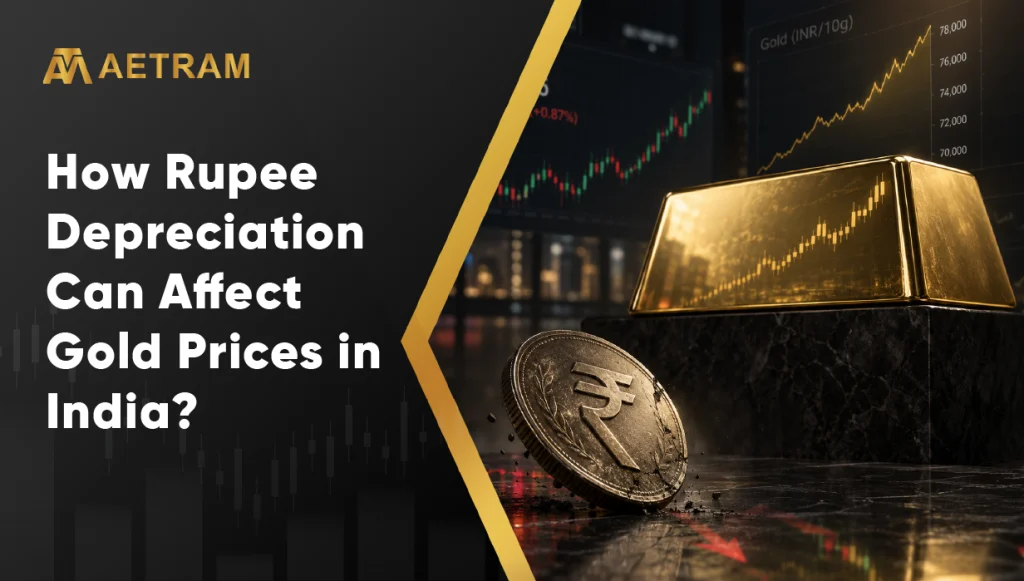
One day you get up and see that the rupee has depreciated with respect to the US dollar. In addition to that, the gold prices in India have increased. Coincidence? Well, not quite. The rupee-dollar rate is one of those factors which can impact the gold price in India. Gold is priced in international markets in US dollars. A depreciation of the rupee may cause gold prices to become relatively costlier for buyers in India. However, the correlation between the two is not always “if rupee depreciates then gold will rise.” There are other factors which impact the price of gold.
Why is Dollar Important for Gold in India?
Gold is a globally-traded commodity and the benchmark prices for gold are normally quoted in US dollars. India imports a good portion of its gold supply. Therefore, when Indian customers or importers buy gold from the international market, the exchange rate becomes relevant.
Let’s assume that the price of international gold is $2,500 per ounce. If the exchange rate stands at ₹80 per dollar:
$2,500 × ₹80 = ₹2,00,000
However, if rupee falls to ₹85 per dollar but the international gold price stays the same:
$2,500 × ₹85 = ₹2,12,500
Here, the international price remains unchanged; however, the price of gold in rupees increases.
What If the Rupee Becomes Weaker Against the Dollar?
If the rupee weakens against the dollar, usually, imports will get costlier in terms of the rupee. Because gold is mostly imported, depreciation in the rupee can make gold more costly in India. It can lead to high gold prices in India. This is why it is clear that even if there is no change in gold prices globally, changes in the rupee exchange rate can cause Indian gold prices to fluctuate.
Indian Gold Prices Do Not Change According to Rupee Alone
It is an important aspect to remember that gold prices in India depend on factors other than the rupee alone. Let us say there is a sudden rise in the dollar gold price while the rupee depreciates. In this case, the Indian gold price will be subject to a stronger move upwards. But suppose the international gold price falls while the rupee depreciates. In this case, there will be a certain degree of balancing effect on gold prices due to weakening of the currency. Thus, Indian gold prices are influenced by:
• International gold prices
• USD/INR exchange rate
• Import-related costs
• Taxes and duties
• Domestic demand
• Global interest rates
• Inflation expectations
• Geopolitical and economic uncertainty
That is the reason why it is unwise for you to consider the rupee in isolation in determining gold price movements.
Why is Gold Usually Vulnerable in Economic Uncertainties?
Gold is considered to be a defensive investment and its demand can rise when there are apprehensions in the minds of investors about the uncertainties related to the economy or geopolitics. In this situation, foreign investors may opt for investments that they consider to be stores of value. This could be positive for international gold prices. However, if in addition to this, the rupee weakens against the US dollar, then Indian gold prices could get another boost from the currency factor.
Implications of Rupee Depreciation for Gold Investors
If you have gold, rupee depreciation may be advantageous for your rupee value of the investment if the international price of gold remains stable or increases. To illustrate this point, let’s say you have gold when the international price of gold is $2,500 per ounce while the rupee value of the dollar is ₹80. In case the international price of gold does not change while the rupee moves to ₹85 per dollar, the rupee value of your gold increases. Nevertheless, this does not necessarily mean that rupee depreciation will always make the investors who invest in gold profitable.
What About Gold in Digital Form, ETFs & Gold Funds?
However, the currency effect may apply to any financial instruments which are based on gold, but again it all depends on the specific instrument. Thus, gold ETFs and gold funds normally try to follow the domestic prices for gold with some expenses and tracking errors. Prices for physical gold are affected by a number of factors besides the underlying international gold price, such as taxes, customs duties, production costs and spreads of dealers. In this case, it is important to understand what investment you purchase instead of thinking that any form of gold investment provides similar returns.
Is It True that a Rising Rupee Causes Falling Gold?
No, it does not have to be true in all cases. If there are no changes in other factors, the stronger rupee will cause reduction in the rupee cost of imported gold. However, the gold prices may go up in case of a sufficient increase in international gold prices. For example, a significant rise of international gold prices in dollars will make the influence of the currency effect insignificant.
Why Track USD/INR for Investors?
If tracking gold price trends in India, then watching the USD/INR price trend may offer some insights into why gold prices are changing the way they do. Whenever there is a sharp fall in the value of rupee, the cost of foreign goods (including gold) in rupees increases. In addition, the dollar price also has an impact on global investor behaviour and commodity prices. Hence, rather than seeing trends only in the domestic gold price, one may also take into account the international gold price and currency trend while trying to decipher the reason behind the change in the domestic gold price.
Do Not Automatically Associate Rupee Price with Gold
While it is easy to think “Rupee price is falling so gold will automatically go up”, remember that this logic does not always work in the market. For example, even if there is a fall in international gold prices, the domestic gold prices may decrease along with the fall in rupee price because of various factors including change in import duties/taxes or demand in the market among others.
Gold’s Link with Currency
Depreciation of the rupee may lead to an increase in gold prices in India since the price of internationally traded gold is set in US dollars while India imports most of its gold. This means that when the rupee depreciates, the cost of purchasing the same amount of gold in rupees may rise even if there is no change in the price of gold in the international market. It should be noted that gold prices are determined by many variables and not only by the exchange rate. This means that knowledge of the link between gold and the rupee can help you understand price changes.
For more market insights, trading resources and information to help you stay informed and make more considered decisions, explore Aetram.
FAQs
- Why does rupee depreciation affect gold prices in India?
Because gold is internationally priced in US dollars. When the rupee weakens, purchasing the same amount of gold in dollar terms can require more rupees. - Will gold always rise when the rupee depreciates?
No. Global gold prices and other factors can move in the opposite direction and offset the currency impact. - Does a stronger rupee make gold cheaper in India?
All else being equal, a stronger rupee can reduce the rupee cost of imported gold. However, domestic gold prices also depend on several other factors. - What other factors influence gold prices in India?
International gold prices, exchange rates, import-related costs, taxes, domestic demand, interest rates, inflation expectations and global uncertainty can all influence prices. - Does rupee depreciation affect gold ETFs and gold funds?
It can affect them indirectly because these products are generally linked to domestic gold prices. However, actual returns can differ because of expenses, tracking differences and the structure of the particular investment product.