ETF vs Direct Stocks: Which Is Better for Beginners?

It can be a frightening experience at first as to which one will suit your investment portfolio between investing in ETFs and investing in the stock markets. Both play different roles in your investment plan, but what is important is that you understand what these terms mean before choosing one over the other.
What Are ETFs?
ETF stands for exchange traded funds. These funds contain a set of assets, such as stock securities. Unlike stocks, ETFs allow you to buy shares in multiple companies at once. What is more, they are tied to a market index. The goal of such funds is to reflect the performance of the market, rather than to outperform it.
What Are Direct Stocks?
Direct stocks mean buying shares of individual companies. Your returns depend on how well that specific company performs. This approach gives you more control, but it also requires more effort. You need to research companies, understand their financial performance and keep track of market trends.
Understanding the Key Distinction
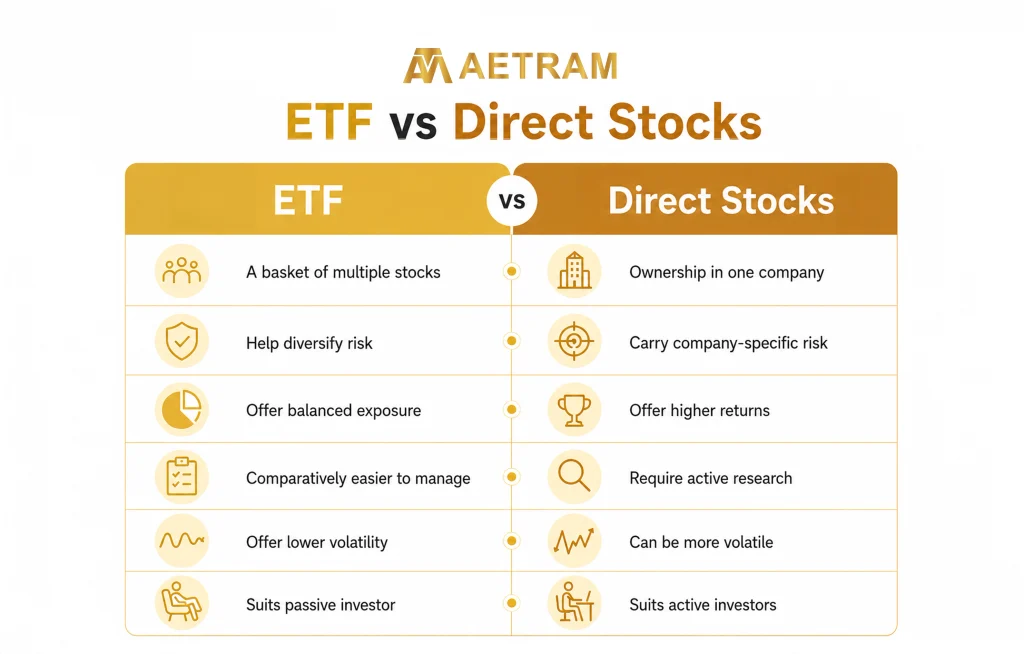
The primary distinction between ETFs and direct stocks is that the latter does not provide diversification. Instead, your funds will be invested in different firms when buying an ETF. However, you must buy shares from a single firm when purchasing direct stocks, making them inherently risky.
Which One Is Best for Newbies?
Newbies may find ETFs to be an excellent entry point since they do not necessitate thorough research. Additionally, you get diversification by default. As a result, there is little risk of losing your money. Conversely, choosing direct stocks requires substantial research and experience. Moreover, these investments demand constant monitoring, which could become too much for newbies.
The Risk Versus Reward Conundrum
The majority of ETFs tend to have stable, moderate returns. They also mimic the market, making your return predictable and reasonable. In addition, ETFs automatically provide diversification, allowing you to recover any losses incurred in one investment with profits made elsewhere. Direct stocks may yield higher rewards, but the risk of suffering huge losses is also significant.
Cost and Effort Needed
ETFS tend to be economical and do not require much hands-on work. It is possible to buy and keep ETFs without making many adjustments. Investing in stocks could take some effort since it involves monitoring the business’ progress and the state of the market. Thus, it suits those individuals who would like to participate in the process.
Which One Should You Go For?
If one is new to investing and seeks an easy and safe path, then he/she should opt for ETFs. On the other hand, if someone wishes to understand companies in-depth and enjoys taking risks, then investing in stocks will be ideal.
Start Simple and Grow Confidently
There is not one best choice for everybody. ETFs are straightforward and predictable; whereas, stocks require effort but have more profit potential. It makes sense for novice investors to start with ETFs. With experience gained and more knowledge acquired, then stocks become an option. The point is to select an appropriate strategy that will help in building a solid investment portfolio.
Connect with Aetram if you are looking to begin your investment journey the right way.