5 Signs You’re Borrowing More Than You Can Afford

Getting a loan doesn’t necessarily make things worse. It helps you in many aspects of life such as buying your dream house, funding education and even in unexpected situations. But when you cannot control it, then there are chances that it may impact your financial stability and future plans.
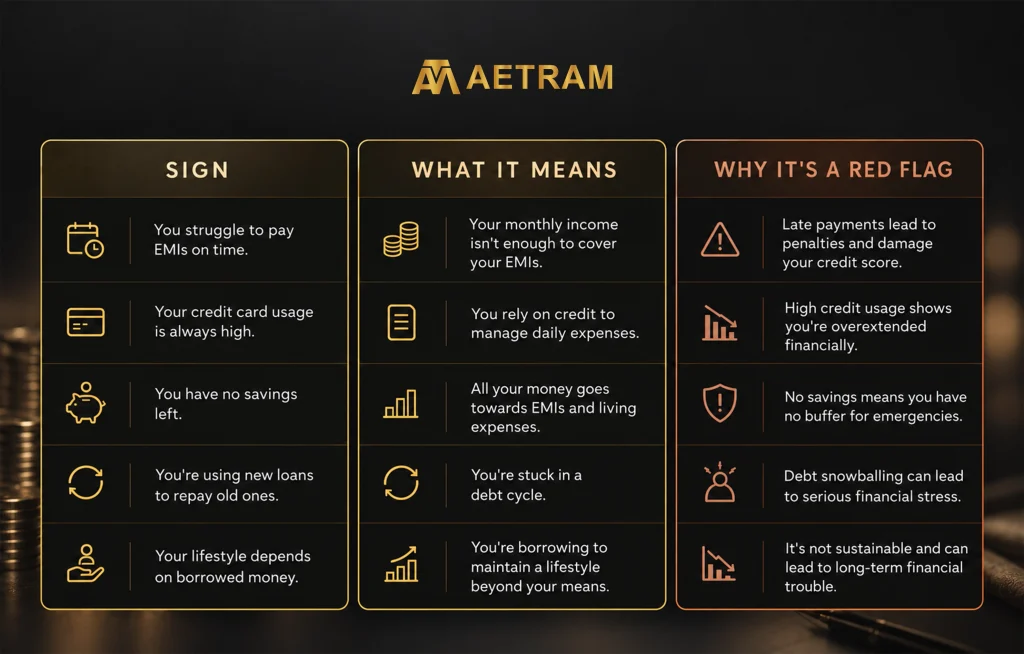
These are the five signs which indicate that you are taking loans in excess.
1. Bulk of Your Income is Spent in Paying EMIs
If your salary is largely used in paying back the loan amount, then you may face difficulty in meeting your necessities, savings and investment plans. A good budget must have provision not only for the necessities but also for future financial planning.
2. Taking New Loan To Pay Off Previous Ones
Taking new loans or making use of credit cards for payment of previous EMI is the worst sign which indicates that you are going into the trap of excessive debts.
3. You Do Not Have Any Savings as an Emergency
When each unforeseen cost is met by borrowing, it could imply that there is no space left after debt for savings for emergencies. Financial security not only lies in controlling the debt but in savings as well.
4. You Often Miss or Pay EMIs Late
The consequences of missing or being late with EMI payments can be a penalty or even damage to your credit score. It will serve as a warning if you are finding it hard to make timely repayments.
5. You Use Credit for Every Day Expenditure
Loans should be used for meeting big financial requirements and not for regular expenses like grocery shopping or dinners out.
A Simple Illustration
Consider a person with a monthly income of ₹60,000. They pay ₹22,000 in EMI payments for loans monthly, which leaves the rest of the income to take care of their rent, groceries, utility bills, transport costs and all other necessities of the household. In case of any medical emergencies, they lack an emergency savings fund and therefore turn to the credit card to meet the expenses.
With the passage of time, the credit card debt increases, making the monthly financial management even more difficult. This is how over-borrowing can affect a person’s finances slowly but steadily, despite having a consistent income source. It is evident from the above example that the main issue does not lie in borrowing but what follows after that.
What Can You Do?
When you notice these warning signs, do not panic. Begin by looking at your income, expenditure and the loans that you have already incurred. The key is in cutting down on non-essential expenditure, getting out of debt and coming up with a repayment plan.
Borrowing Wisely and Living Confidently
Loans can actually be good in the right way that you do it, whereas spending more than you should is going to make you financially dependent. You will be able to manage your finances better once you are aware of all the above signs. The best part about borrowing money wisely is that it is not about not borrowing at all but about having your aims met through loans.
Connect with Aetram for more practical financial tips and smart strategies to help you manage debt, grow your savings and build long-term financial security.
FAQs
1. How do I know if I’m borrowing too much?
If your EMIs consume a large part of your income or you’re struggling to make repayments, you may be over-borrowing.
2. Is it okay to have multiple loans?
Multiple loans can be manageable if repayments comfortably fit your budget and don’t affect your financial stability.
3. Can late EMI payments affect my credit score?
Yes. Delayed or missed EMI payments can negatively impact your credit score and future borrowing ability.
4. Should I use a loan for everyday expenses?
Generally, borrowing for routine expenses isn’t advisable, as it can lead to long-term financial stress.
5. How can I reduce my debt burden?
Create a repayment plan, avoid taking new loans unnecessarily, reduce discretionary spending and prioritize building an emergency fund.