Why Mutual Fund Distributors Matter Even When You Have Direct MF Schemes?

Every time an investor wants to invest in a mutual fund scheme he/she is always confused whether to opt for a direct MF scheme or Regular MF scheme.
Thanks to the never ending debate on social media between regular and direct MF. Some arguments for direct plans are solid, like direct plans have a lower expense ratio, the underlying portfolio is identical, so why would anyone pay a distributor?
On paper, the maths is hard to dispute. In practice, India’s mutual fund industry tells a more complicated story. Individual investors’ AUM in direct plans grew 43% in 2025, far outpacing the 11% growth seen in regular plans, and yet regular plans still command the larger share of total industry assets. If direct plans are objectively cheaper, why hasn’t the industry tilted entirely in that direction?
The answer lies in a distinction that spreadsheets don’t capture: the difference between cost and value. This blog unpacks why mutual fund distributors (MFDs) continue to matter to a large section of Indian investors, even in an age of app-based direct investing.
The Real Difference Between Direct and Regular Plans
Before getting into the “why,” it helps to be precise about the “what.” Direct and regular plans are two parallel variants of the same mutual fund scheme, and SEBI (India’s market regulator) has mandated every fund house to offer both since January 2013.
Both plans invest in the identical portfolio of securities, managed by the same fund manager. But the only difference lies in the cost structure and the channel through which the investor accesses the scheme.
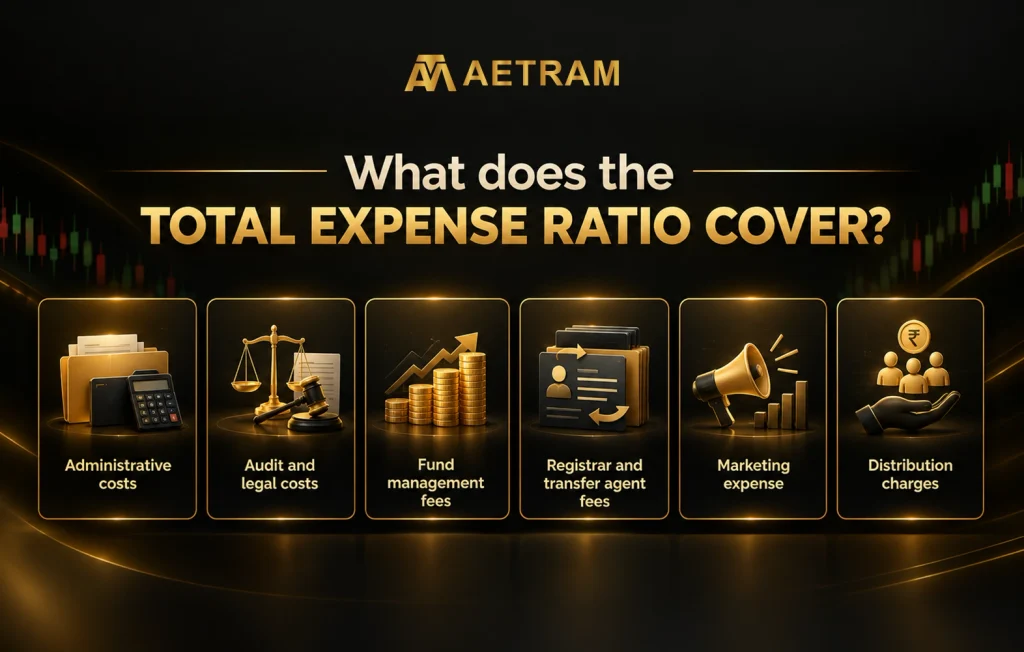
In a regular plan, the distributor is compensated through a trail commission that is embedded in the fund’s Total Expense Ratio (TER). This TER gap between direct and regular plans typically runs between 0.5 and 1.0 percentage points a year.
In a direct plan, that commission simply doesn’t exist, so the units are bought straight from the asset management company (AMC) without any intermediary involvement, and the NAV compounds slightly faster over time as a result.
None of this is in dispute. Where the conversation usually stops is what an investor is actually giving up when they skip the distributor relationship altogether.
Cost vs Behaviour In Investing
Ask any experienced advisor what actually erodes retail investor returns, and cost rarely tops the list. Behaviour does. Panic selling in a downturn, chasing last year’s top-performing fund, stopping SIPs the moment markets wobble, or simply never rebalancing a portfolio are some of the behavioural decisions that typically cost investors far more than a 0.5% or 1% TER difference ever could.
This isn’t a hypothetical concern in the Indian context. AMFI’s own SIP data through 2026 illustrates just how fragile investor discipline can be.
In February 2026, the SIP stoppage ratio which measures SIPs stopped, completed, or discontinued against new SIPs registered in the same month rose to 75.62%, up from 74.83% in January. By March and April 2026, the picture turned sharper still: the stoppage ratio actually crossed 100% in both months, meaning discontinuations outpaced new registrations, and this appeared to reflect genuine account behaviour. Even in May it was as high as 95.46% with market volatility cited as a key trigger for pausing SIPs.
This is precisely the gap a good MFD is meant to close. As one industry commentary puts it plainly, investing returns are shaped by both cost and behaviour, and the behaviour gap is typically larger than the cost gap. A competent distributor narrows that behaviour gap, handles the paperwork, maps financial goals and helps investors avoid expensive mistakes. This is the value created by mutual fund distributors that often outweighs the additional cost of a regular plan.
Where Distributors Add Value Beyond “Selling a Fund”
The stereotype of an MFD as someone who simply pushes whichever scheme pays the highest commission is outdated for most serious practitioners today, and increasingly regulated by SEBI. In reality, the value a good distributor brings spans several dimensions that a direct-plan app simply cannot replicate:
1. Goal-based financial planning. Most retail investors don’t walk in knowing exactly how much they need for retirement, a child’s education or a home down payment. A distributor helps translate vague financial anxiety into a concrete plan like how much to invest, in which fund categories, how long to invest, whether to go for SIP or lumpsum, etc.
2. Asset allocation and rebalancing. Choosing a fund is the easy part. Deciding the right mix of equity, debt, and hybrid categories is the difficult one which can be done by a mutual fund distributor. In addition, MFDs help in periodically rebalancing as your goals approach or when the markets move. This requires regular tracking that most DIY investors simply don’t pay attention to.
3. Behaviour during volatility situation is arguably the single biggest value driver. When markets fall 15–20% in a matter of weeks, the instinct to stop SIPs or redeem in panic is strong. A distributor who picks up the phone during that moment and talks to an investor to stay the course, often prevents the single costliest mistake in an investor’s financial life.
4. Paperwork, compliance, and life-stage transitions. KYC updates, nominee changes, transmission of units after a death in the family, tax-related redemptions, etc. are some administrative work which are time consuming and tedious. If you have a distributor, then it makes the life of the investor simple as the distributor typically handles them without friction.
5. Indian retail investors are bombarded with WhatsApp forwards algorithm-driven “top funds” lists, advice from influencers, etc. which results in confusions. Most of them are not knowledgeable enough to separate the wheat from the chaff. A trusted and reputed MF distributor who is registered with AMFI can act as a filter. The distributor is also someone who is accountable for the recommendations they make, unlike an anonymous social media post.
The Regulatory Backdrop: SEBI’s Balancing Act
It’s worth noting that SEBI itself has not taken a purely “direct plans are always better” stance. The regulator has progressively pushed toward transparency and encouraged adopting direct-plan since its introduction in 2013. However, it has also acknowledged that without proper advisory support, retail investors tend to make poorer decisions, which is part of why SEBI separately created the Registered Investment Adviser (RIA) framework, a fee-only advisory model distinct from commission-based distribution.
SEBI has also continued to scrutinise the distribution cost structure to ensure fairness. Regulatory attention on the components of the Total Expense Ratio charged to investors by fund houses has been a recurring theme. This reflects the regulator’s intent to keep the direct-versus-regular gap meaningful and justified, and not arbitrary.
Meanwhile, the commission framework itself continues to evolve. A revised structure for additional commissions tied to inflows from B30 (beyond top 30) locations took effect from 1 March 2026, reflecting SEBI’s ongoing effort to widen mutual fund penetration into smaller towns where investor hand-holding tends to matter most, given lower baseline financial literacy and market exposure.
Not Every Investor Needs a Distributor
To be fair to the direct-plan camp, none of this means every investor needs an MFD. If you are financially literate, disciplined enough to stay invested through downturns, comfortable researching and selecting funds independently and willing to manage your own rebalancing and paperwork, a direct plan is a genuinely rational choice.
The cost savings are real and compound meaningfully over the long term. For example, a Rs 10,000 monthly SIP over 20 years, the TER gap between direct and regular plans can translate into a few lakhs of additional wealth.
The honest framing, then, isn’t “direct is bad” or “regular is always better.” It’s a matter of self-assessment and it includes: do you have the time, patience, risk tolerance, financial knowledge to be your own advisor? If yes, direct plans reward that independence. If not, or if you would simply delegate that mental and physical load to someone accountable for a distributor’s fee, paid indirectly through a marginally higher TER, is often money well spent and a lot of time saved.
The Data Suggests Indian Investors Are Choosing Both
India’s mutual fund industry has seen considerable growth in the last few years in both the types of plans. Investors aren’t picking one camp exclusively. The total AUM has crossed Rs 85 lakh crore by July 2026, with monthly SIP contributions holding above Rs 31,000 crore and SIP accounts crossing 10.6 crore by July 2026.
Even though there are digitally savvy and cost-conscious investors who prefer to choose direct plans to invest in mutual funds, there is a substantial number of investors who continue to rely on distributor-led regular plans. This is due to the guidance and the accountability a distributor provides and this is not something a mobile app interface can replace. Moreover, an MFD also acts as a behavioural anchor for investors who do not track the market or have less financial knowledge.
Conclusion
Direct mutual fund plans will always win the pure cost argument as there’s no getting around basic arithmetic. But personal finance isn’t a purely mathematical exercise; it’s a deeply behavioural one, shaped by fear, greed, inertia, and life’s unpredictable disruptions. Mutual fund distributors earn their relevance not by beating the TER argument, but by sidestepping it entirely. By offering something a lower expense ratio cannot offer which is a human relationship that keeps an investor invested when it matters most. For investors who value that relationship, an MFD isn’t a cost to be optimised away. It’s an investment in staying the course.
Disclaimer: This blog is intended for informational and educational purposes only and should not be construed as financial, investment, or legal advice. Investments in mutual funds are subject to market risks. Please consult a qualified financial advisor before making any investment decisions. Aetram Trades Pvt. Ltd. is a SEBI-registered stock broker and an AMFI-registered Mutual Fund Distributor (ARN-281894).