What Is Securities Lending and Borrowing (SLB)?
Imagine potentially earning additional income from eligible shares you already hold in your Demat account without selling them. This might be difficult to believe, but the Indian share market has a system through which eligible investors can lend their securities to other participants in the market for some consideration. This process is referred to as Securities Lending and Borrowing (SLB). This can be advantageous not only for the investors holding shares on a long-term basis but also for the ones requiring borrowed securities for any particular reason.
What Is Securities Lending and Borrowing?
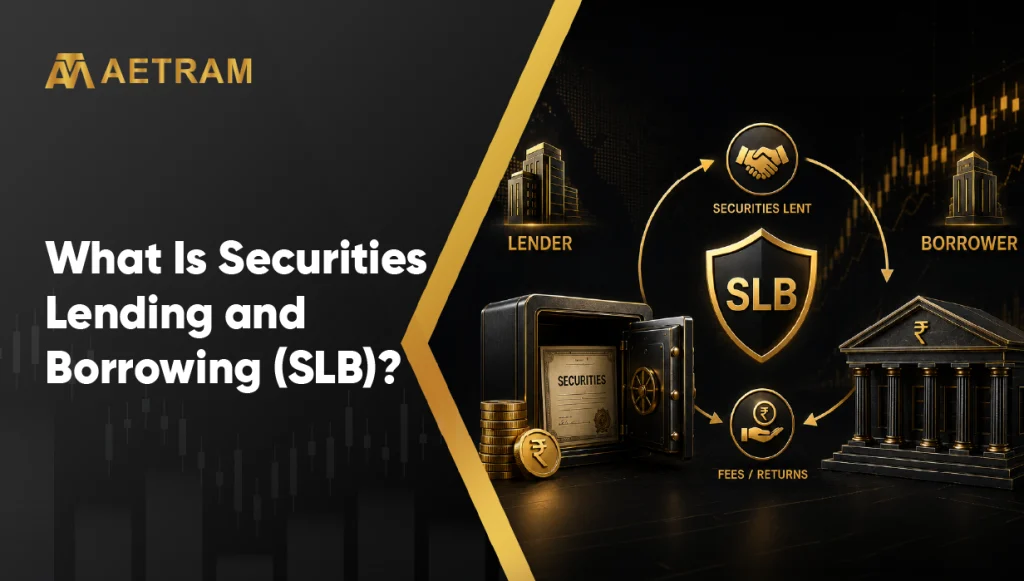
The Securities Lending and Borrowing is a regulated system where a market participant lends his/her securities to another party for a definite period of time. The investor lending his/her securities is referred to as a lender and the participant borrowing securities is the borrower. For the process of lending the securities, the lender receives a lending fee. Eventually, the securities are returned to the lender in accordance with the rules of the settlement. In short, SLB involves temporary lending of eligible shares by the investors instead of storing them in their Demat account.
Why Would a Traders Borrow Shares?
The major reason why traders borrow shares is because of the ability to make short sales. For example, in case a trader anticipates a fall in the price of a certain stock, he or she can borrow the stocks using the available channel and sell them. The trader will later buy them back and return them to the lender. In case the prices fall as anticipated, the trader would be able to make profits from the price differences, less the costs involved. However, in case the prices rise, the trader faces a loss.
Why Would an Investor Lend Shares?
In case we have an investor who has held on to some shares for a long time and does not intend to sell them anytime soon, he or she may be able to lend the eligible shares and earn a lending fee using the SLB. Nevertheless, it is essential to note that lending stocks does not mitigate the risk of investing.
A Simple Example of SLB
Let us say Ravi holds 100 qualified shares of a particular company, but rather than sell them off, he decides to lend them via SLB procedure. The shares are borrowed by another participant of the market and Ravi earns money as a lending fee during the specified period. After that, the securities are returned according to the existing settlement procedures. In this way, Ravi retains his investment exposure while the lending procedure offers him the possibility to generate extra earnings via the lending fee. Yet, the relevant conditions, fees, risks and corporate actions treatment should be taken into account prior to engaging.
What is the SLB Process?
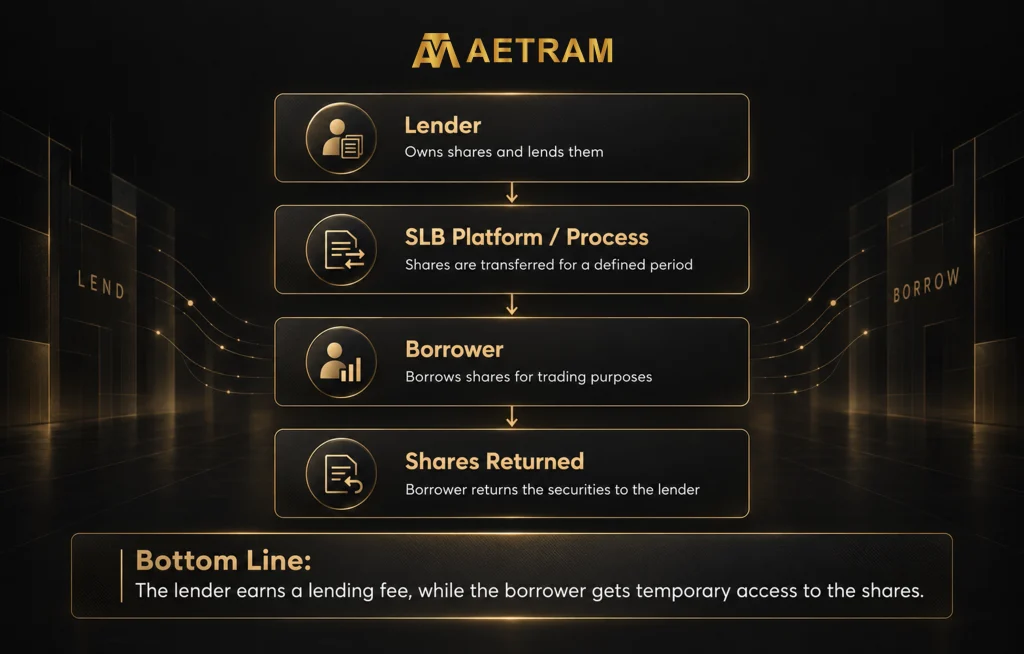
It is actually quite a straightforward idea. An investor has eligible shares and lends them using the appropriate SLB system. The borrower requests the security and pays the predetermined lending fee. After this process is completed, the following things will happen:
- The securities are lent to the borrower.
- The borrower pays the lending fee.
- The borrower uses the security within the approved market process.
- The securities are finally returned in the approved settlement process.
All the above processes, time frames, collateral arrangements and charges are dependent upon the regulations and exchanges governing the arrangement.
SLB in the Indian Market
SLB in the Indian Market
The Securities Lending and Borrowing (SLB) market in India is evolving to offer more flexibility to market participants. On August 17, 2026, BSE Clearing introduced 3-working-day contracts in the SLB segment. These contracts allow participants to borrow or lend eligible securities for a shorter period, which can be useful for short-term trading requirements.
What Happens to Dividends and Other Corporate Actions?
Corporate actions such as dividends, bonus, rights and stock splits may take place during the period of security lending. Depending on the regulations applicable in the case of SLB and the type of corporate action involved, the treatment of corporate benefits may vary. Hence it is imperative that investors understand how corporate benefits would be treated in the event of SLB.
What are the Risks Associated?
SLB is not a risk-free process of earning extra income. For borrowers, market risk remains a concern, especially when securities are lent out as part of short-selling strategy. In case the price of stock rises rather than falls, borrower may suffer huge losses. Some factors to consider include:
- Lending fees
- Market volatility
- Settlement obligations
- Collateral requirements
- Corporate actions
- Liquidity
- Applicable charges
Understanding these risks is important before participating.
SLB vs Holding Shares Normally
| Regular Shareholding | Securities Lending |
| Shares are held in your Demat account | Eligible shares are temporarily lent |
| No lending income | Potential to earn a lending fee |
| Investor retains the investment | Securities are temporarily transferred under SLB |
| No borrowing arrangement | Involves a borrower and lending mechanism |
But Is It Appropriate for Everyone?
Maybe not always. There are situations where Securities Lending and Borrowing may be worth considering by those people who have securities eligible for such lending and know the terms of the deal. At the same time, the decision-making process shouldn’t be limited only by the lending fee since there are many other aspects that need to be taken into consideration: the duration of the lending, corporate actions and associated costs, among others.
What Can Your Shares Do Besides Rising in Value?
Securities Lending and Borrowing is a regulated process through which eligible investors can receive extra revenue from securities that they already own, while the borrower gets a chance to use them within the framework of allowed trading strategies. The process of Securities Lending and Borrowing can be interesting for long-term investors as a tool of earning some extra money without selling their securities. As usual, any market process carries some risks along with it.
For more practical insights on stock markets, trading and investing, explore Aetram.
Frequently Asked Questions
- What is the full form of SLB?
SLB stands for Securities Lending and Borrowing. - Can investors earn money by lending shares?
Yes. Investors who lend eligible securities through the SLB mechanism may earn a lending fee, subject to applicable rules and charges. - Why do traders borrow shares?
Borrowed securities can be used for permitted trading strategies, including short selling. - Are all shares eligible for SLB?
No. Only securities permitted under the applicable SLB framework are eligible. Investors should check the current list with their broker or intermediary. - Is securities lending risk-free?
No. SLB involves market, settlement, operational and other risks. Investors should understand the applicable terms and conditions before participating.